Resistant starch has become one of the most talked-about carbohydrates in nutrition science. It’s often linked to better blood sugar control, gut health, and even weight loss. But the real story is more nuanced — and far more interesting than the hype suggests.
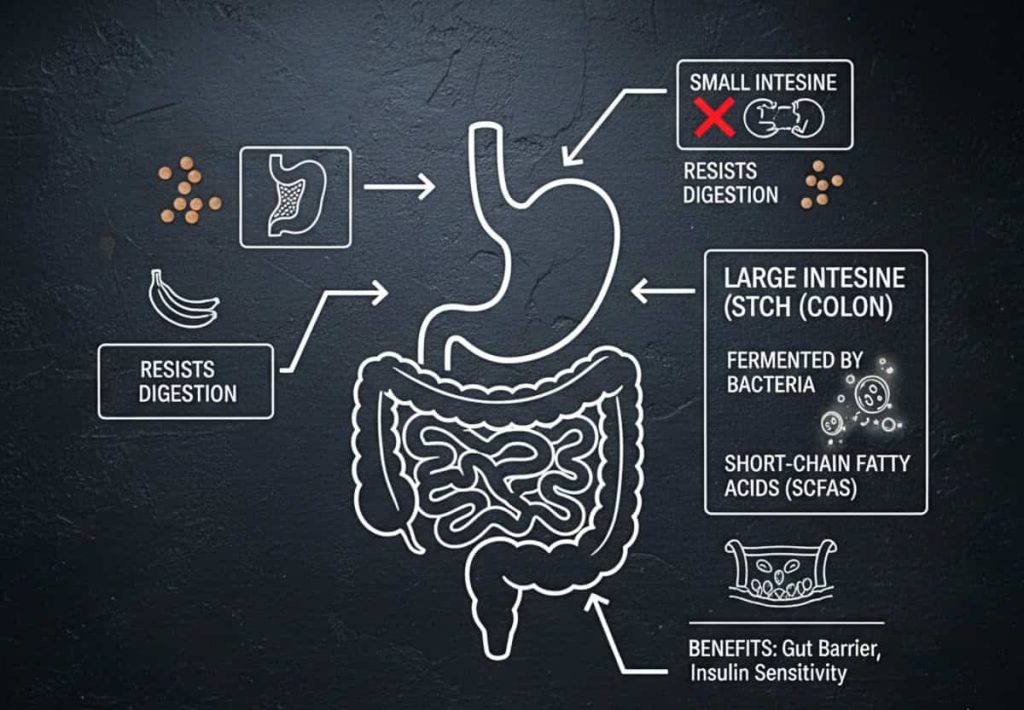
Unlike most starches, resistant starch resists digestion in the small intestine. Instead of being quickly broken down into glucose, it travels to the colon, where it interacts with gut bacteria and metabolic pathways in ways researchers are still working to fully understand. This article breaks down what the evidence supports and where the science draws clear limits.
What Is Resistant Starch and How Does It Work?
Resistant starch is made of glucose molecules, just like regular starch. The difference lies in its physical and chemical structure.
The Amylose Connection
Many resistant starches are high in amylose, a form of starch whose glucose chains are tightly coiled. Digestive enzymes struggle to break these bonds, which means the starch “resists” digestion and behaves more like dietary fiber. Because it isn’t fully digested, resistant starch raises blood sugar more slowly and feeds beneficial gut bacteria.
How Resistant Starch Affects Blood Sugar
One of the most consistent findings in research is the effect of resistant starch on insulin sensitivity. Studies in healthy individuals and people with metabolic syndrome show that it can help stabilize post-meal blood glucose levels. This happens because the starch releases glucose more slowly — or not at all — during the initial digestive phase.
Resistant Starch and Weight Loss: The “Metabolic vs. Weight” Divide
This is where many articles overpromise. According to recent research led by Dr. Laure Bindels, professor at Université Catholique de Louvain, resistant starch does not currently have strong evidence showing direct fat loss in humans.
Animal Studies vs. Human Reality
- Animal Studies: Show significantly reduced fat mass in obese rodents.
- Human Studies: Show consistent improvements in glucose control, but no consistent proof of direct fat mass reduction.
The Specialist’s Nuance: Why We Use Resistant Starch
As a nutritional biologist, I always emphasize that the public frequently confuses metabolic improvement with weight loss. This carbohydrate is excellent for sensitizing insulin, but that does not automatically translate into “burning fat” in humans.
Expert Tip: Do not consume this nutrient expecting a “thermogenic effect.” Consume it to protect your pancreas and feed your gut microbiome. Weight loss may be an indirect side effect of better satiety, but it is not the primary function.
Best Food Sources of Resistant Starch
You don’t need supplements to find this. Resistant starch naturally occurs in everyday foods, especially when prepared with specific techniques:
- Green bananas and plantains
- Lentils, peas, and beans
- Oats
- Cooked and cooled rice or potatoes (The cooling process allows starch to retrograde, increasing its resistance).
FAQ – The Science of Resistant Starch
1. What exactly defines it?
It is a type of carbohydrate that resists digestion in the small intestine. Instead of turning into glucose right away, it reaches the large intestine intact, where it’s fermented by gut bacteria and acts like a prebiotic.
2. Does reheating destroy resistant starch?
Not necessarily. While some loss can occur, many studies show that foods that have been cooked, cooled, and then reheated still retain higher levels of resistant starch than freshly cooked versions.
3. Can it cause bloating?
Usually less than other fibers. Because it ferments slowly in the colon, resistant starch tends to cause fewer digestive side effects like gas or sudden bloating.
4. How does it support the microbiome?
When fermented in the colon, it produces short-chain fatty acids like butyrate. These compounds support the gut lining, reduce inflammation, and promote a healthier balance of bacteria.
The Bottom Line: Precision Over Hype
It isn’t a miracle weight-loss pill. But as part of a balanced diet, it offers measurable metabolic benefits. For more on how food structures impact digestive health, see our analysis of how pistachios support metabolic health.
Research & Metabolic Specialist: Emma leads our Scientific Review Process, ensuring every insight is grounded in evidence while addressing the complexities of nutritional biology.
Medical Disclaimer: The information on The NutriDeep is for educational purposes only. Always consult a healthcare professional for personalized dietary advice.
