Creatine with fizzy drinks is a popular query for athletes looking for convenience, but is it actually effective? After a heavy set, you might be tempted to mix your supplement with sparkling water or an energy drink. However, if you’ve already read our breakdown on Can I Put Creatine in Coke Zero?, you know that diet sodas present a specific challenge for creatine. But what about “fizzy drinks” in general—from sparkling water and energy drinks to kombucha? According to sports nutrition research and formulation experts at MyJoyBurst, putting creatine in a carbonated environment is one of the hardest formulations in the industry. Here is why the “fizz” might be fighting your fitness goals.
Navigating the nuances of supplement vehicle selection ensures that your daily ergogenic routine works in strict harmony with your underlying physiology rather than fighting your digestive system. When analyzing the practical implications of creatine with fizzy drinks, understanding the structural and chemical hurdles prevents you from inadvertently undermining your own training efforts. Furthermore, pairing these evidence-based insights with comprehensive nutritional protocols—such as those detailed in our guide on [How Much Protein Per Day? 5 Proven Science-Backed Steps for Optimal Health]—allows you to construct a robust, fully optimized regimen that drives continuous muscle recovery and performance gains.
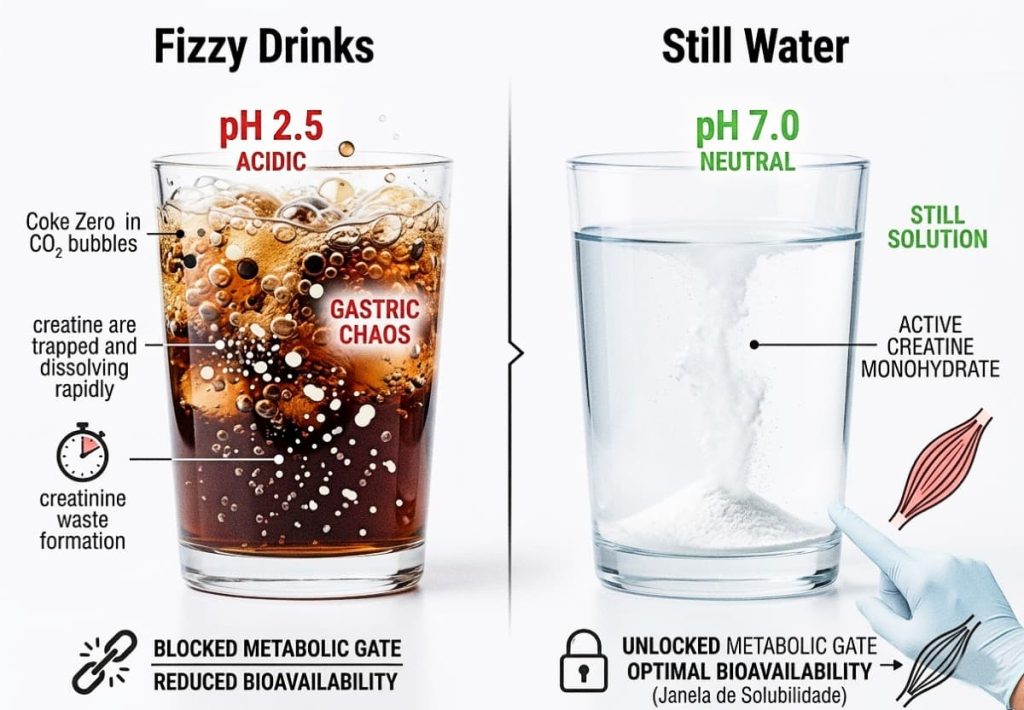
The Stability Trade-Off
Creatine monohydrate is a “use it or lose it” supplement once it hits a liquid. While the powder is shelf-stable for years, the moment it dissolves, it begins a process called intramolecular cyclization. This turns your active creatine into creatinine, a metabolic waste product that does nothing for your strength.
Understanding the chemical kinetics of sports nutrition reveals why timing and liquid choice are crucial for preserving your investment. When considering creatine with fizzy drinks, the rate of intramolecular cyclization is drastically heightened due to the aggressive interaction between active monohydrate and low-pH beverages. Recognizing this swift molecular degradation prevents you from inadvertently consuming inactive waste products, ensuring that every serving delivers maximum ergogenic value to your training routine.
The Acidic Breakdown
This turns your active creatine into creatinine, a metabolic waste product that does nothing for your strength. Fizzy drinks often have an acidic pH to maintain their carbonation. This acidity, combined with the liquid state, accelerates that breakdown.
When considering the chemistry of your post-workout drink, it is vital to understand that creatine with fizzy drinks creates an unstable environment. The carbonation process inherently lowers the pH, and when you combine that acidity with the solubility challenges of monohydrate powder, the chemical degradation accelerates. Many athletes who frequently consume creatine with fizzy drinks find that they are unknowingly converting their high-quality supplement into useless creatinine before it ever reaches their system.
The “Ready-to-Drink” Dilemma
This is why most “Ready-to-Drink” (RTD) fizzy creatine beverages often use lower doses (like 2g) to manage stability—a trade-off between convenience and the standard 3–5g performance dose.
Examining the molecular stability of sports supplements highlights why fluid selection dictates the actual bioavailability and efficacy of your daily dose. When consuming creatine with fizzy drinks, the lowered pH and carbonated environment actively threaten the integrity of the monohydrate structure, speeding up the conversion into inactive creatinine. Recognizing this vulnerability protects your investment in high-grade supplements, cementing the fact that peak athletic development demands meticulous attention to formulation chemistry.
The Nucleation “Eruption”
Mixing a fine powder like creatine into a carbonated drink creates a physical reaction called nucleation. Every tiny grain of creatine acts as a surface for CO2 bubbles to form.
The physical mechanics of beverage mixing often dictate whether a supplement strategy remains practical in a fast-paced daily routine. When handling creatine with fizzy drinks, the sudden appearance of rapid nucleation turns a simple glass into an overflowing mess, resulting in lost powder and sticky counters. Avoiding carbonated bases ensures your exact dose makes it straight into your system without unnecessary kitchen mishaps.
- The Result: If you’ve ever seen a “Mentos in Coke” video, you know the risk. Your drink can instantly foam over, leaving half of your supplement dose stuck as a sticky residue on the rim of the glass rather than in your muscles.
Solubility vs. Absorption
A common misconception is that if a drink is fizzy or warm, it absorbs better. While warm liquids (like coffee or tea) do increase solubility (the powder “disappears” faster), this does not necessarily improve tissue absorption.
Conflating physical dissolution speed with actual biological uptake is a frequent pitfall in athletic nutrition. While evaluating creatine with fizzy drinks or heated options, remember that true bioavailability depends on cellular transport mechanisms rather than how fast the powder vanishes. Prioritizing stable, scientifically backed carriers guarantees that your muscles actually utilize the compounds you ingest.
Digestion and Performance
In fact, the gas in fizzy drinks can lead to bloating and gastrointestinal distress when combined with the osmotic effect of creatine. For athletes needing explosive power, the “heavy” feeling of a carbonated gut can actually hinder performance during a workout. This is exactly why experts consistently advise against pairing creatine with fizzy drinks if your digestive system is sensitive, as the combination of gas and osmotic pressure often offsets any supposed convenience benefits.
Physical laboratory friction in the kitchen often determines whether a supplement habit remains viable over long-term training cycles. When testing the behavior of creatine with fizzy drinks, the violent nucleation reaction frequently turns a routine shake into a countertop overflow disaster, wasting precious powder in a sudden burst of foam. Utilizing stable, non-carbonated mixing liquids eliminates this frustration entirely, guaranteeing that your exact targeted dosage reaches your body safely.
Better Ways to Mix Your Dose
If you want the benefits of creatine without the carbonated headache, science suggests these alternatives:
- Fruit Juices: Options like grape or apple juice provide natural sugars. The resulting insulin spike acts as a “key” that unlocks muscle cells, helping to shuttle the creatine inside more efficiently.
- Warm Water: It dissolves the powder the fastest without the chemical breakdown risks associated with high-acid sodas.
- The Protein Shake: Combining creatine with whey and a carb source (like a banana) remains the gold standard for post-workout recovery.
- Skim or Plant-Based Milk: Mixing your dose into dairy or fortified alternative milks provides a smooth, neutral matrix that avoids the acidic degradation seen when consuming creatine with fizzy drinks, while delivering slow-release amino acids.
- Electrolyte-Enhanced Still Water: Utilizing a clean, flat mineral water with balanced sodium and potassium levels improves overall cellular hydration without introducing the disruptive carbonation and nucleation risks of sparkling beverages.
- Green or Black Tea: Serving as a warm, polyphenol-rich base, unsweetened tea dissolves micronized powder rapidly while keeping the pH environment far more stable than carbonated commercial sodas or energy drinks.
Adopting superior delivery systems for your daily supplementation transforms routine maintenance into a powerful catalyst for athletic growth. Rather than accepting the complications tied to creatine with fizzy drinks, focusing on nutrient-dense liquids or rich dairy matrices optimizes compound stability and boosts cellular uptake. This intentional strategy ensures every single gram of monohydrate contributes directly to your strength profile and long-term functional development.
The Biochemical Barrier of Carbonation
Analyzing the Interaction Between Low pH and Monohydrate
Preventing Inactive Degradation Products in Everyday Supplementation
The chemical environment of your beverage dictates the lifespan of your sports supplements. When examining how creatine with fizzy drinks behaves in solution, researchers point directly to the accelerated drop in active structural integrity.
The Role of Carbonic Acid in Accelerated Breakdown
Carbonated liquids rely on dissolved carbon dioxide, which forms weak carbonic acid and creates an inherently acidic solution. This low-pH environment drastically speeds up intramolecular cyclization, turning your expensive ergogenic powder into useless creatinine before you even finish your glass.
Practical Kitchen Pitfalls and Dosing Inconsistencies
The Mechanics of Laboratory Nucleation in Home Settings
Overcoming Countertop Spills and Sticky Residue Messes
Practical execution in the kitchen often determines whether a supplement routine remains sustainable over months of consistent training. When testing the daily reality of creatine with fizzy drinks, the physical reaction of nucleation turns a routine shake into a messy overflow hazard.
Why Fine Powders Trigger Immediate Foam Explosions
Every microscopic grain of micronized creatine acts as a nucleation site where trapped carbon dioxide gas rapidly expands. This sudden foaming action causes a significant portion of your serving to stick to the rim of the glass or spill over the counter, rendering your daily dosing entirely inaccurate.
Optimizing Long-Term Athletic Adaptation
Designing a Reliable Pre- and Post-Workout Protocol
Maximizing Cellular Hydration Without Gastrointestinal Distress
Achieving elite performance requires removing variables that cause physical distraction during heavy training blocks. Athletes who consistently avoid creatine with fizzy drinks protect their digestive lining from unnecessary osmotic stress and gas accumulation.
Selecting Still Alternatives for Superior Muscle Saturation
Shifting your focus toward clean, non-carbonated delivery vehicles like plain water or natural fruit juices eliminates chemical antagonism and promotes smooth cellular uptake, ensuring your strength and recovery metrics improve reliably over time.
The Verdict
The final question remains: should you ever consume creatine with fizzy drinks? Technically, you can, but it is rarely the optimal strategy for serious hypertrophy. If you are struggling with the inconvenience of mixing supplements, you might be tempted by the ease of creatine with fizzy drinks, but you must drink it immediately to minimize the conversion to waste. However, if you are looking for peak performance and muscle saturation, avoid the bubbles. Stick to still liquids like water or juice to ensure that every gram of powder you pay for actually makes it to your muscle fibers.
Reaching a clear conclusion on everyday nutrition habits helps you bypass fitness marketing myths and concentrate on what truly powers physical progression. While understanding the behavior of creatine with fizzy drinks offers useful context, selecting uncompromised, clean administration methods produces superior body composition results. Consistency paired with optimal biochemical environment is the ultimate key to sustainable, elite-tier athletic execution.
FAQ
Is sparkling water better than soda for creatine?
Slightly, because it lacks the phosphoric acid found in colas. However, the nucleation (foaming) issue remains, and the lack of an insulin trigger (sugar) means it won’t absorb as fast as a juice-based mix.
Does caffeine in energy drinks ruin the creatine?
Research is mixed. High doses of caffeine (over 300mg) might blunt the explosive power benefits of creatine, but they don’t seem to stop the muscle-building process entirely.
Can I mix it in my pre-workout?
Most pre-workouts are non-carbonated for a reason. Mixing creatine into a still pre-workout is generally more effective and easier on the stomach than mixing it into an energy drink.
Can I mix creatine in kombucha or fermented sparkling beverages?
Generally, no. Kombucha and other fermented drinks are highly acidic and naturally carbonated. Mixing creatine with fizzy drinks of this type triggers both rapid intramolecular cyclization and messy nucleation, leading to supplement degradation and poor digestive tolerance.
Does the temperature of a fizzy drink change how fast the creatine degrades?
Yes. Higher temperatures combined with the carbonated, low-pH environment of a fizzy drink accelerate the chemical conversion of active creatine into inactive creatinine. If you are consuming creatine with fizzy drinks, keeping the beverage ice-cold can slightly slow down degradation, though it does not eliminate the issue entirely.
How long does creatine stay stable if I accidentally mix it in advance?
Creatine monohydrate begins to degrade into useless creatinine relatively quickly once exposed to liquid, especially in low-pH environments. If you mix your supplement into carbonated or acidic beverages, you should consume it immediately; letting it sit for more than a few hours results in a significant loss of active supplement potency. (For supplementary meal planning around active schedules, see our guide on [Best High-Protein Fast Food: 5 Dietitian-Approved Menu Hacks]).
Is it safe to consume creatine with fizzy drinks regularly?
While it is not “unsafe” in a toxic sense, it is counterproductive. Mixing creatine with fizzy drinks on a daily basis likely leads to inconsistent dosing due to the nucleation and foam loss mentioned earlier. For consistent results, stick to still liquids.
Clearing up common preparation myths ensures your daily routines support your overarching physical goals without unnecessary confusion. Addressing precise questions concerning creatine with fizzy drinks or alternative liquid choices empowers you to fine-tune your supplementation timeline precisely to your individual metabolic profile and training lifestyle.
Medical Disclaimer: This content is for informational purposes only and does not constitute professional medical or nutritional advice. Always consult with a healthcare professional before making changes to your supplement regimen. The author assumes no liability for outcomes resulting from the use of this information.
