If you’ve ever wondered are pistachios fattening, you’re not alone. For decades, these green gems have been misunderstood due to their calorie density. They’re nuts, they’re high in fat, and they’re not exactly low in calories. At first glance, it sounds logical to avoid them. However, as pistachios continue to dominate food trends in the U.S., the conversation around them has become more nuanced. People are starting to notice that pistachios don’t behave the same way as many other high-calorie snacks.
So, what’s really behind this reputation? And why do pistachios keep showing up in discussions about healthy food choices?
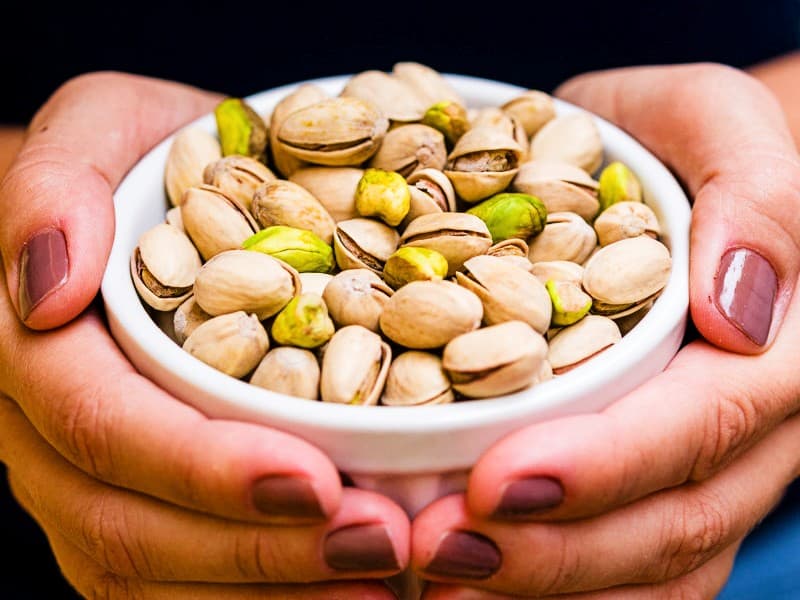
📱 Visual Summary: The “Pistachio Principle” explained in 30 seconds.
Why Pistachios Get Labeled as “Fattening”
The idea usually comes down to simple math. Pistachios contain fats, and fat has more calories per gram than carbohydrates or protein. When someone looks at a nutrition label without context, pistachios can seem like a risky choice for anyone watching their weight.
This type of thinking is a leftover from the “low-fat” era, where calorie-dense foods were automatically placed in the “avoid” category, regardless of their nutritional quality or how they are actually consumed in real life.
When looking at the raw data, it’s easy to see why people ask: are pistachios fattening? But the answer lies in the biology of the nut.
Furthermore, when investigating whether are pistachios fattening, clinical dietitians note that public perception is often distorted by simplified marketing metrics rather than comprehensive metabolic data. Because traditional dietary guidelines historically demonized all lipid sources equally, healthy whole foods frequently suffered unearned reputations, obscuring their actual physiological benefits and long-term role in weight homeostasis.
From a historical standpoint, the persistent anxiety over whether are pistachios fattening stems largely from reductionist dietary paradigms that categorized all lipids as metabolic liabilities.
Individuals frequently ask are pistachios fattening because traditional public health messaging relentlessly championed low-fat alternatives, inadvertently steering consumers toward heavily refined carbohydrate snacks that caused rapid glycemic spikes and compensatory overeating.
When modern nutritional epidemiology re-evaluated nut consumption to answer whether are pistachios fattening, researchers discovered a stark paradox: populations incorporating regular tree nut portions often experienced better long-term weight maintenance compared to those consuming fat-free, processed counterparts.
This disconnect occurs because human energy balance—often analyzed when determining if are pistachios fattening—is not governed by bomb calorimetry alone, but by complex neuroendocrine signaling pathways that regulate hunger, satiety, and energy expenditure in response to whole-food structures.
The “Pistachio Principle”: Why Shells Matter
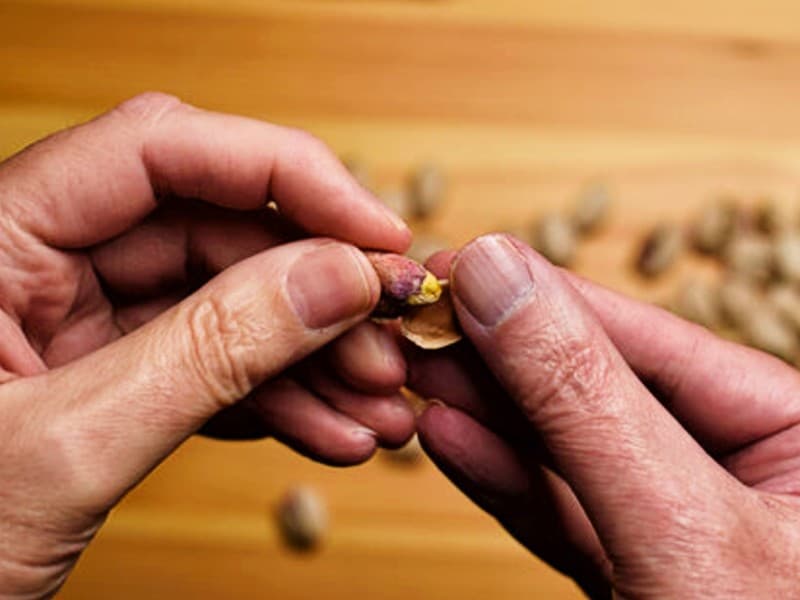
One detail often overlooked is that calories don’t exist in isolation. How you eat matters just as much as what you eat. Pistachios are rarely consumed the same way as ultra-processed snacks. Because they often come in shells, they require a physical effort to eat.
This leads to what experts call “The Pistachio Principle.” The act of cracking each shell naturally slows down your eating pace, giving your body more time to register fullness (satiety). Furthermore, the pile of empty shells serves as a visual cue for your brain, making you more aware of exactly how much you’ve consumed.
This behavioral psychology component is precisely why discussions surrounding are pistachios fattening must look beyond simple caloric arithmetic.
By forcing a deliberate pause between handfuls, the physical barrier of the shell re-engineers human consumption habits, effectively reducing total caloric intake without requiring conscious willpower or restrictive portion-control tracking.
To understand why these green kernels have captured global attention despite historical calorie fears, you can also explore our guide on Why are Pistachios so popular?.
Beyond the Label: Why Calories Don’t Tell the Whole Story
Unlike refined snacks that disappear in seconds, pistachios offer a combination of protein, fiber, and healthy fats. This trio is essential for satiety—the feeling of being full and satisfied. Just as the cooking order of onion and garlic affects flavor and nutrient preservation, the physical structure of what we eat dictates our metabolic response.
Ultimately, assessing whether are pistachios fattening requires a shift from reductionist calorie-counting to a broader understanding of postprandial thermogenesis and hormonal satiety signaling. Whole-food matrices rich in viscous fibers and unsaturated fats actively stimulate peptide YY and cholecystokinin release, biological pathways that naturally suppress appetite and prevent subsequent overeating hours later. To dive deeper into their specific physiological advantages, check out 7 Surprising benefits of pistachios for metabolic health.
The Role of Satiety: Protein, Fiber, and Healthy Fats
In real-life eating habits, pistachios are satisfying in smaller amounts. Many people find they don’t feel the urge to keep mindlessly snacking long after starting, which is a common problem with “empty-calorie” foods like chips or crackers.
When researchers examine why are pistachios fattening is a misconception, they consistently point to this unique macronutrient synergy. The combination of plant-based protein, viscous dietary fiber, and healthy monounsaturated fats acts directly on gastric emptying rates, slowing down digestion and sustaining energy levels over extended periods.
This physiological mechanism prevents the abrupt blood sugar rollercoasters that typically trigger intense afternoon cravings, reinforcing why natural whole foods support sustainable metabolic health far better than isolated nutrients.
Pistachios vs. Ultra-Processed Snacks
When people worry about pistachios being fattening, they often forget to compare them to the alternatives. In many cases, the alternative is a packaged snack high in refined flour and added sugars. These foods are designed to be eaten fast and in large quantities without ever making you feel truly full. Pistachios, on the other hand, encourage mindful eating.
To accurately address concerns over whether are pistachios fattening, nutritional science demands a clear contrast against hyper-processed convenience foods engineered in laboratories to stimulate unnaturally high dopamine responses. While commercial chips and sweet pastries bypass normal satiety signals—allowing individuals to consume hundreds of calories in minutes without registering fullness—whole pistachios demand active engagement.
This fundamental difference in food architecture ensures that long-term body weight is protected by natural self-regulation, proving that true nutritional quality relies as much on physical structure and digestion speed as it does on the raw calorie count on the label.
The Specialist’s Nuance: Bioavailability and Fat Absorption
To truly answer the question are pistachios fattening, we must look at how our bodies absorb their nutrients.
The Specialist’s Nuance: Bioavailability of Fats Recent studies suggest that not all calories in nuts are fully absorbed by the human body. The rigid cell walls of pistachios may prevent the body from absorbing about 5% to 10% of their fat content during digestion. This means the “effective” calorie count might be lower than what appears on the label—a crucial detail for those practicing biohacking or strict metabolic control.
Experts also highlight that evaluating whether are pistachios fattening involves complex gastrointestinal dynamics. Because structural plant cell walls resist total enzymatic breakdown during transit, a significant fraction of encapsulated lipids bypasses direct systemic absorption, proving that laboratory bomb calorimetry values frequently overestimate the true energy yield delivered to the human body.
Expanding further upon the mechanics of energy partitioning, investigating whether are pistachios fattening reveals fascinating insights into human digestive efficiency.
The fibrous cell walls enclosing the lipid droplets within pistachios do not completely rupture during mastication and gastric churning, which heavily influences whether are pistachios fattening in real-world clinical settings.
Consequently, a portion of the monounsaturated and polyunsaturated fats remains trapped within the cellular matrix, passing through the upper gastrointestinal tract unabsorbed when evaluating why are pistachios fattening is often misunderstood.
This microbial interaction not only modifies local short-chain fatty acid production—such as beneficial butyrate generation—but also confirms that the net caloric yield assimilated by the systemic circulation is measurably lower than theoretical laboratory values, permanently redefining how clinical dietitians assess whether are pistachios fattening for weight management.
Portion Awareness and Mindful Eating
Labeling foods as “fattening” can often backfire by creating an all-or-nothing mindset. This leads people to completely avoid nutrient-dense foods instead of learning how to include them thoughtfully in a balanced diet.
With pistachios, portion awareness develops more naturally. Between the physical work of shelling them and their distinct, savory flavor, they provide a more complete and intentional culinary experience. This is very different from foods that are engineered to be consumed without thought.
Psychological Satisfaction and Sensory Specific Satiety
When evaluating whether are pistachios fattening, behavioral psychologists and nutritionists frequently analyze the concept of “sensory specific satiety” and its profound impact on daily caloric intake. Unlike hyper-palatable, ultra-processed snacks engineered with artificial flavor enhancers that override natural fullness cues and trigger compulsive overeating, whole nuts engage multiple human senses simultaneously.
The vibrant green and purple hues, the tactile engagement of cracking open the hard outer shells, the distinct earthy aroma, and the satisfying crunch all signal the brain that a genuine, nourishing meal or snack is taking place. This rich multi-sensory feedback loop accelerates the neurological registration of satisfaction, ensuring that individuals who ponder whether are pistachios fattening naturally feel completely fulfilled with much smaller, controlled portions.
Moreover, looking closely at how are pistachios fattening in the context of behavioral economics reveals that friction is an effective ally for weight management. Foods that require zero physical effort to consume—such as potato chips, candies, or crackers—invite passive, unmonitored overconsumption while watching television or working.
In contrast, the deliberate physical labor involved in shelling individual pistachios creates a natural boundary, introducing micro-pauses that give the endocrine system adequate time to release satiety hormones like peptide YY. Consequently, understanding whether are pistachios fattening requires acknowledging that human psychology and physical food design play just as large a role in metabolic health as raw caloric numbers on a nutrition label.
FAQ — Are Pistachios Really Fattening?
Are pistachios fattening?
Pistachios are calorie-dense, but that doesn’t automatically make them fattening. How they are eaten, their fiber and protein content, and portion awareness play a major role in how they affect weight.
What is the “Pistachio Principle”?
The Pistachio Principle refers to how eating pistachios in shells slows consumption. Cracking each shell encourages mindful eating, while the visual cue of empty shells increases portion awareness.
Do pistachios make you feel full?
Yes. Pistachios contain a combination of protein, fiber, and healthy fats, which work together to promote satiety and reduce the urge to overeat.
Is it better to eat pistachios with or without shells?
Pistachios in shells tend to promote greater portion awareness and slower consumption compared to shelled pistachios.
Are pistachios good for weight management?
When eaten mindfully and in appropriate portions, pistachios can fit well into a balanced diet and may help replace less satisfying, processed snacks.
Final Verdict: Are pistachios fattening? Not when eaten mindfully. They shouldn’t be seen as something to fear, but as a versatile, satisfying ingredient that fits perfectly into a well-rounded lifestyle.
The Metabolic Impact: Blood Sugar and Insulin Stability
When investigating whether are pistachios fattening, modern endocrinologists and metabolic researchers shift their focus toward glycemic control and insulin dynamics. Unlike refined carbohydrates that trigger sharp postprandial glucose spikes followed by reactive hypoglycemia—which frequently drives chronic cravings and continuous grazing—tree nuts exhibit a remarkably low glycemic index.
For individuals trying to understand if are pistachios fattening, clinical trials demonstrate that incorporating modest daily quantities of these green kernels significantly blunts the glycemic response of concurrent meals. This stabilizing effect on circulating blood sugar prevents the excessive insulin secretion that typically promotes fat storage, offering a powerful physiological mechanism explaining why conscious consumption supports weight management rather than impeding it.
Furthermore, exploring whether are pistachios fattening must account for the thermic effect of food (TEF). Protein and dietary fiber require a notably higher energy expenditure for the body to digest, process, and metabolize compared to simple sugars and highly processed fats.
Because pistachios deliver a dense matrix of plant-based protein, viscous fiber, and beneficial unsaturated fats, a measurable percentage of the ingested calories is immediately expended as metabolic heat during processing. This built-in thermodynamic advantage reinforces the scientific consensus that evaluating whether are pistachios fattening cannot be reduced to simple arithmetic, as our internal metabolic machinery processes whole-food matrices with entirely different efficiencies than isolated chemical calories.
Disclaimer: While pistachios are a nutrient-dense snack, individuals with nut allergies should avoid them. Additionally, many commercial varieties are heavily salted; for those monitoring blood pressure or sodium intake, raw or unsalted versions are the recommended choice.
Research & Metabolic Specialist: Dedicated to uncovering the cellular impact of dietary patterns, Emma leads our Scientific Review Process.
