If you’ve ever felt bloated after a glass of milk, you probably blamed lactose. But what if the culprit wasn’t the sugar, but a single amino acid in the protein? The debate between A1 vs A2 milk beta-casein is shifting how we look at dairy, biology, and gut inflammation. As we dive into the science in 2026, it’s clear that the “lactose-free” label might not be the final answer for everyone exploring the A1 vs A2 milk debate.
Understanding Milk Proteins: Casein and Whey
Cow’s milk contains two primary types of protein: Casein (about 80%) and Whey (20%). While whey is often discussed in supplements, beta-casein makes up about 30% of total milk protein and is the heart of the A1 vs A2 milk discussion.
Originally, all cows produced only A2 beta-casein. Over time, a genetic mutation in certain cattle populations led to the A1 variant. Today, most commercial milk is a mixture of both, a microscopic change with significant implications for human digestion.
When exploring the broader biological implications of A1 vs. A2 milk, molecular biologists emphasize that milk proteins serve as complex biological messengers rather than mere building blocks. The distinct structural folding of these caseins dictates how enzymes process them within the gastrointestinal tract, highlighting why modern dairy science must look beyond standard nutritional metrics to understand true human digestive compatibility.
When examining the broader biochemical architecture of bovine milk, researchers must look deeply into the micellar structure formed by casein proteins and calcium phosphate. Casein does not float freely in solution; instead, it organizes into large colloidal particles known as micelles, which are stabilized by a hydrophilic outer layer of kappa-casein. This intricate biological delivery system is designed by nature to slowly release amino acids and minerals into the neonatal mammalian gut over an extended period.
However, the genetic divergence that introduced the A1 variant altered a critical segment of the beta-casein polypeptide chain, modifying how these micelles interact with digestive enzymes. While whey proteins like alpha-lactalbumin and beta-lactoglobulin pass through the upper GI tract with relatively rapid absorption kinetics, caseins require targeted enzymatic cleavage by pepsin and pancreatic proteases.
Understanding this foundational dairy biology is essential for anyone trying to decipher why modern commercial milk—often a homogenized blend of various bovine genetic strains—elicits such divergent physiological responses among human consumers. Consequently, analyzing the structural differences between A1 and A2 beta-casein provides a vital window into how subtle agrarian shifts in cattle breeding over the centuries have directly impacted modern human digestive tolerance and gut barrier integrity.
The Key Molecular Difference: Proline vs. Histidine
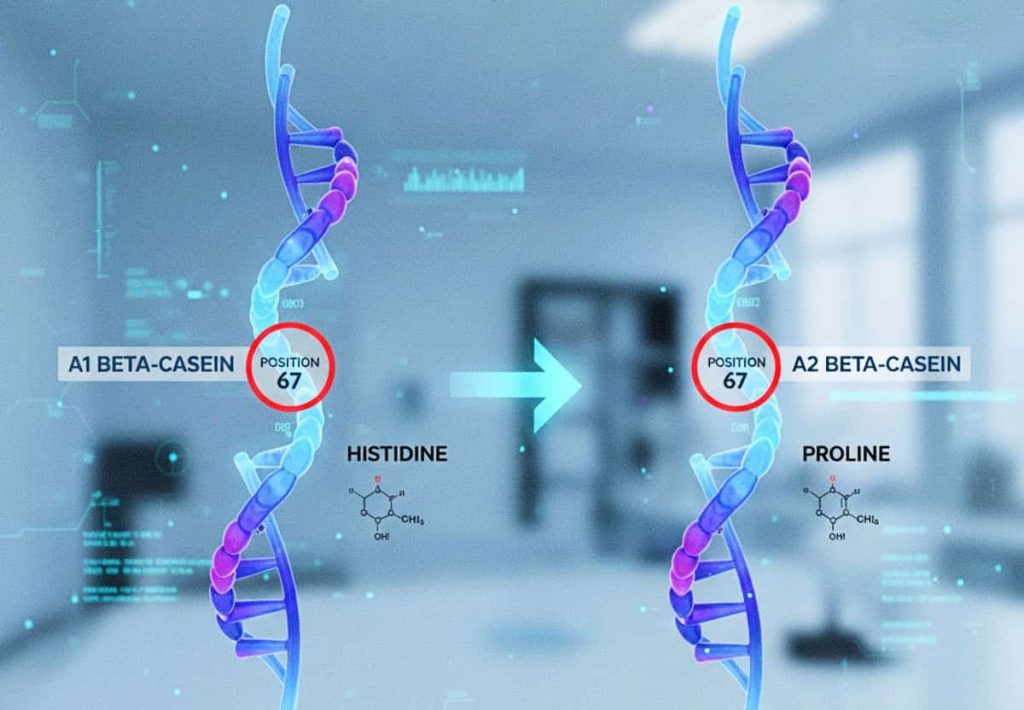
The difference between A1 and A2 beta-casein is surprisingly small: a single amino acid at position 67 in the protein chain.
- A2 beta-casein contains the amino acid proline.
- A1 beta-casein contains histidine.
This variation significantly affects how the protein is digested. During digestion, A1 beta-casein can release a peptide called beta-casomorphin-7 (BCM-7). A2 beta-casein, due to its proline bond, does not readily release this peptide.
This molecular shift is the foundation of why A1 vs A2 milk behaves differently during human digestion.
This minute structural variation in A1 vs. A2 milk proteins fundamentally changes enzymatic cleavage patterns during gastric digestion. Because the peptide bond adjacent to proline resists rapid enzymatic breakdown, the downstream signaling molecules generated by A2 proteins follow an entirely safer metabolic pathway compared to the opioid-releasing tendencies of its A1 counterpart.
Why BCM-7 Matters for Gut Inflammation
BCM-7 is an opioid peptide that can interact with receptors in the nervous and immune systems. Research suggests that BCM-7 may contribute to gut inflammation and alter intestinal motility. This reaction explains why some people who test negative for lactose intolerance still feel discomfort when drinking regular milk.
Therefore, when analyzing the clinical complaints associated with A1 vs. A2 milk, researchers note that BCM-7 can directly stimulate intestinal mucus production and modulate local immune responses.This localized irritation frequently mimics the exact symptoms of lactose malabsorption, leading many consumers to misdiagnose their dairy sensitivities as sugar intolerance rather than a protein-driven inflammatory reaction. For a broader perspective on how processed food elements impact gut biology, you can explore Is whey protein an ultra-processed food? Quality, function, and myths.
To fully grasp the pathophysiological mechanisms associated with beta-casomorphin-7 (BCM-7), clinical gastroenterologists and immunologists investigate how opioid peptides cross-talk with the enteric nervous system, often referred to as our “second brain.” The gut wall is lined with millions of neurons and specialized enteroendocrine cells that express mu-opioid receptors.
When A1 beta-casein is broken down during incomplete digestion, the resulting BCM-7 fragment binds directly to these mucosal receptors, initiating a cascade that can significantly inhibit gastrointestinal motility, slow down transit time, and upregulate localized pro-inflammatory cytokine production.
This localized immune stimulation frequently triggers increased intestinal permeability—commonly known as leaky gut—allowing larger macromolecular antigens to cross the epithelial barrier and provoke systemic immune vigilance. For individuals grappling with chronic functional gastrointestinal disorders, irritable bowel syndrome (IBS), or unexplained post-prandial discomfort, this continuous, low-grade inflammatory signaling explains why conventional dairy can cause systemic fatigue and abdominal distress even in the complete absence of clinical milk allergies or classic lactase enzyme deficiency.
Thus, mitigating BCM-7 exposure by transitioning to heritage protein profiles represents a major therapeutic breakthrough in functional nutritional medicine, highlighting the practical value of A1 vs A2 milk selections.
The Specialist’s Nuance: Not a “Magic Pill”
It’s important to note that the scientific community is not 100% in agreement. While clinical trials show inflammatory markers in sensitive patients, some researchers argue that BCM-7 levels are too small to affect everyone. This suggests that A2 milk is a targeted solution for those with specific protein sensitivities, rather than a universal fix.
Navigating the complexities of A1 vs. A2 milk requires acknowledging that human gastrointestinal tracts vary significantly in their enzymatic output and mucosal resilience. While subsets of clinical patients experience profound relief from switching protein structures, others may find that co-existing sensitivities—such as fermentable oligosaccharides or mild dysbiosis—still require broader dietary management. This lack of a one-size-fits-all response underscores why clinical dietitians advocate for personalized elimination trials rather than assuming A2 formulations will instantly resolve every form of post-dairy distress.
A1 Milk, Inflammation, and Broader Health Questions
Beyond digestion, researchers have explored possible links between A1 beta-casein and systemic inflammation. Studies have investigated associations with conditions such as Type 1 diabetes and cardiovascular disease.
While some epidemiological data suggest correlations, causation has not been conclusively established. Human clinical evidence remains limited, and scientists agree that further long-term, controlled studies are needed to understand the full impact of A1 proteins on metabolic health.
Because public health debates surrounding A1 vs. A2 milk continue to evolve, nutritional epidemiologists stress the importance of distinguishing between observational associations and verified clinical causation. While ongoing cohort studies monitor systemic immune pathways, conclusive proof regarding long-term chronic conditions requires larger, randomized controlled trials across diverse global populations. To better understand how heavily modified food components interact with human physiology, check out What is the real risk of ultra-processed foods? A science-based perspective.
Moving beyond immediate post-prandial gastrointestinal distress, nutritional epidemiologists and clinical researchers have spent recent decades exploring whether systemic absorption of BCM-7 can influence long-term metabolic health and chronic disease trajectories. Because the human intestinal barrier is not entirely impermeable—especially under conditions of stress, NSAID use, or subclinical inflammation—small peptide fragments can occasionally translocate into the systemic circulation, where they may interact with peripheral tissues and immune cells.
Hypotheses and preliminary animal models have investigated potential correlations between chronic A1 protein ingestion and the modulation of immune pathways implicated in insulin resistance, vascular endothelial dysfunction, and neurodevelopmental concerns. While mainstream scientific consensus emphasizes that human clinical data remains observational and requires much larger, long-term randomized controlled trials to establish direct causation, the biological plausibility of opioid peptides exerting systemic physiological effects keeps this topic at the forefront of nutritional research.
As personalized medicine continues to advance, clinicians increasingly advocate for precautionary dietary adjustments, allowing sensitive populations to bypass potential inflammatory triggers while awaiting the final verdict from ongoing multi-center clinical trials investigating dairy protein variants and evaluating A1 vs A2 milk safety profiles.
Benefits of Switching to A2 Milk
When we look at the clinical trials for A1 vs A2 milk, the results for gut comfort are promising.
Human clinical trials have shown that individuals who experience discomfort from conventional milk often report:
- Less abdominal bloating and pain.
- Improved stool consistency.
- Better overall digestive comfort.
Interestingly, these benefits are observed even in some lactose-intolerant individuals, suggesting that milk protein type—not just lactose—may be the trigger.
Ultimately, incorporating the findings of A1 vs. A2 milk research into personalized nutrition plans allows clinicians to offer targeted dietary solutions. By identifying whether a patient’s discomfort stems from lactase deficiency or protein-induced gut irritation, practitioners can restore dietary dairy inclusion without forcing unnecessary restrictions on whole-food nutrition.
Cow Breeds and Milk Type
Different cow breeds naturally produce different profiles:
- Jersey and Guernsey cows: Predominantly produce A2 milk.
- Holstein and Friesian cows: More commonly produce A1 or mixed milk.
Knowing which breeds produce which protein is essential for consumers looking for A1 vs A2 milk options in supermarkets.
Agricultural genetics and herd management play a pivotal role in the commercial availability of A1 vs. A2 milk products worldwide. As consumer awareness scales up, dairy producers are increasingly adopting selective breeding programs and DNA verification to certify pure herds, transforming global dairy farming standards to meet modern digestive health demands.
The Evolution of Dairy Farming and Modern Breeding Strategies
As consumer awareness regarding the molecular impacts of A1 vs. A2 milk continues to accelerate, the global agricultural and dairy farming sectors are undergoing a quiet revolution. Historically, dairy cattle selection prioritized sheer volume, milk yield, and feed conversion efficiency over protein structural purity, leading to the widespread dominance of Holstein and Friesian herds that predominantly express the A1 beta-casein genetic variant. However, modern herd management is increasingly recognizing that agricultural optimization must encompass human digestive compatibility alongside farm-level productivity.
Specialized dairy cooperatives and independent breeders are now implementing rigorous genomic testing and selective breeding protocols to restore pure A2 herds, utilizing DNA hair or tissue samples to identify and isolate cows carrying homozygous A2 alleles. This strategic shift not only transforms commercial supermarket shelves by offering verified heritage milk options, but it also bridges the gap between traditional agriculture and modern precision nutrition. By aligning farming practices with clinical insights into human gut health, the dairy industry is successfully adapting to meet the sophisticated demands of wellness-focused consumers who refuse to compromise between nutritional enjoyment and digestive comfort when assessing A1 vs A2 milk.
FAQ — A1 vs A2 Milk: Everything You Need to Know
Check out these common questions regarding A1 vs A2 milk and its effects on the body.
Is A2 milk lactose-free?
No, it has the same amount of lactose as regular milk. It only differs in the protein structure. If you have severe lactose intolerance, you may still need lactose-free options.
Can people with milk allergies drink A2 milk?
No. If you have a true dairy allergy (IgE mediated), you must avoid all cow’s milk, including A2, as the allergic response is triggered by several proteins.
Does A2 milk taste different?
Most people find it tastes exactly like conventional milk, as the protein variation does not affect the flavor or fat content.
To summarize the evolving dialogue surrounding A1 vs. A2 milk, keeping abreast of ongoing genetic research and gastrointestinal studies ensures that consumers can make truly informed dietary choices. As dairy farming practices adapt to these molecular findings, understanding the subtle distinctions between protein variants empowers individuals to reclaim dairy tolerance and optimize their daily nutritional intake with confidence.
Disclaimer: This article is for informational purposes only. If you have chronic digestive issues or a suspected dairy allergy, consult a gastroenterologist or a registered dietitian before making significant dietary changes.
Advancing Toward Personalized Dairy Nutrition
Ultimately, navigating the complex landscape of A1 vs. A2 milk highlights a broader paradigm shift within modern healthcare: moving away from rigid, one-size-fits-all dietary rules and toward highly individualized, mechanism-driven nutrition. As analytical tools become more precise and clinical gastroenterology continues to unravel the subtle crosstalk between food proteins, gut peptides, and human immunity, consumers are better equipped than ever to curate a diet that optimizes both metabolic performance and daily comfort. Embracing these insights ensures that your nutritional choices are guided by deep biological understanding rather than generalized assumptions.
