Plastic cutting boards became popular because they’re cheap, lightweight, and dishwasher-safe. For years, they were marketed as the most hygienic option for home and professional kitchens. However, recent research paints a very different picture. From contamination to long-term hygiene issues, plastic cutting board risks are something many people are only now beginning to understand.
The Hidden Problem: Microplastics in Your Food
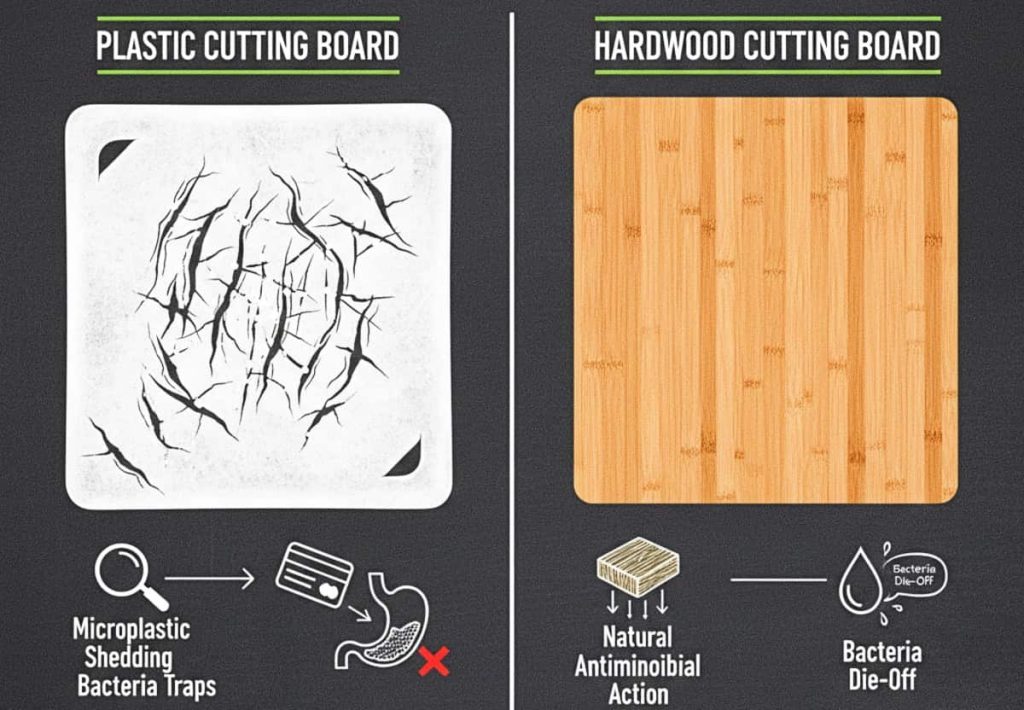
Every time you chop on a plastic surface, the knife doesn’t just cut food — it also scrapes the board itself. Unlike wood, which has a fibrous structure, plastic is a rigid polymer that fractures under pressure.
The Scale of Plastic Ingestion
Multiple peer-reviewed studies have shown that boards made from polyethylene or polypropylene release microplastics with each cut. According to investigative reports by Outside Online, a single person could be ingesting an amount of plastic equivalent to several credit cards every year just from standard food preparation.
The “Trojan Horse” Effect in Environmental Health
Specialists point out that microplastics may not just be physical irritants; they can act as carriers for other environmental toxins or disrupt the gut microbiome. This is why many researchers now advocate for a “precautionary principle.”
Why Scratches Make Plastic Boards Worse Over Time
Plastic boards visibly scar, and those deep grooves are more than just cosmetic damage — they are structural failures that increase plastic cutting board risks.
These structural defects are the primary driver of long-term plastic cutting board risks, as they compromise both food safety and material integrity.
The Hygiene Paradox of Non-Porous Surfaces
Plastic is often described as non-porous, which sounds hygienic. In reality, once it’s scratched, that advantage disappears.
- Bacterial Buildup: Knife marks create channels where food residue and moisture settle.
- Sterilization Failure: In home kitchens, plastic boards rarely reach the industrial temperatures needed for full sterilization.
- Polymer Softening: Heating a board in a dishwasher can soften the polymer, potentially increasing microplastic shedding.
Bacteria and Hygiene: Plastic vs. Wood
The scientific debate often centers on “Sanitization vs. Survival.” While plastic can withstand harsh chemicals, its surface doesn’t fight bacteria naturally.
Natural Antimicrobial Properties of Wood
Hardwood boards behave differently. Research from the University of Wisconsin found that wood naturally “traps” bacteria inside its fibers, where they die off due to a lack of moisture.
Gut Health and Industrial Exposure
Animal studies have linked diets prepared on plastic surfaces to increased gut inflammation. This highlights that we must look at these boards as industrial products that can alter the integrity of our diet through mechanical processing.
Industrial Formulations in the Kitchen
This brings up a critical point about how we categorize safety in our kitchens. Just as we analyze whether Whey Protein is an ultra-processed food based on its industrial formulation and additives, we must look at plastic boards not just as “tools,” but as industrial products that can alter the integrity of our whole foods through mechanical processing.
Better Alternatives to Plastic Cutting Boards
If you’re moving away from synthetic materials to mitigate plastic cutting board risks, there are several superior options:
Professional Hardwood Options
- End-Grain Hardwood: The gold standard. It is self-healing, knife-friendly, and extremely long-lasting.
- Edge-Grain Boards: A more affordable wooden option that remains significantly safer than plastic for daily use.
Modern Composite and Bamboo
- Bamboo Boards: Lightweight and renewable, though slightly harder on knife edges.
- Non-Plastic Composites: Dishwasher-safe options that offer convenience without the microplastic shedding associated with traditional polymers.
FAQ: Managing Kitchen Safety
What are the primary plastic cutting board risks regarding safety?
While they meet regulatory standards, emerging research on microplastics suggests that long-term plastic cutting board risks are higher than previously thought.
How often should plastic boards be replaced?
As soon as deep grooves appear or the surface feels rough. For frequent users, this can mean replacing them every few months.
What is the healthiest cutting board material?
High-quality hardwood (especially end-grain) is widely considered the safest balance of hygiene, durability, and knife protection.
Final Takeaway: A Return to Natural Materials
Choosing wood reduces both personal exposure to polymers and environmental impact. For daily home cooking, plastic offers convenience — but at a growing cost to your health and your tools.
Disclaimer: This content is for educational purposes only and is not medical advice. While current research highlights plastic cutting board risks regarding microplastic shedding and hygiene, always follow food safety guidelines from local health authorities when handling raw proteins.
