Quick Summary
Whey protein is technically an ultra-processed food, but its purpose is functional: supplementing protein intake efficiently. The key is to choose powders with minimal additives, avoid unnecessary gums, dyes, and sweeteners, and use them as a supplement rather than a replacement for whole foods. High-quality whey supports muscle growth, body composition, and overall nutrition.
Interestingly, the same principles about avoiding over-processing apply to cooking whole foods too—like how marinating steaks overnight with garlic can sometimes reduce flavor and nutrients if not done carefully.
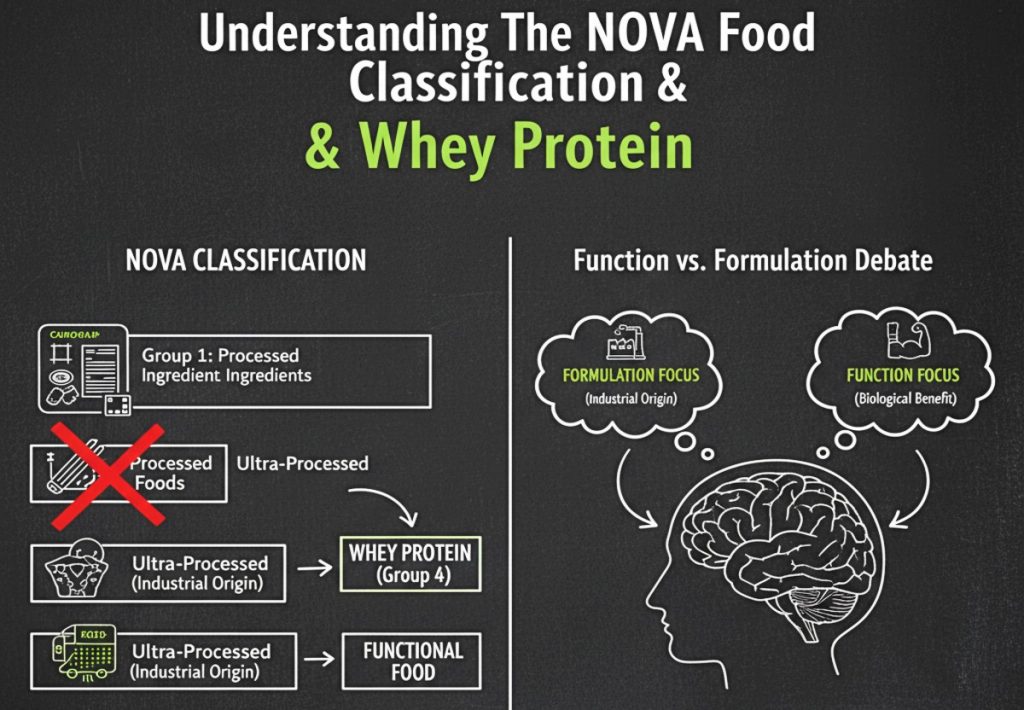
What Does “Ultra-Processed” Really Mean?
The term “ultra-processed food” (UPF) has become a hot topic in nutrition. A recent comprehensive database of 50,000 foods showing the prevalence of ultra-processing found that 73% of the U.S. food supply is ultra-processed, often cheaper than minimally processed options but nutritionally limited.
Ultra-processed foods are typically “industrial formulations” made from oils, starches, sugar, flavor enhancers, and additives. This is similar to how certain nutrients are often misunderstood in isolation. Salt, for example, is essential to human physiology, yet it becomes problematic mainly because of its heavy presence in these industrial systems. As explained in Is Salt Actually Bad for You? The Truth About Sodium and Health, the issue is not salt itself, but how industrial food systems concentrate and overuse it.
Is Whey Protein an Ultra-Processed Food?
Yes—but context matters.
Experts like Dr. Adam explain that while whey protein is technically ultra-processed, it doesn’t fall into the same “junk” category as sugary snacks or ready-to-eat meals. Its formulation is designed to deliver protein efficiently, not just calories.
- It may contain some emulsifiers, sweeteners, or anti-caking agents.
- Its purpose is nutritional, not hyper-palatable or cheap filler.
Protein powders are functional foods, meant to supplement your diet rather than replace whole foods.
The Specialist’s Nuance: The “Function over Formulation” Debate
The Nuance: Functional nutrition specialists debate whether the NOVA classification (which defines ultra-processed foods) is fair toward supplements. The critique is that it focuses on industrial origin but ignores biological function.
Expert Tip: A whey protein with only 3 ingredients (protein, lecithin, and stevia) is technically ultra-processed, yet metabolically superior to a “natural” boxed juice loaded with fructose. Do not fear processing that isolates nutrients; fear processing that adds empty calories.
Choosing Your Whey: Focus on Quality
Not all protein powders are created equal. When selecting a whey or other protein supplement, pay attention to what comes with it.
Look for the “Big Three” offenders:
- Excessive gums
- Artificial dyes
- High-intensity sweeteners
The shorter the ingredient list, the closer the powder stays to its functional purpose: pure protein.
Other practical tips:
- Use whey as a supplement to your regular diet.
- Avoid relying on it as your sole protein source—whole foods provide additional nutrients like fiber, vitamins, and minerals.
- Check labels for sugar content, serving size, and additives.
Benefits of Whey Protein
Despite being ultra-processed, whey offers several advantages:
- Supports muscle growth: Rich in all nine essential amino acids, especially leucine.
- Promotes lean body mass: Helps preserve muscle during weight loss.
- Quick digestion: Ideal post-workout for fast protein absorption.
- Potential health benefits: May aid in lowering blood pressure and supporting recovery.
Plant-based options (pea, soy) are also available for those avoiding dairy, though absorption rates and amino acid profiles differ slightly.
Risks and Considerations
While whey is generally safe, some cautions apply to ensure it remains a beneficial part of your routine:
- Additives: Some powders contain sweeteners, flavorings, and stabilizers that may affect digestion or gut microbiome balance.
- Overconsumption: Excessive protein intake can strain kidneys in individuals with pre-existing conditions.
- Balance: Whole foods provide essential nutrients beyond protein that powders simply cannot replicate.
A recent 2024 study published in the National Institutes of Health (PMC) found that while protein-enriched ultra-processed foods can affect energy balance positively, overconsumption may still occur. This highlights the need for mindful use—treating whey as a precision tool rather than a free pass for unlimited calories.
FAQ – Whey Protein Edition
Q: Is all protein powder bad for you?
A: No. While technically ultra-processed, whey protein is a functional food designed to supplement your diet—not to displace whole foods. Choose minimal-additive options for best results.
Q: Can I replace meals with protein shakes?
A: Not recommended. Protein powders supplement your intake; they don’t replace the nutritional variety of whole foods.
Q: Are plant-based powders as effective as whey?
A: They can be, though absorption and amino acid profiles differ. Combining plant sources like pea and rice can provide a complete profile.
Q: How much protein do I really need?
A: Most adults need ~0.8g per kg body weight, while active individuals may need 1.2–2.0g per kg. Whey can help reach these goals, especially post-workout.
Q: Can ultra-processed foods ever be healthy?
A: Some minimal processing is beneficial (e.g., pasteurization, freezing). The problem arises with hyper-palatable, nutrient-poor, heavily engineered foods.
Key Takeaway
Whey protein is technically ultra-processed, but its purpose is functional, not harmful, provided you choose high-quality powders and use them sensibly. Think of it as a tool in your nutritional toolkit.And just like cooking whole foods, over-processing can reduce quality. For instance, marinating steaks overnight with garlic can sometimes diminish flavor and nutrients—so both in your kitchen and your supplement routine, balance and care matter.
