I grew up hearing my mom scream, “Don’t put that hot pot in the fridge! You’ll break it!” For years, I dutifully left my leftovers steaming on the counter for hours, thinking I was protecting my appliance and my electric bill. But after diving into food microbiology and thermodynamics, I realized I wasn’t saving my fridge—I was basically throwing a massive party for Salmonella and Staphylococcus aureus.
I decided to put this “old school” kitchen wisdom to the test against modern thermodynamics. Here is what actually happens when you freeze hot food, and the one specific mistake that could actually ruin your meal—and no, it’s not the electricity cost.
Expert Note: This article is based on food safety guidelines from the USDA and FDA. Our culinary methodology incorporates thermodynamics and food microbiology to ensure safe preservation practices.
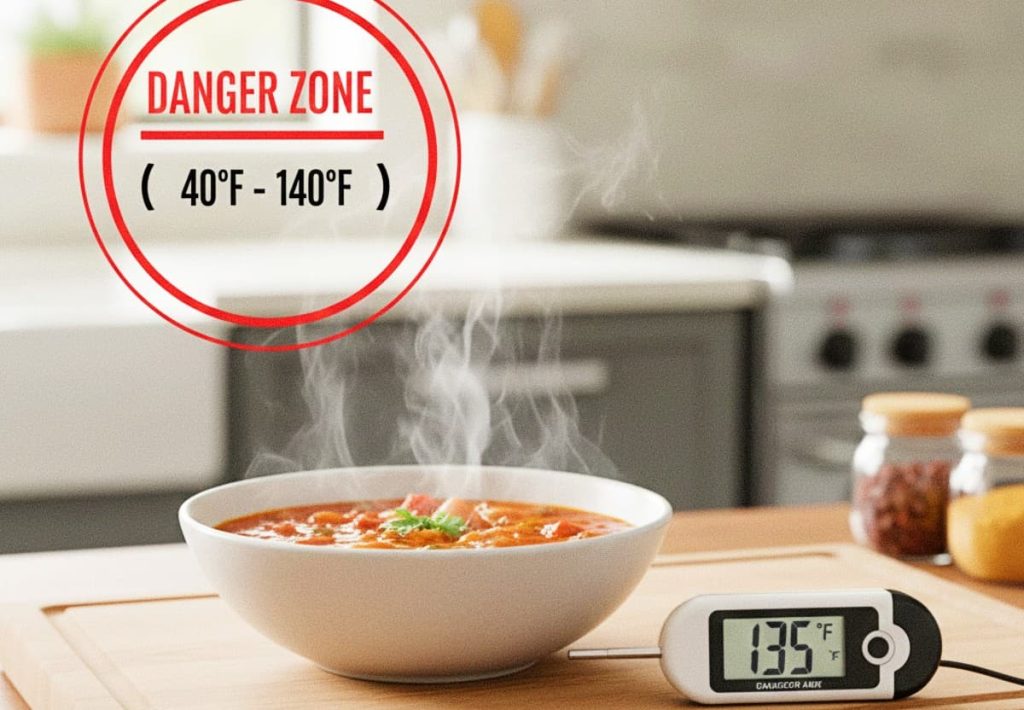
1. Why Food Spoils at Room Temperature
Leaving cooked food out for too long is the main cause of contamination. Between 40°F and 140°F (5°C – 60°C), bacteria multiply rapidly, contaminating your food. This range is called the danger zone, as confirmed by food safety experts from the USDA and FDA.
Tip: Never leave hot or warm food at room temperature for more than 2 hours (or 1 hour on hot days above 90°F / 32°C). For more on how temperature affects food safety, check this detailed guide on storing hot food in the fridge by experts who debunk common myths about appliances and energy costs.
2. Myths About Putting Hot Food in the Fridge or Freezer
Many people believe that placing hot food in the fridge or freezer damages the appliance or spikes electricity bills. Modern frost-free refrigerators are designed to handle hot food safely. The extra energy cost is minimal—about $0.10–$0.20 per day if done daily. The real problem is letting food cool for hours at room temperature, which allows bacteria to thrive. Refrigerating or freezing quickly is the correct way to preserve food.
3. How to Cool and Store Hot Food Safely
Quick Cooling Methods Divide into smaller portions: more surface area allows heat to escape faster. Preparing your containers and portions before you even start cooking is a key part of mise en place, which helps you stay organized and significantly reduces food waste.
4. Freezer Burn and Proper Packaging
Freezer burn happens when air contacts the food, forming ice crystals that dry it out. It’s not dangerous but affects taste and texture. Prevention: Use airtight containers or freezer bags. Freeze in small portions to accelerate freezing. Do not stack items until fully frozen.
5. Safe Thawing
In the fridge: safest method; plan ahead for larger items. Cold water: place food in a sealed plastic bag and change the water every 30 minutes. Microwave: use defrost function and cook immediately afterward. Avoid thawing at room temperature, as it puts food back into the danger zone.
6. Refreezing and Quality
It is safe to refreeze food thawed in the fridge, but quality may be affected. Do not refreeze food left out at room temperature for more than 2 hours. Cooked leftovers can be refrozen after cooking. Expert Tip: When you’re ready to eat your frozen leftovers, using an air fryer is one of the best ways to restore their original crispy texture. Check out our complete guide on using air fryers safely to get the most out of your meals.
7. Special Situations
Power outages: If ice crystals remain or the food is 40°F (5°C), it’s safe to use or refreeze. Outdoor freezing: Exposing food to outdoor cold (snow) can lead to uneven thawing; don’t rely on this. Cans and eggs: Frozen cans may burst; eggs should not be frozen in their shells if cracked.
8. Trusted Tips From Food Safety Experts
According to the USDA, freezing food at 0°F (-18°C) stops bacteria growth but does not kill microbes—thawed foods must be handled with care. Experts also emphasize: Rapid freezing preserves texture and flavor by preventing large ice crystal formation. Blanch vegetables before freezing to maintain color and nutrients. Use airtight packaging to prevent freezer burn and nutrient loss.
Conclusion
Freezing hot food does not damage your fridge or drastically increase your electricity bill. The real risk is leaving food at room temperature, which allows bacteria to multiply. By using quick cooling, proper packaging, and safe thawing, you ensure: Food safety Preservation of taste and texture Retention of nutrients Freezing is one of the best ways to store food. Follow these expert-backed methods, and your meals will stay fresh and healthy for weeks or even months.
Frequently Asked Questions
Q: Can you put hot food directly in the fridge or freezer? A: Yes. Modern refrigerators and freezers are designed to handle hot food safely. The real risk is leaving food at room temperature for too long, where bacteria grow rapidly.
Q: Will putting hot food in the fridge damage the appliance? A: No. Modern frost-free refrigerators can handle the temperature change. Any increase in energy use is minimal compared to the food safety risks of improper cooling.
Q: Why is room temperature so dangerous for cooked food? A: Between 40°F and 140°F (5°C–60°C), bacteria multiply quickly. This “danger zone” is where most foodborne illnesses begin if food is left out too long.
Q: How long can hot food sit out before refrigerating? A: No more than 2 hours at room temperature, or 1 hour if the environment is hotter than 90°F (32°C).
Q: Should food cool completely before freezing? A: It’s best to cool food to around 40°F (5°C) before freezing to prevent warming nearby frozen items. However, this cooling should happen in the fridge, not at room temperature.
Q: What’s the fastest way to cool hot food safely? A: Dividing food into smaller portions, stirring liquids, and using an ice bath are the most effective methods to move food quickly out of the danger zone.
Q: Is freezer burn dangerous? A: No. Freezer burn affects texture and flavor, not safety. Proper airtight packaging prevents it.
Q: Can you refreeze food after thawing? A: Yes, if it was thawed safely in the fridge and not left at room temperature. Some texture or quality loss may occur.
Q: What’s the safest way to thaw frozen food? A: Thawing in the refrigerator is the safest method. Cold water and microwave thawing are also safe if done correctly and followed by immediate cooking.
Q: Does freezing kill bacteria? A: No. Freezing stops bacterial growth but doesn’t kill microbes. Once thawed, food must still be handled and cooked properly.
Q: Is freezing one of the best food preservation methods? A: Yes. When done correctly, freezing preserves safety, nutrients, flavor, and texture better than many other storage methods.
