If you follow the wellness world on social media, you’ve likely encountered the “Seed Oil Apocalypse.” The term “hateful eight” is frequently used by influencers to describe oils like soybean, corn, and canola, labeling them as toxic agents that drive systemic inflammation and the modern obesity epidemic.
But what does the peer-reviewed science actually say? The answer is clear: the modern debate around seed oils vs fruit oils is often fueled by a fundamental misinterpretation of clinical evidence. To optimize your health and your kitchen, you need to understand how these fats operate at a molecular level.
The Inflammation Myth: Theory vs. Clinical Reality
The core argument driving the anti-seed-oil movement is that Omega-6 fatty acids (predominantly found in seed oils) are inherently “pro-inflammatory” because they convert into arachidonic acid in the body.
What the Human Trials Show
However, as highlighted in a seminal, large-scale review by Dr. Matti Marklund and an international team of colleagues, this theory is a reductionist generalization. While it may occur in isolated in vitro (test tube) models, it fails to translate to the complex environment of the human body.
Randomized controlled trials consistently demonstrate that dietary intake of linoleic acid (the primary Omega-6 in seed oils) does not increase systemic inflammatory markers in humans. In fact, modern researchers looking at the evidence behind seed oils health effects point out that these clinical data associate PUFAs with lower LDL cholesterol and significantly improved long-term cardiovascular outcomes, debunking the internet anxiety surrounding these cooking fats.
Guilt by Association: The Omitted Variable in Modern Diets
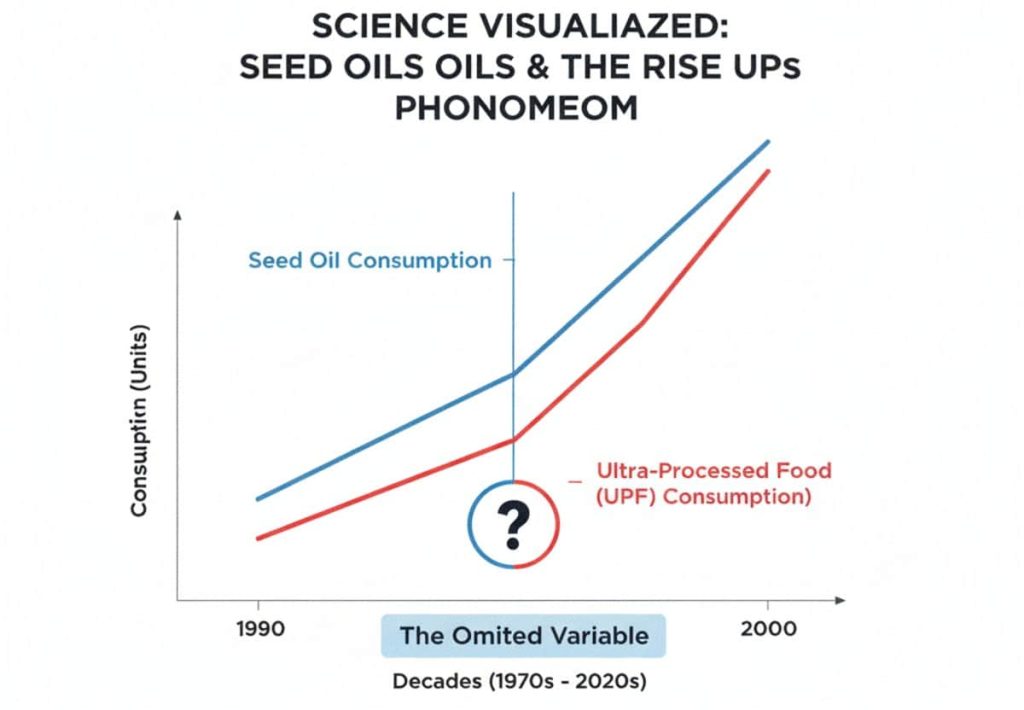
Why is public perception so profoundly negative if the clinical data is neutral or positive? Dr. Christopher Gardner of Stanford University points to a classic epidemiological phenomenon known as the “omitted variable.”
The Ultra-Processed Food Connection
The historical rise in global seed oil consumption has directly paralleled the explosion of commercial ultra-processed foods (UPFs).
The biological problem isn’t the splash of soybean oil you use at home to stir-fry fresh vegetables. The problem is the industrial bag of chips or the commercial fast food item that contains that oil alongside massive doses of refined sodium, added sugars, artificial chemical additives, and absolutely zero dietary fiber. Blaming a single cooking oil for the severe metabolic consequences of an ultra-processed lifestyle is a classic case of misplacing scientific blame.
Seed Oils vs. Fruit Oils: Deep-Diving the Profiles
To maintain Nutrideep’s strict standards of scientific integrity, we must look at the direct biochemical breakdown when comparing seed oils vs fruit oils. They serve entirely different functions in both human metabolism and culinary arts.
The Seed Oil Profile
Oils derived from seeds (such as Canola, Soybean, and Sunflower) are exceptionally high in Polyunsaturated Fatty Acids (PUFAs). These oils are highly effective tools for lowering total cardiovascular risk profiles when used as a direct, conscious replacement for heavy saturated fats like commercial butter, lard, or tallow.
The Fruit Oil Profile
Oils extracted from fruits (such as Extra Virgin Olive Oil and Avocado Oil) are rich in Monounsaturated Fatty Acids (MUFAs), specifically oleic acid. While refined seed oils are perfectly safe, they lack the dense concentration of natural polyphenols found in cold-pressed fruit oils. These unique plant-derived antioxidants provide specific, targeted anti-inflammatory benefits that many health-conscious consumers are actively looking for.
Dietary Fats Comparison Matrix
| Dietary Category | Core Nutritional Profile | Scientific Consensus | Best Kitchen Use Case |
| Refined Seed Oils | High PUFA (Linoleic Acid) | Neutral/Beneficial: Lowers LDL; no link to systemic inflammation in humans. | High-heat cooking (sautéing, stir-frying, baking) |
| Fruit Oils (EVOO/Avocado) | High MUFA (Oleic Acid) | Highly Beneficial: Polyphenol-rich; superior cellular antioxidant profile. | Raw dressings, low-heat finishing, light sautéing |
| Saturated Fats (Butter/Lard) | High Saturated Fatty Acids | Caution Advised: Increases LDL; replacing with liquid plant oils improves heart health. | Occasional use, structural baking |
| Ultra-Processed Foods | Complex Synthetic Mixture | Highly Harmful: Overloaded with sugars/sodium; primary driver of metabolic disease. | Strictly Avoid / Limit |
Practical Culinary Application: How to Navigate the Oil Aisle
The clinical science is clear on chemical safety, but from a chef’s perspective, not all lipids perform the same way under structural stress. When choosing between seed oils vs fruit oils for daily meal preparation, you must understand that the molecular composition dictates how a fat reacts to heat. If you want to optimize your home kitchen for both biological health and culinary performance, follow these three foundational rules:
Rule 1: Stability for High-Heat Cooking
Molecular stability matters when applying heat. Refined plant oils like sunflower, grapeseed, or high-oleic canola are excellent choices for searing, roasting, or stir-frying. They possess a high smoke point and resist molecular breakdown and oxidative stress much better than many unrefined or saturated fats when exposed to extreme kitchen temperatures.
Rule 2: Prioritize Polyphenols for Cold Uses
Extra Virgin Olive Oil (EVOO) and unrefined avocado oil contain delicate polyphenols. These unique, health-boosting antioxidants degrade and evaporate under intense heat. To maximize their specific anti-inflammatory benefits, use fruit oils primarily as “finishing” agents—drizzled cold over salads, raw vegetables, or added to dishes after turning off the stove.
Rule 3: The Crucial Rule of Context
When you are dining out at restaurants, the presence of a seed oil isn’t the underlying problem—it’s the industrial context. Commercial deep fryers often reuse the exact same vat of oil for days or weeks at high temperatures. This prolonged exposure leads to thermal degradation and the creation of Advanced Oxidation Products (AOPs). Focus on reducing the frequency of eating out rather than obsessing over the type of oil used in your home-cooked meals.
Safety First: The Nutrideep Integrity Warning
When analyzing the practical kitchen impact of seed oils vs fruit oils, ensuring product quality is vital. If you are paying a premium price for “clean” or cold-pressed oils, do not let clever marketing packaging deceive you. If a brand cannot point to transparent extraction standards or sustainable sourcing practices, take their health claims with a grain of salt.
Sourcing truly clean, non-oxidized fats is only half the battle for your metabolic health. If you are investing your hard-earned money into high-tier ingredients, you must ensure your everyday cooking gear isn’t introducing toxic risks into your family’s food.
Be sure to read our complete analysis on air fryer peeling toxic risk guide to check if your kitchen appliances are compromised. Scratched non-stick coatings and flaky industrial linings can leach synthetic compounds directly into your hot oils, completely undoing the benefits of a clean, home-cooked diet.
FAQ: Uncovering the Truth About Everyday Cooking Oils
Are seed oils toxic because of the chemical solvents (like hexane) used in extraction? Industrial extraction does utilize solvents like hexane, but the final product is rigorously refined, washed, and tested. Global regulatory bodies set incredibly strict safety limits ensuring trace solvents do not reach consumers at active levels. While cold-pressed variants are structurally cleaner, evaluating the refinement process of seed oils vs fruit oils shows that commercial options are not inherently toxic.
Does the Omega-6 to Omega-3 fatty acid ratio really matter for human health? While the ratio is a popular target for wellness influencers debating seed oils vs fruit oils, the consensus among major global health organizations is different. Data shows that focusing on increasing your absolute intake of whole-food Omega-3 fatty acids (like wild fatty fish) is vastly more effective for your health outcomes than obsessing over the background ratio of Omega-6s in your daily cooking oil.
Should I completely stop using sunflower oil in my kitchen? No. If you have a bottle of refined sunflower oil in your pantry, use it confidently for high-heat baking or sautéing. When balancing your usage of seed oils vs fruit oils, remember that the chemical danger is not the oil itself in normal home cooking; the real danger is the repeated, high-heat industrial oxidation that occurs inside commercial fast-food deep fryers.
Why do my health symptoms improve dramatically after I “quit” seed oils? When people cut out seed oils, they naturally stop eating fast food, commercial cakes, fried appetizers, and industrial chips. When looking at the real baseline differences between seed oils vs fruit oils, you feel significantly better because you have removed a massive mountain of refined sodium, added sugars, and processed carbohydrates from your daily routine—not because you eliminated a single teaspoon of domestic soybean oil from your fresh home stir-fry.
Culinary & Health Disclaimer: The dietary and food science insights provided by Nutrideep are for educational and consumer information purposes. Individual lipid responses can vary based on genetics, baseline metabolic health, and overall dietary patterns. Always consult a qualified healthcare professional or registered dietitian before making drastic changes to your nutritional intake.
