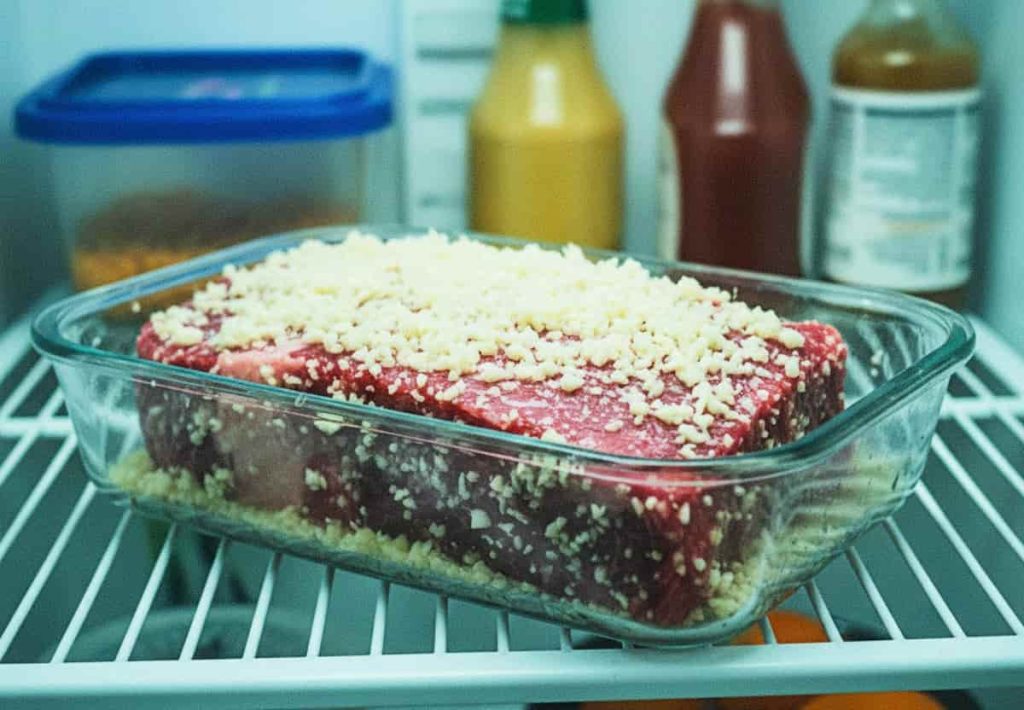
Season steak with garlic overnight might seem like a great way to infuse flavor, but in my years in the kitchen, I’ve seen this ruin more expensive cuts than almost any other mistake. While the intention is to “absorb more flavor,” the reality of thermodynamics and food chemistry says otherwise.
Why Garlic Marinades Work Against the Meat
The main problem when you season steak with garlic overnight isn’t the garlic itself—it’s the chemical reaction that occurs during those long hours in the fridge. Most people don’t just use garlic; they add salt or acidic components.
The Osmosis Effect and Moisture Loss
Salt pulls moisture out of the steak through osmosis. When you let the meat sit for 12 to 24 hours, those natural juices leak out and don’t return. You end up with a steak that is quietly dehydrating before it even touches the pan.
The Burnt Garlic Problem
Garlic has a very low tolerance for high heat. If you season steak with garlic overnight, those tiny pieces of minced garlic become embedded in the surface of the meat.
When you go for that essential high-heat sear, the garlic burns almost instantly. Burnt garlic is notoriously bitter and harsh, which competes with and ultimately loses to the natural richness of the beef.
The Specialist’s Nuance: The Allicin Factor
As a culinary specialist, I always point to the Allicin factor. Allicin is the compound responsible for that classic garlic punch, but it is highly volatile.
When you mince garlic and let it sit on meat for hours, the allicin breaks down and can develop a sharp, metallic aftertaste. This is why a steak that was seasoned too early often tastes “off” or flat. By adding lightly crushed whole cloves at the end of cooking, you release aromatic oils into the butter without releasing these bitter enzymes.
How Steakhouses Actually Use Garlic
If you want that “sweet” roasted garlic aroma found in top-tier steakhouses, you need to change your timing. Instead of trying to season steak with garlic overnight, use the butter-basting technique:
- Sear the meat: Use only salt and pepper initially.
- Lower the heat: Once the crust is formed, drop the temperature.
- Add the aromatics: Add butter, fresh thyme, and crushed garlic.
- Baste: Spoon that flavored butter over the steak as it finishes.
When Does Overnight Marinating Actually Work?
There is a debate among chefs about tougher, secondary cuts (like flank or skirt steak). In these specific cases, a marinade can help tenderize. However, for a Ribeye or New York Strip, you should never season steak with garlic overnight.
A Better Way to Build Flavor
Instead of the common mistake to season steak with garlic overnight, a simpler method consistently produces better results and preserves the integrity of the meat. If you frequently prepare meals ahead of time, understanding how flavors react is crucial.
You can see a clear example of the correct method in this pan-seared steak technique, where garlic is added only at the end. This professional approach ensures the highest quality results without the risk of bitterness that occurs when you season steak with garlic overnight. By focusing on timing rather than long marination, you protect both the moisture and the delicate aromatics of the garlic.
When Garlic Actually Works
Garlic shines when it’s added late—not early. The most reliable approach is to introduce garlic during the final stage of cooking, when the steak is nearly done. At this point, heat is lower, and fat has already rendered into the pan, preventing the garlic from scorching.
While some guides discuss how to marinate steak overnight for tougher or thinner cuts like flank steak, when it comes to high-quality prime cuts and garlic, timing is everything to avoid bitterness. Garlic gently infuses the butter and cooking juices instead of burning. That flavored fat then coats the steak, delivering aroma and taste without a metallic aftertaste.
This is the same principle used in classic butter-basting techniques found in professional kitchens. If you frequently prepare your meals ahead of time or do intensive meal prep, understanding how flavors and temperatures react over time is as crucial as knowing how to safely freeze and store hot food without compromising the quality and safety of your ingredients.
FAQ: Seasoning Steak with Garlic
Is garlic bad for steak?
Timing is Everything
No, garlic is a steak’s best friend, but only when added late. Adding it too early leads to scorching and a loss of aromatic complexity.
Does garlic burn easily on a grill?
High Heat Risks
Yes. Raw minced garlic will burn at the high temperatures required for a proper steak crust, turning your expensive dinner bitter.
Conclusion Letting your steak sit overnight in garlic doesn’t unlock flavor—it strips it away. Once you treat garlic as a finishing element rather than a marinade, your steak will stop tasting muted and start tasting like a masterpiece again.
Medical Disclaimer: The information provided on The NutriDeep is for educational purposes only and does not substitute professional medical advice or food safety certification. Culinary techniques involving raw meat and high-heat cooking should be performed with caution. Always consult food safety guidelines when storing or preparing meat to prevent foodborne illness.
