We’ve all been there: standing over the sink, scrubbing a “non-stick” pan that was a miracle worker just six months ago. Now, it’s a stained, sticky mess that makes a simple omelet feel like a battle. Most of us just assume we did something wrong, but the reality is simpler: these pans just aren’t built for the way people actually cook. Understanding the balance between non-stick pan safety and performance is the first step to reclaiming your kitchen.
The Heat Trap: Why 500 Degrees Changes Everything
The dirty secret of the cookware industry is that the coatings we love were never meant for high heat. They rely on a polymer called PTFE—essentially a thin layer of plastic engineered to be slippery. It’s fantastic for eggs on low heat, but the modern stove is a beast that these materials can’t handle.
The Thermal Breakdown of Polymers
The moment you leave that pan to preheat while you prep ingredients, you’re likely pushing it past its limit. Once a coated pan hits roughly 500°F, the material starts to break down. It doesn’t happen with a bang; it starts with a faint, chemical smell. That’s the surface literally degrading. According to technical safety standards, exceeding this thermal limit is the primary cause of premature surface failure and concerns regarding non-stick pan safety and performance.
The “Gray Meat” Problem: Why Weight Matters
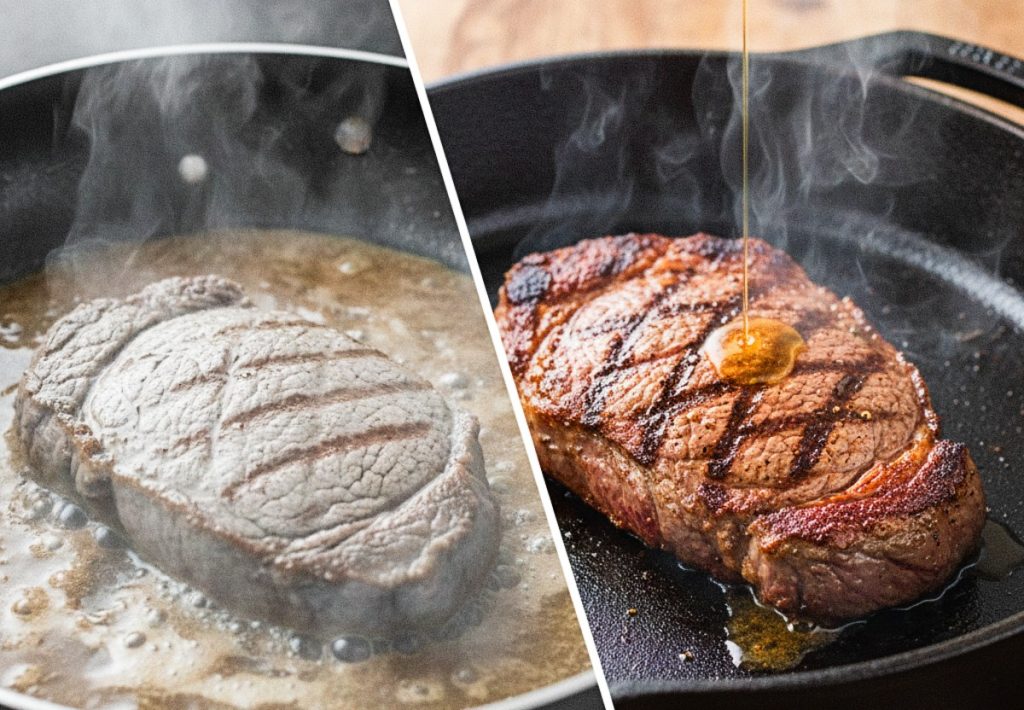
If you’ve ever wondered why your steaks look gray and sad em vez de terem aquela crosta profunda, the culprit is likely your pan’s weight. Most non-stick pans are made of thin, stamped aluminum. It’s light, cheap, and has zero heat stamina.
Heat Storage: Physics vs. Marketing
Think of it like a battery. A heavy cast iron or tri-ply stainless steel pan stores a massive amount of energy. When a cold piece of meat hits that hot metal, the pan barely flinches. It keeps searing. In a thin, lightweight pan, the temperature crashes instantly. Instead of searing, the meat ends up boiling in its own moisture. This is physics, not magic.
Flavor Purity: The Reaction You Didn’t See Coming
There’s another issue that rarely gets mentioned: reactivity. Every time you cook, the metal in your pan is talking to your food. This interaction is a huge factor when comparing non-stick pan safety and performance against traditional materials.
Acidic Reactions and Metallic Leaching
If you’ve ever simmered a tomato sauce and noticed a metallic “off” taste, you’ve experienced reactivity. Damaged coatings and cheap aluminum can leach into acidic ingredients like lemon, wine, or vinegar.
The “Fond” Factor
Stainless steel allows for the development of “fond”—those delicious, caramelized brown bits that stick to the bottom and make the base for a world-class sauce. You can’t get that on a non-stick surface; the food just won’t bond.
Ending the Cycle of Disposable Cookware
Switching to “real” metal is about more than just better food; it’s about ending the two-year cycle of buying and tossing pans. When you look at the hidden risks of using plastic in the kitchen, it becomes clear that iron and steel are the only tools built to last.
- Cast Iron: You don’t buy the coating; you build it yourself. By baking oil into the metal, you create a natural, carbon-based surface.
- Stainless Versatility: It’s the workhorse. It doesn’t rust, it doesn’t react, and you can scrub it with steel wool without a second thought.
FAQ: Straight Talk for the Home Cook
How does heat impact non-stick pan safety and performance?
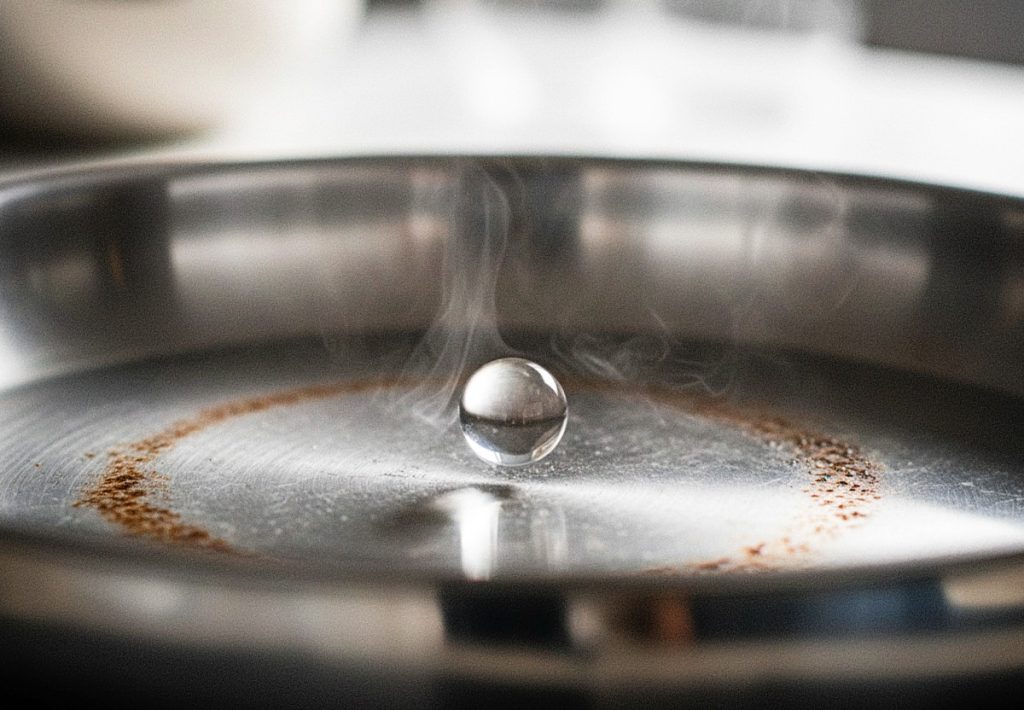
Using high heat on a non-stick pan is the fastest way to kill the surface. High heat causes the PTFE coating to off-gas and degrade, which is why medium-low heat is the only safe zone for coated cookware.
Can I really use soap on cast iron?
Yes. Modern dish soap is fine. Just don’t put it in the dishwasher, and dry it immediately on the stove so it doesn’t rust.
Is cast iron better for my health than non-stick?
It’s definitely better than eating flakes of synthetic coating. Plus, iron pans can add a tiny bit of dietary iron to your food, which is a significant win for non-stick pan safety and performance comparisons.
The Verdict: Stop Buying, Start Owning
Moving away from the “frictionless” myth takes a little bit of practice. But the payoff is a kitchen that feels permanent. A good skillet shouldn’t be a consumable product that you replace every couple of years. It should be an heirloom.
Disclaimer: This content is for educational purposes regarding culinary tools and safety. Always ensure adequate ventilation when cooking at high temperatures and consult manufacturer guidelines to maintain non-stick pan safety and performance.
