The microwave oven is a staple of modern life, yet it remains one of the most debated appliances in the kitchen. For decades, it has been caught between two extremes: hailed as a technological miracle for its speed and vilified as a source of “dangerous radiation.” Clinical evidence, however, suggests the reality is far more nuanced. The danger does not lie in the electromagnetic waves themselves, but rather in the interaction between heat, container materials, and food structure.
The Physics of Safety: Radiation vs. Reality
A common source of anxiety is the term “radiation.” It is critical to distinguish between ionizing radiation—the high-frequency energy capable of damaging DNA, such as X-rays—and the non-ionizing radiation emitted by microwaves. Microwave ovens operate using low-frequency electromagnetic waves that cause water molecules to vibrate and create heat through friction.
According to the World Health Organization (WHO) guidelines on electromagnetic fields, these ovens are designed with metal shielding and screen mesh specifically to contain these waves. Provided the appliance door seals correctly and the unit is not damaged, leakage is negligible. From a physics perspective, the heat generated is no different than the heat produced by a conventional oven or a skillet; the only difference is the method of energy transfer.
The Real Risk: Leaching and Chemical Migration
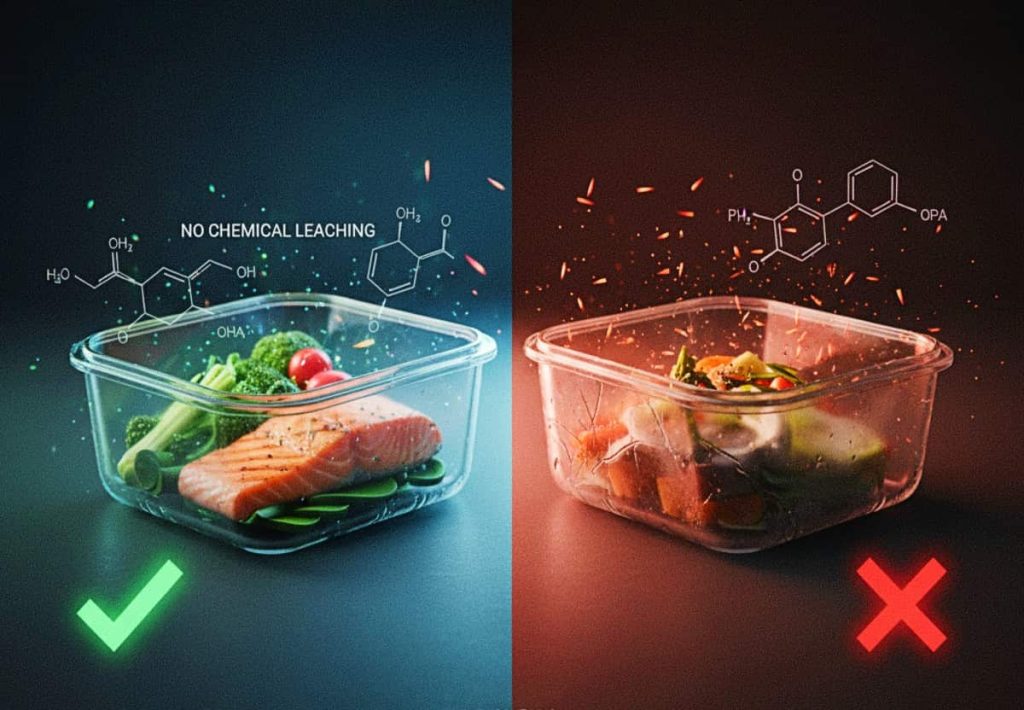
While the waves themselves are safe, the vessels used to contain the food are often not. The primary health concern involves the use of plastic containers. When plastics are exposed to heat, additives such as phthalates and Bisphenol-A (BPA) can degrade and leach directly into food. These compounds are known endocrine disruptors, capable of mimicking hormones and potentially interfering with metabolic and reproductive health.
Even containers labeled “microwave-safe” should be approached with caution. Over time, physical wear, scratches, or warping can increase the likelihood of chemical migration. To understand why this trade-off for convenience is often a dangerous biological gamble, read our full report: Forever Chemicals: Is Your Convenience Worth the Biological Cost?.
Nutritional Integrity and Food Safety
Contrary to the belief that microwaves destroy food quality, data suggests that shorter cooking times—facilitated by high-speed heating—often preserve heat-sensitive antioxidants and vitamins better than prolonged exposure in a conventional oven or boiling water. However, the convenience of the microwave introduces two specific challenges:
- Uneven Heating: Microwaves do not heat food uniformly. This can create “cold spots” where harmful bacteria may survive, potentially increasing the risk of foodborne illness. Using a rotating turntable and allowing food to sit for a minute after heating helps temperature equilibrium.
- Formation of Harmful Compounds: In some high-starch foods, extreme temperatures can lead to the formation of acrylamide. Additionally, relying on the microwave to cook raw meat can be risky if internal temperatures are not verified.
Specialist’s Nuance: Digestion and Texture
Beyond chemistry, there is an emerging discussion regarding the structural changes in food. Some practitioners suggest that the rapid agitation of water molecules may alter the texture of proteins and fats in a way that differs from traditional slow-heating methods. While definitive human studies on “digestibility differences” are still limited, the anecdotal evidence regarding post-meal satisfaction and digestive comfort suggests that food structure—not just caloric content—plays a role in how the body processes a meal.
FAQ: The Microwave Consensus
Q: Does microwaving destroy the nutritional value of food? A: Generally, no. Because it is a faster method that requires less water than boiling, it often retains more water-soluble vitamins and antioxidants. The key is to avoid overcooking.
Q: Are there plastics that are truly safe to microwave? A: While some are labeled “microwave-safe,” all plastics can potentially degrade over time. Glass or ceramic are the only materials that do not present a risk of chemical leaching under heat.
Q: Why do foods heat unevenly? A: Microwaves target water molecules. Foods with varying water content, density, or shape will absorb energy differently. Stirring or using a rotating plate is essential to ensure a uniform temperature throughout the food.
Q: Is it dangerous to stand near a microwave while it is running? A: No. Radiation intensity drops off drastically with distance. As long as the door is in good working order, standing a few feet away provides an ample margin of safety.
