Peeling garlic is often cited as the most tedious “entry barrier” to home cooking. Between the sticky papery skins and the lingering odor under fingernails, it is a task many seek to bypass. While the “shake in a jar” or “knife smash” methods are popular, discovering how to use a microwave garlic peel technique has emerged as the most technologically efficient option—though it comes with a specific chemical trade-off that every cook should understand.
The Science of the “Steam Bond”
The microwave garlic peel method works through a simple thermodynamic principle. Garlic’s papery skin is composed of cellulose and lignin, designed to trap moisture within the bulb. According to the science desk at NPR (KUNC), when exposed to microwave radiation, the water molecules trapped in the thin space between the clove and the skin agitate and turn into steam.
This localized steam pressure acts as a biological lubricant, breaking the adhesive bond between the clove and its “wrapper.” As the internal moisture expands, the skin loosens and the clove practically slides out of its sheath. For maximum efficiency, experts suggest trimming the hard root end of the cloves before heating, providing a clear exit path for the clove to slide through.
The Flavor Trade-off: The Allicin Factor
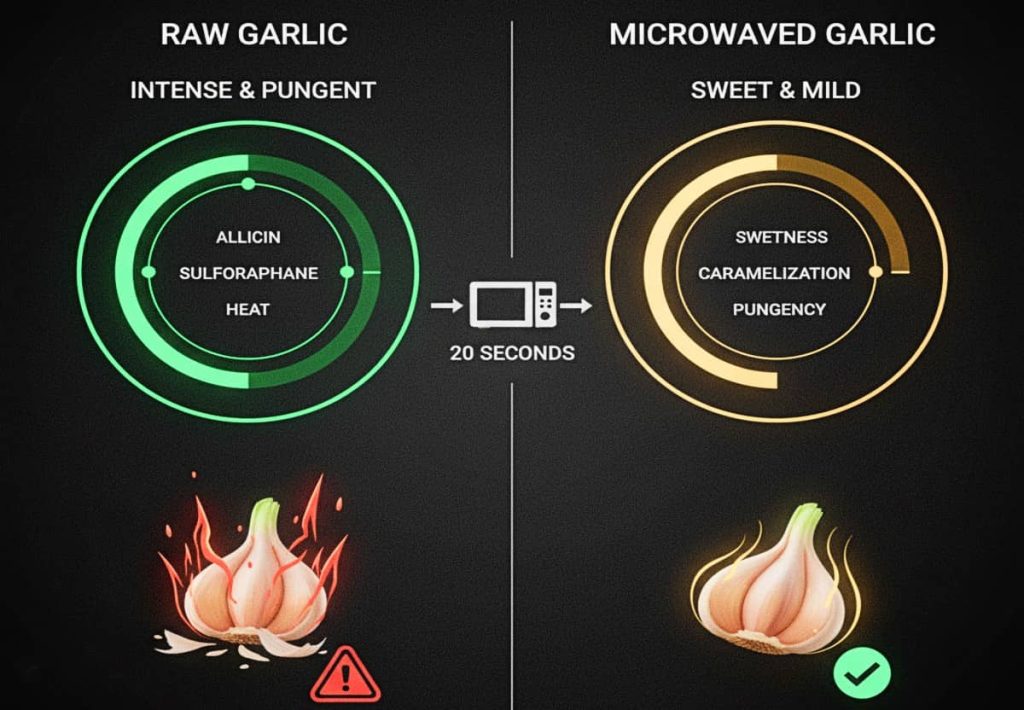
While using the microwave is a masterclass in convenience, executing a microwave garlic peel significantly alters the garlic’s chemical profile. To understand why, we must look at Allicin, the compound responsible for garlic’s characteristic “bite” and aroma.
According to food chemistry insights from the Oregon State University Linus Pauling Institute, Allicin is not present in whole, intact garlic; it is created when the enzyme allinase reacts with alliin after the cells are ruptured (by cutting or crushing). However, research demonstrates that allinase is highly heat-sensitive. Even a brief 20-second exposure to microwave energy can partially inactivate this enzyme, limiting the subsequent formation of these active sulfur compounds.
As a result, microwaved garlic tends to be:
- Milder: The sharp, pungent “kick” is reduced.
- Sweeter: The heat begins to convert starches into sugars, pushing the flavor toward the “roasted” end of the spectrum.
- Softer: The texture changes from brittle to slightly jammy.
Specialist’s Nuance: When to Microwave vs. When to Smash
Because the microwave alters the garlic’s chemistry, its use should be strategic based on the recipe’s requirements. Understanding how to manage these delicate flavor compounds is crucial; for instance, knowing whether to prioritize your aromatics in the pan—as discussed in our guide to Onion or Garlic First? The Science and Technique Behind the Right Order—can be just as important as how you peel them.
Practical Application of the Microwave Garlic Peel
To balance convenience with flavor, you must choose your peeling technique based on your final culinary goal.
Technique Selection Guide
Use the Microwave Method When:
- Prepping 40-clove chicken or large batches.
- Making Garlic Confit (slow oil poaching).
- You need whole, intact slices for aesthetics.
- The garlic will be cooked for a long time in a sauce.
Use the Knife Smash Method When:
- Making Pesto or Aioli (requires raw intensity).
- Making Vinaigrettes or Salad Dressings.
- You want the maximum bioactive and nutrient pungency.
- You are only using 1 or 2 cloves.
Pro-Tips for the Perfect Peel
To master the microwave garlic peel technique without “killing” the flavor, follow these calibrated timings:
- Quantity Control: Microwave 1–3 cloves for only 8-10 seconds. For a full head, go for 20 seconds.
- Avoid the “Steam Bath”: Do not use a damp paper towel unless you intentionally want to steam-cook the garlic. Use a dry plate or paper towel to maintain a drier exterior.
- The Root Cut: Always trim the base first. This allows the steam to push the clove out cleanly without it getting trapped and “mushing” the interior.
FAQ: Microwave Garlic Peel Common Questions
- Does microwaving garlic make it less healthy? A: Heat reduces the activity of the allinase enzyme, which in turn reduces the total yield of Allicin (the main antioxidant compound) produced upon crushing. If you are consuming garlic primarily for its raw antioxidant and wellness properties, the microwave method is not recommended.
- Will my microwave smell like garlic afterward? A: Briefly. However, because the cloves remain mostly intact, the odor is much less than if you were sautéing it. A quick wipe with lemon water easily removes any lingering scent.
- Why is my garlic sticky after microwaving? A: This usually happens if you heated it for too long. The sugars in the garlic begin to leak out and caramelize, creating a sticky residue. Reduce your time by 5 seconds in the next batch.
- Can I freeze the garlic after peeling it this way? A: Yes. In fact, many meal-preppers use the microwave to peel a week’s worth of garlic, then store the cloves in olive oil or airtight containers in the freezer for quick use.
Final Takeaway: Efficiency Without Industrial Sacrifice
The kitchen is a playground of chemical reactions. Reclaiming efficiency with the microwave doesn’t mean ruining your dish, provided you know exactly when to prioritize speed and when to respect the chemistry of raw ingredients.
Medical Disclaimer: This content is for informational and educational purposes only and does not constitute medical advice. Always seek the guidance of a qualified health professional with any questions regarding a medical condition or dietary changes.
