We’ve all been there. You’re halfway through a recipe, the pan is already smoking, and suddenly you realize the garlic isn’t even peeled. You rush, the oil burns, the timing falls apart — and somehow a perfectly good ingredient ends up in the trash.
That’s usually how food waste begins. Not with negligence, but with chaos. Kitchen organization is the first step toward better cooking; as we detail in our guide on whether to put onion or garlic first, timing is everything when it comes to flavor and preventing waste.
The Power of “Mental Clarity” in the Kitchen
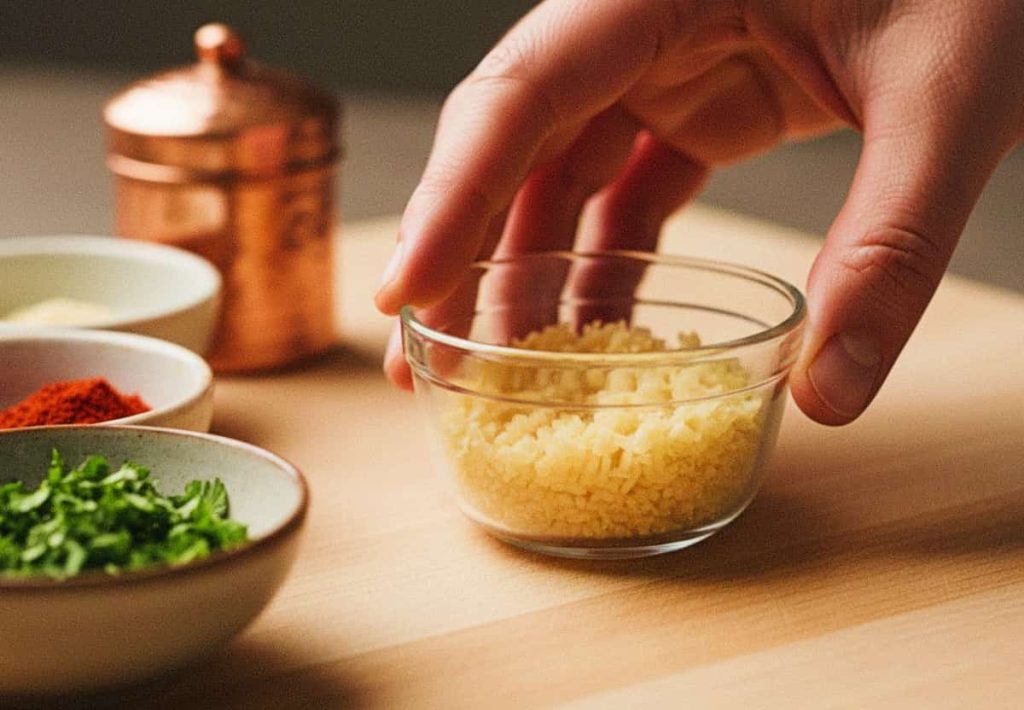
This is where the old French idea of mise en place quietly becomes relevant again — not as a culinary cliché, but as a practical tool for kitchen organization. Mise en place literally means “putting everything in its place,” but in practice, it’s less about neat bowls and more about mental clarity.
As explained in our guide on the key to culinary organization, the habit forces you to slow down before cooking. It requires you to acknowledge what you actually have, what you truly need, and what doesn’t need to be touched at all. This simple pause eliminates a surprising amount of waste.
Historically, the concept gained strength through figures like Auguste Escoffier. His kitchens weren’t efficient because chefs worked faster; they were efficient because mistakes were harder to make when everything was prepped and visible.
The Specialist’s Nuance: Efficiency vs. “Over-Prep”
The Nuance: While mise en place is the gold standard of kitchen organization, there is a quiet debate among modern chefs regarding the risks of “over-preparing.” Some experts argue that chopping everything hours in advance can lead to the oxidation of nutrients and the loss of volatile oils—especially in aromatics like garlic and herbs.
Expert Tip: Use “Just-in-Time” Mise en Place. Organize your tools and wash your vegetables early, but save the actual slicing of sensitive items for the final minutes before they hit the pan. This merges Escoffier’s mental order with maximum nutritional and flavor integrity.
A Clinical Perspective on Waste
In my clinical perspective, the biggest trap isn’t the occasional indulgent meal. It’s the invisible displacement of real food by rushed decisions. When kitchen organization is absent, convenience fills the gap, and convenience almost always generates waste.
Once ingredients are washed, measured, and visible, your behavior changes naturally:
- Portions become more realistic.
- Missing items are noticed early, not mid-recipe.
- There’s less temptation to over-prepare or compensate with excess.
Why Order is About Care, Not Aesthetics
This doesn’t require military precision. It’s often as simple as reading a recipe fully before starting or using what’s already aging in the fridge first. Kitchen organization doesn’t make cooking more rigid — it makes it more forgiving. When cooking feels chaotic, the brain looks for shortcuts. That’s when ingredients are forgotten or thrown away.
FAQ: Kitchen Organization & Waste
1. Does mise en place actually save time?
Yes. By eliminating mid-recipe chaos, you prevent burnt ingredients and avoid “panic messes.” While it uses a few extra prep bowls, the cleaning is often easier than scrubbing a burnt pan.
2. Can I organize a very small kitchen?
Absolutely. In small spaces, kitchen organization is even more critical. You don’t need a vast counter; you just need to clear your workspace and prep ingredients before turning on the heat.
3. How does this reduce grocery costs?
When your pantry is organized, you stop “double-buying” items you already have. You also use fresh produce before it spoils because it’s prepped and visible.
Final Takeaway: Start Before the Heat
Good cooking starts before the stove is even on. By prioritizing kitchen organization, you treat your ingredients with more respect and your wallet with more care.
Medical Disclaimer: The information on The NutriDeep is for educational purposes only. While kitchen organization can reduce stress and improve food quality, please ensure all food handling follows local safety guidelines to prevent foodborne illness.
