We often obsess over what we eat, but the science of 2026 confirms that how we prepare and serve that food is a powerful metabolic lever. Cooking doesn’t just make food palatable—it fundamentally alters its molecular architecture, dictating how quickly your body converts carbohydrates into blood glucose.
Understanding how cooking methods change the structural composition of starches can help you manipulate the glycemic index of your favorite meals. By changing the temperature and preparation timeline, you can turn a high-spike carbohydrate into a steady, slow-releasing energy source.
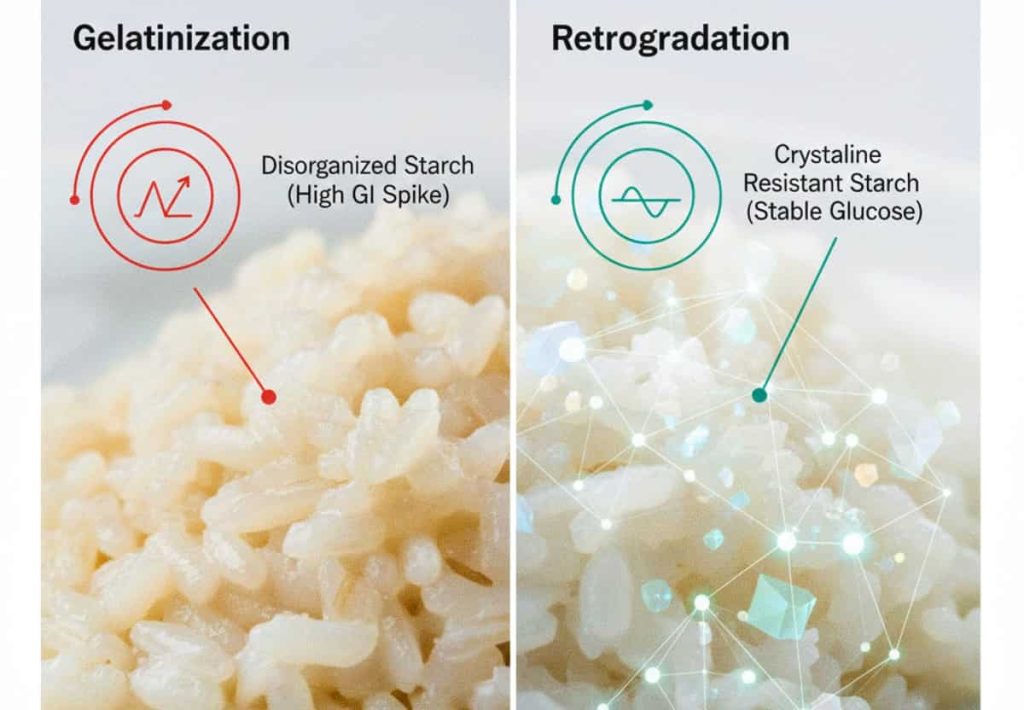
The Mechanism: Gelatinization vs. Retrogradation
To understand how cooking methods change human metabolism, we must look at the two distinct molecular phases that occur when starches are exposed to heat and cold.
The Heat Phase: Gelatinization
When you apply heat and moisture to starchy foods like rice, pasta, or potatoes, you initiate a process called gelatinization. The tightly packed starch granules absorb water and swell, completely breaking down their rigid, native crystalline structure. This cellular expansion makes the glucose chains highly accessible to your digestive enzymes (like alpha-amylase), resulting in rapid digestion and a sharp spike in blood glucose.
The Cold Phase: Retrogradation
However, the “cooling effect” is the exact metabolic inverse. When these cooked, gelatinized starches are cooled to refrigerator temperatures (around 4°C), the disordered starch molecules begin to re-align into a highly ordered, tightly packed crystalline structure known as retrogradation.
This chemical realignment forms Type-3 Resistant Starch (RS3). Because your body fundamentally struggles to break down these crystallized bonds in the small intestine, resistant starch behaves more like prebiotic dietary fiber than a digestible carbohydrate, significantly blunting the overall glycemic response.
Expert Map: The Evidence Hierarchy of Cooking Methods
Different preparation styles yield completely different metabolic results. This matrix illustrates how everyday culinary techniques alter the glycemic response:
| Cooking Approach | Impact on GI / GL | Primary Molecular Mechanism | Best Clinical Use Case |
| Cook-Cool-Reheat | Lowest | Promotes extensive retrogradation; maximizes Type-3 Resistant Starch. | Daily preparation of rice, pasta, and tubers |
| Steaming / Boiling | Lower | Minimizes excessive gelatinization; preserves baseline plant cellular structures. | Fresh vegetables, whole root tubers |
| Baking / Roasting | Higher | Dry, intense heat breaks down complex carbohydrates; increases sugar availability. | Use with moderation for steady energy |
| Refining / Mashing | Highest | Drastically increases surface area; mechanically destroys natural fiber barriers. | Avoid if managing insulin sensitivity |
Key Takeaways from the Literature
The current global evidence base—ranging from clinical crossover trials on commercial pasta to high-tech processing of rice—offers clear, actionable guidance for long-term metabolic management:
The “Reheat” Advantage
A seminal randomized cross-over trial demonstrated that pasta cooked, cooled for 24 hours, and then reheated resulted in a significantly lower Area Under the Curve (AUC) for postprandial blood glucose compared to freshly cooked pasta. The retrograded crystalline structures remain largely intact even after standard kitchen reheating, proving that the metabolic benefits are stable.
The Nuance of Processing
While gentle methods like steaming are generally superior for glucose control, modern agricultural technologies like plasma processing are emerging as industrial ways to manipulate raw starch structures. These innovations aim to lower the baseline glycemic index of staple crops without sacrificing their traditional culinary textures.
The Specialist’s Nuance: The Variety Paradox
Nutritional specialists emphasize that not all starches react identically to temperature shifts. The efficiency of the cooling effect depends entirely on the ratio of two specific starches: amylose and amylopectin.
- High-Amylose Grains: Linear starches (like Basmati rice or traditional durum wheat pasta) retrograde beautifully. The long glucose chains align easily when cooled, producing massive amounts of resistant starch.
- High-Amylopectin Grains: Branched, sticky starches (like short-grain sushi rice or sticky jasmine) resist crystallization. Cooling and reheating is significantly less effective at lowering the glycemic index in these varieties.
The Pro-Tip Metabolic Buffer
To maximize the molecular cooling effect, always choose high-amylose cultivars. Furthermore, pair your reheated carbohydrate with a clean, unrefined fat—such as a light drizzle of extra-virgin olive oil. Starch retrogradation and healthy dietary lipids work in tandem as a powerful “metabolic buffer,” delaying gastric emptying and slowing glucose absorption even further than cooling alone.
Sourcing Integrity: Preparing a Safe, Clean Kitchen
As you optimize your meal preparation timelines to leverage how cooking methods change nutritional values, do not forget the physical tools you are using to store and heat your food.
Leaving your starches to cool in cheap, degraded plastic containers or cooking them in compromised appliances can introduce unwanted synthetic chemicals into your clean diet. Understanding how cooking methods change food chemistry also means controlling your cooking environment.
Before prepping your weekly meals, be sure to audit your kitchen tools using our air fryer peeling toxic risk guide. Ensuring your non-stick cooking baskets and preparation surfaces are free from structural wear is just as vital for cellular health as managing your post-meal blood sugar levels.
FAQ: Navigating Starch Retrogradation and Food Sequencing
Does reheating pasta completely remove the metabolic “cooling effect”? No. While extreme industrial temperatures could melt and reverse retrogradation, standard domestic reheating (such as a microwave or a stovetop pan) is insufficient to break down the crystallized resistant starch. When studying how cooking methods change starch molecular bonds, research proves you fully retain the glycemic-lowering benefits.
Is this structural change limited exclusively to white potatoes? The biochemical principles of starch retrogradation are completely universal. If you want to see how cooking methods change everyday foods, similar glycemic-lowering effects and resistant starch increases are widely documented in sweet potatoes, white rice, brown rice, green lentils, and whole oats.
Does the initial cooking method matter when trying to lower the glycemic index? According to metabolic research, the specific initial method (steaming versus boiling) matters significantly less than the subsequent cooling step. If you look at how cooking methods change carbs over a 24-hour window, cooling the carbohydrates between 4°C to 8°C for 8 to 24 hours successfully initiates the reduction in glycemic index regardless of the starting cooking technique.
How does food sequencing work to protect my insulin levels? Pairing carbohydrates with fiber, fat, or protein acts as a physical “buffer” in the digestive tract. Eating your vegetables or lean proteins before touching your starches slows down gastric emptying. Clinical studies on how cooking methods change postprandial curves show this sequencing trick can reduce the post-meal glucose spike by up to 73%.
Practical Guidance for the Nutrideep Reader
To apply these metabolic insights seamlessly into your busy routine, adopt these three rules:
- Prep Ahead: Cook your rice, pasta, or potatoes 24 hours in advance. Letting them rest in the refrigerator overnight is the single most effective, low-effort lifestyle change you can make to alter how cooking methods change your biological response.
- Mind the Culinary Texture: Avoid overcooking your food. The softer and mishier a grain becomes, the easier it is for your digestive enzymes to rip it apart. Aim for a firm, authentic al dente profile.
- Lead with Fiber and Protein: Always open your meals with greens and clean proteins. This simple behavioral shift keeps your baseline metabolic response perfectly steady.
Metabolic & Health Disclaimer: The nutritional science insights presented by Nutrideep are for educational and consumer information purposes. Glycemic responses can vary dynamically based on individual metabolic health, insulin sensitivity, and physical activity levels. Consult a certified healthcare provider or registered dietitian before altering clinical dietary protocols.
