How can you avoid crying while cutting onions? This is a question that has haunted home cooks for generations. Few kitchen experiences are as universally frustrating as cutting onions. One moment, dinner prep is calm and focused; the next, eyes burn, vision blurs, and tears start flowing — all while handling a sharp knife.
Why Do Onions Make People Cry?
When an onion is sliced, its cells rupture and release an enzyme called alliinase. This enzyme reacts with sulfur-containing compounds, creating a volatile gas that reaches the eyes, reacts with moisture, and forms a mild acid.
The Most Reliable Solution: Lower the Temperature
One of the most effective ways to reduce onion tears is chilling the onion before cutting it. Cold temperatures slow the chemical reactions that produce gases. Refrigerating onions for 30 minutes significantly reduces the irritant.
So, how can you avoid crying while cutting onions when you’re in a rush? Even 15 minutes in the freezer can help slow down those enzymes.
A Sharp Knife and Better Airflow
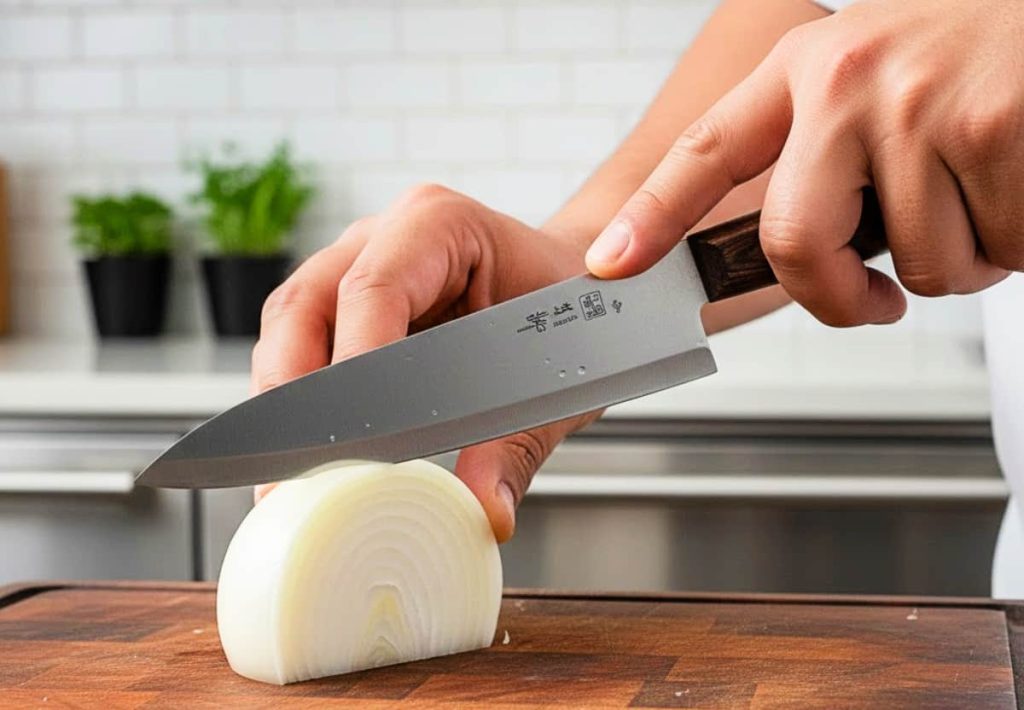
Knife sharpness plays a bigger role than many realize. A dull knife crushes onion cells, releasing more gas. A sharp knife slices cleanly, minimizing cellular damage.
Improving Ventilation
Turning on a stove hood or opening a window helps move the gas away from your face. Even small improvements in airflow can noticeably reduce irritation. This is a practical step for anyone asking how can you avoid crying while cutting onions without buying special gear.
The Mechanics of the Slicing Motion
Beyond just having a sharp blade, the technique you use can influence the amount of gas released. A “sawing” motion or hacking at the onion causes more trauma to the cell walls than a smooth, forward-gliding slice. By using a professional slicing technique, you ensure that fewer enzymes are agitated. This is a subtle but vital part of the answer to how can you avoid crying while cutting onions—it’s not just about the tool, but how you handle it.
Physical Barriers and Onion Variety
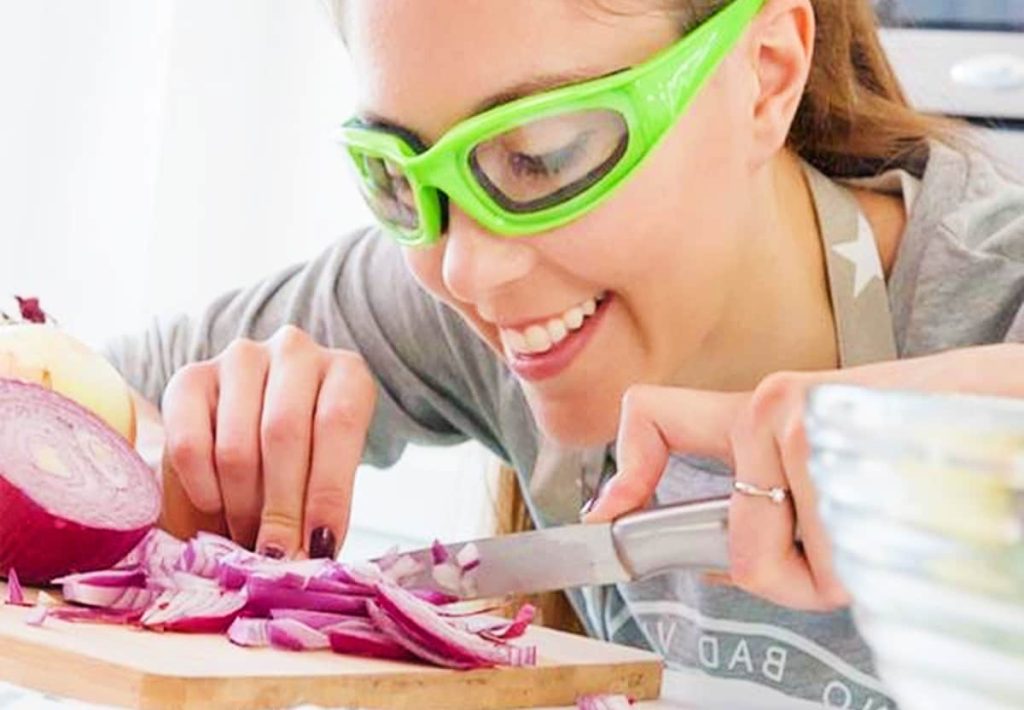
While they look humorous, onion goggles create a tight seal that completely blocks the gas. Many contact lens wearers also notice fewer tears because the lenses act as a partial barrier.
That detailed firsthand account can be found in this external article, which explains why goggles outperform tricks like chewing gum or holding bread in the mouth.
Choosing the Right Onion
Not all onions are equally aggressive. Sweet onions (Vidalia) contain fewer sulfur compounds, while older, pungent onions release stronger irritants.
The Scientific Debate: Do “Kitchen Hacks” Really Work?
As a Scientific Reviewer, Emma notes that experts often debate the efficacy of “viral hacks.” While some swear by chewing gum or lighting candles, food scientists argue these offer inconsistent results because they don’t address the core enzymatic reaction. The consensus remains that temperature control and tool sharpness are the only methods with a high success rate in controlled settings.
Cooking Smarter Starts With Small Changes
Reducing onion tears is part of a broader idea: making the kitchen more efficient. For example, the same mindset applies to modern appliances like air fryers, which allow people to enjoy crispy foods with less mess. Those benefits are explored in our article about cooking smarter with air fryers.
FAQ – How Can You Avoid Crying While Cutting Onions?
Why does chilling onions help?
Enzymatic Activity
Cold temperatures slow the enzyme reactions that create tear-inducing sulfur gases, giving you more time to chop before the gas reaches your eyes.
Are sweet onions less irritating?
Sulfur Content
Generally, yes. They contain fewer sulfur compounds than stronger red or white varieties.
Disclaimer: While onion-induced tears are generally harmless, they can cause temporary blurred vision. Always exercise extreme caution when handling sharp knives in the kitchen, especially if your vision is impaired by irritation.
