Most people believe a great tomato sauce depends on rare ingredients or some hidden Italian technique. The truth is much simpler — and far more interesting. A memorable sauce is built on balance, not complexity.
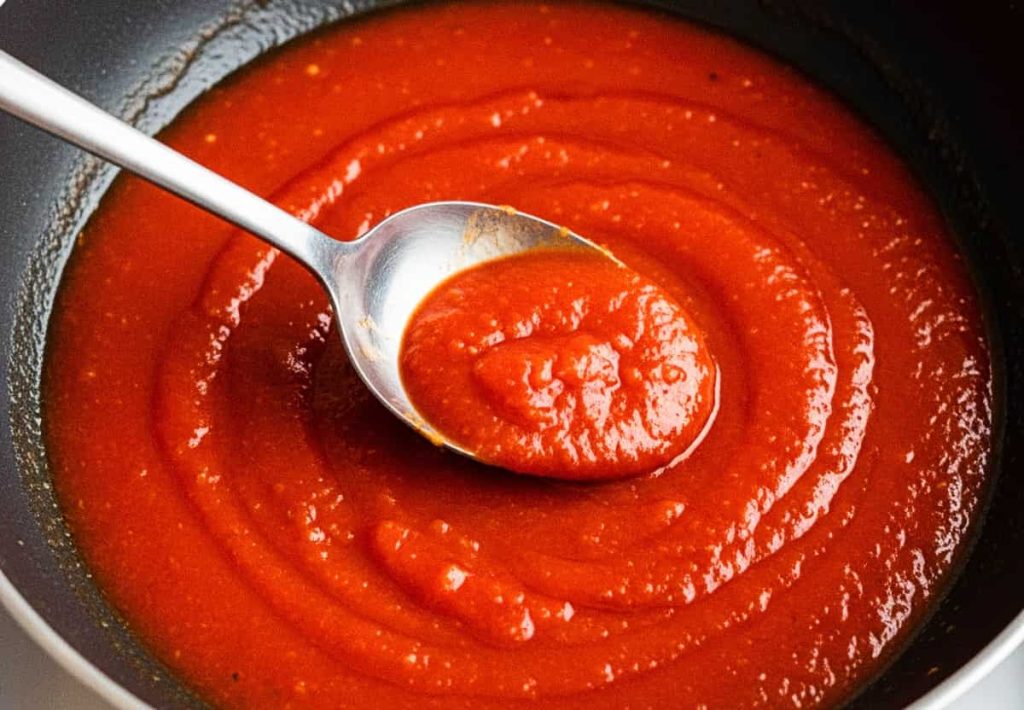
Choosing the Right Tomatoes: Fresh vs. Canned
Fresh tomatoes, when in season, deliver brightness and aroma. However, for a consistent great tomato sauce year-round, canned whole peeled varieties offer the depth required for longer cooking. The real secret isn’t just the type of tomato, but adjusting your timing to match its water content.
Furthermore, understanding the agricultural brix levels and acidity profiles of different tomato cultivars provides a massive advantage when crafting a truly exceptional great tomato sauce, ensuring that your choice of fruit aligns seamlessly with your desired culinary outcome.
Furthermore, understanding the impact of regional terroir and soil mineral composition on commercial tomato harvesting helps explain why industrial canners often select specific growing zones where soil chemistry naturally optimizes the sugar-to-acid ratio. When tomatoes are vine-ripened under intense sunlight and processed within hours of harvest, they retain a structural integrity and enzymatic profile that completely transforms the baseline flavor architecture of your great tomato sauce, making the selection of canned over fresh a deliberate culinary advantage rather than a mere convenience.
Why Starting with Oil, Garlic, and Onion Matters
Before tomatoes hit the pot, garlic and onion should gently soften in olive oil. This isn’t about browning; it’s about releasing natural sugars. When this base is done right, the entire great tomato sauce gains a foundational depth that prevents bitterness.
This gentle lipid extraction process acts as a flavor vehicle, capturing fat-soluble aromatic compounds from the aromatics and distributing them uniformly throughout every single serving of your great tomato sauce.
Beyond simple sugar caramelization, the molecular interaction between Allium compounds (such as allicin from garlic and various fructans from onions) and high-grade lipids triggers complex Maillard and non-enzymatic browning pathways at low heat thresholds. This chemical synergy builds a robust aromatic foundation, ensuring that the volatile sulfur compounds responsible for harsh sharpness are mellowed out into sweet, rounded flavor notes that anchor every subsequent layer of your great tomato sauce.
The Science of Time: How Simmering Changes Flavor
Time is a chemical ingredient. The duration of your simmer fundamentally alters how your brain perceives the flavor profile:
- Short-simmered (15-20 mins): Sharper, more acidic, and “fresh.”
- Long-simmered (45+ mins): Naturally sweeter as water evaporates and sugars concentrate. This is the hallmark of a great tomato sauce in the Italian-American tradition.
As these complex thermal reactions unfold over time, the physical structure of the sauce transforms, creating a rich mouthfeel that defines the gold standard of any great tomato sauce preparation.
As thermal energy continues to break down pectin structures within the cellular walls of the fruit, water molecules dissociate from pectin-bound matrices, allowing free water to evaporate at a steady rate. This physical reduction process forces natural organic acids, volatile esters, and concentrated sugars to pack densely together, generating that unmistakable velvet-like mouthfeel characteristic of a truly professional great tomato sauce.
When examining the thermodynamic properties of an extended simmer, food scientists look closely at how heat transfer accelerates the Maillard reaction and caramelization pathways among the natural reducing sugars present in the fruit pulp, such as glucose and fructose. As thermal energy permeates the liquid matrix, water molecules continuously gain kinetic energy, breaking hydrogen bonds and vaporizing into the surrounding atmosphere. This constant reduction process does not merely concentrate the physical volume; it alters the vapor pressure of volatile organic acids, allowing harsh acetic and citric notes to escape into the kitchen air while retaining heavier, sweet-smelling esters.
Furthermore, the continuous thermal agitation encourages lipid-carbohydrate interactions, coating the tongue more uniformly and extending the duration of the aftertaste. This explains why a properly reduced culinary creation delivers a lingering sensory satisfaction that quick, high-heat reductions can never replicate, cementing the fundamental role of controlled thermal kinetics in professional kitchen methodology.
The One Thing Most Recipes Never Explain: Time Changes Flavor
Time is a chemical ingredient. The duration of your simmer doesn’t just change the thickness; it fundamentally alters how your brain perceives the flavor profile.
Short-simmered sauces taste sharper and more acidic because organic acids remain volatile. Conversely, long-simmered sauces taste naturally sweeter as water evaporates and sugars concentrate. This chemical transformation is exactly what makes the best slow-cooked Italian-American tomato sauces so rich and addictive—the extended time allows the tomatoes to move past their raw acidity into a deep, jammy sweetness.
Mastering this delicate balance between acid reduction and sugar concentration allows home cooks to replicate professional-level results every time they prepare a great tomato sauce from scratch.
Ultimately, recognizing how thermal kinetics dictate human gustatory perception allows home cooks to take complete control of their culinary environment. By manipulating simmer durations based on the initial water activity and acidity of your produce, you can precisely dictate whether your final great tomato sauce expresses a vibrant, sharp brightness or a deep, comforting, jammy warmth.
The Specialist’s Nuance: The “Umami” Boost
While everyone focuses on acidity, professional chefs look for Umami. Tomatoes are naturally rich in glutamates, but there is a secret to intensifying this “savory” depth.
The Pro Tip: The Parmesan Rind Add a small parmesan rind to the sauce while it simmers. The rind doesn’t melt, but it releases savory notes that balance the acidity perfectly. This is why a great tomato sauce simmered for 40 minutes with a rind often beats a 4-hour sauce made without one.
If you find yourself making a large batch of long-simmered sauce to save for later, understanding the cooling process is key. Make sure to check our safe guide Can you put hot food in the fridge? The science behind the myth to ensure that concentrated sweetness doesn’t develop “off” flavors during storage.
Leveraging these savory compounds elevates the overall flavor complexity, proving that chemical synergy is just as important as traditional technique when refining a great tomato sauce.
In addition to parmesan rinds, Italian culinary tradition frequently utilizes cured meat proteins or anchoring anchovy pastes dissolved invisibly in the initial oil phase to push free glutamate levels even higher. This multi-source umami stacking creates a profound cognitive satisfaction on the palate, proving that chemical depth is the ultimate differentiator when perfecting a great tomato sauce.
The Pro Tip: The Parmesan Rind
Add a small parmesan rind to the sauce while it simmers. The rind doesn’t melt, but it releases savory notes that balance the acidity perfectly. This is why a great tomato sauce simmered for 40 minutes with a rind often beats a 4-hour sauce made without one.
If you find yourself making a large batch of long-simmered sauce to save for later, understanding the cooling process is key. Make sure to check our safe guide to cooling and freezing hot food to ensure that concentrated sweetness doesn’t develop “off” flavors during storage.
The Health Science: Why Cooked Tomatoes are Better
Beyond flavor, a great tomato sauce is a nutritional powerhouse. Tomatoes are the primary source of lycopene, a powerful antioxidant linked to heart health and skin protection.
The specialist’s secret is that lycopene is “fat-soluble.” This means your body cannot effectively absorb it from raw tomatoes alone. By simmering your sauce with high-quality olive oil, you are performing a chemical extraction that makes the lycopene more bioavailable. Furthermore, the heat from a long simmer breaks down the plant’s cell walls, releasing even more nutrients. So, when you take the time to build a great tomato sauce, you aren’t just improving the taste—you are maximizing the nutritional density of your meal. To understand how whole foods compare against highly industrialized formulations, you can also read What is the real risk of ultra-processed foods? A science-based perspective.
By combining lipid-based extraction with prolonged thermal processing, you unlock the ultimate physiological potential of the fruit, making every hearty bowl of your great tomato sauce an exceptional vehicle for cellular health.
From a metabolic and physiological standpoint, increasing lycopene bioavailability through lipid-mediated micellar incorporation provides the human body with enhanced cellular defense against oxidative stress and inflammatory pathways. Consequently, viewing your culinary preparations through this nutritional lens reveals that crafting a traditional great tomato sauce is as much an act of preventive wellness as it is a pursuit of sensory excellence.
Delving deeper into the nutritional biochemistry of heated Solanaceae crops reveals fascinating insights regarding antioxidant stabilization and cellular protection. Lycopene exists naturally in plants primarily in the all-trans isomeric configuration, which is relatively rigid and difficult for the human enterocyte to absorb across the intestinal brush border.
However, when subjected to thermal processing in the presence of dietary lipids like extra virgin olive oil, a significant fraction of these trans-isomers undergo thermal isomerization into cis-isomers. Cis-lycopene possesses a bent molecular geometry that increases its solubility in mixed micelles and enhances its uptake efficiency in human plasma by over 50%.
Additionally, the breakdown of plant cell walls releases bound dietary fiber and minerals, reducing overall anti-nutrient interference. Therefore, viewing culinary technique through this physiological lens demonstrates that slow-simmering processes act as a form of pre-digestion, unlocking vital micronutrients that would otherwise remain locked away within the raw vegetable matrix.
Preserving the Balance: Storage and Safety
If you find yourself making a large batch of this great tomato sauce, understanding how to preserve that “jammy” sweetness is vital. As the sauce cools, the flavors continue to marry, but improper cooling can lead to “off” flavors or bacterial growth.
Always allow your sauce to reach room temperature uncovered before transferring it to the fridge or freezer. This prevents condensation from dripping back into the sauce, which could dilute the concentrated flavor you worked so hard to achieve. When stored correctly, a long-simmered sauce can actually taste better the next day, as the aromatic compounds from the herbs and the savory parmesan rind have more time to penetrate the tomato fibers.
Implementing proper post-cooking protocols ensures that your culinary efforts are protected, allowing you to enjoy the complex, fully harmonized flavors of your great tomato sauce safely days later.
Proper thermal dissipation and controlled atmospheric sealing also prevent the oxidation of delicate polyunsaturated fats introduced by the initial olive oil base, safeguarding the vibrant aromatic profile during cold preservation. Adhering to these strict food safety standards ensures that your stored batches of great tomato sauce remain just as safe, aromatic, and structurally balanced weeks later as they were on day one.
Ensuring the long-term microbiological safety and sensory integrity of large culinary batches requires a rigorous understanding of the temperature danger zone and cooling dynamics. When hot pots are placed directly into a refrigeration unit while still steaming, the localized ambient temperature within the appliance spikes dangerously, putting surrounding perishable items at risk of bacterial proliferation while creating a vacuum seal that can warp container lids.
By allowing the preparation to undergo a controlled, uninhibited ambient cooling phase down to approximately 60 degrees Celsius before final containment, you facilitate the safe dissipation of initial residual heat while minimizing condensation droplets that could otherwise dilute the delicate balance of surface aromatics.
Furthermore, maintaining proper container hygiene and utilizing airtight, food-grade glass or BPA-free silicone vessels prevents the absorption of ambient refrigerator odors, guaranteeing that when you finally reheat your batch days later, the complex chemical harmony of the herbs, lipids, and concentrated tomato solids remains completely pristine and unmodified.
FAQ — Secrets to a Great Tomato Sauce
Is adding sugar to tomato sauce necessary?
Usually no. Long-simmered sauces naturally develop sweetness through evaporation. Sugar is only a “shortcut” for fast-cooked sauces where acidity hasn’t had time to mellow.
Olive Oil or Butter?
Olive oil brings freshness. Butter, used sparingly, softens acidity and creates a silkier texture. Both have a place in a great tomato sauce.
Embracing these evidence-based kitchen practices transforms ordinary ingredients into an extraordinary culinary experience, cementing the mastery behind every authentic batch of a great tomato sauce.
Mastering these underlying biochemical principles empowers you to troubleshoot texture, acidity, and flavor imbalances dynamically, ensuring that every iteration of your homemade great tomato sauce consistently reaches professional culinary standards.
