Gen Z protein obsession has become a defining health trend in 2026. In any grocery aisle, you are bombarded by protein-infused water and high-protein snacks. This generation has turned protein from a simple nutrient into a lifestyle aesthetic, but understanding the Gen Z protein obsession requires looking beyond the marketing hype to see what is actually happening to our food.
The answer lies at the intersection of social media algorithms, a distrust of traditional institutions, and a desperate search for a “safe” health win in a world of nutritional misinformation.
1. The “Last Macro Standing” Phenomenon
Protein is currently enjoying a “halo effect” that other nutrients have lost. As explored in this deep dive into America’s protein fixation, the narrative around macros has shifted dramatically.
While experts debate the necessity of high intake, the Gen Z protein obsession continues to drive market sales. This fixation suggests that young adults are seeking a “safe” health win in a landscape filled with conflicting nutritional advice.
The Evolution of “Villain” Nutrients
- The 90s (Fat as the villain): A decade defined by low-fat everything.
- The 2000s (Carbs as the enemy): The era of Atkins and the fear of bread.
The Survivor
Protein is the only macronutrient that has never been “cancelled.” Because it is associated with muscle growth and vitality, it has avoided the negative stigma attached to “dieting.” This makes it the only “safe” choice for a generation wary of traditional eating disorders.
2. Social Media: The 72% Influence
According to 2025 data from Morning Consult, 72% of Gen Z adults turn to TikTok, Instagram, and YouTube for wellness advice.
The Algorithm of “Protein Maxxing”
The algorithm rewards what performs, and protein “maxxing” performs incredibly well. High-protein recipes are visually satisfying and promise a “self-optimized” body.
Trust in the Feed
For many young adults, following a “What I Eat in a Day” protein goal is a way to feel in control of their health when they no longer trust traditional primary care providers.
3. The “Health Halo” of Ultra-Processed Foods
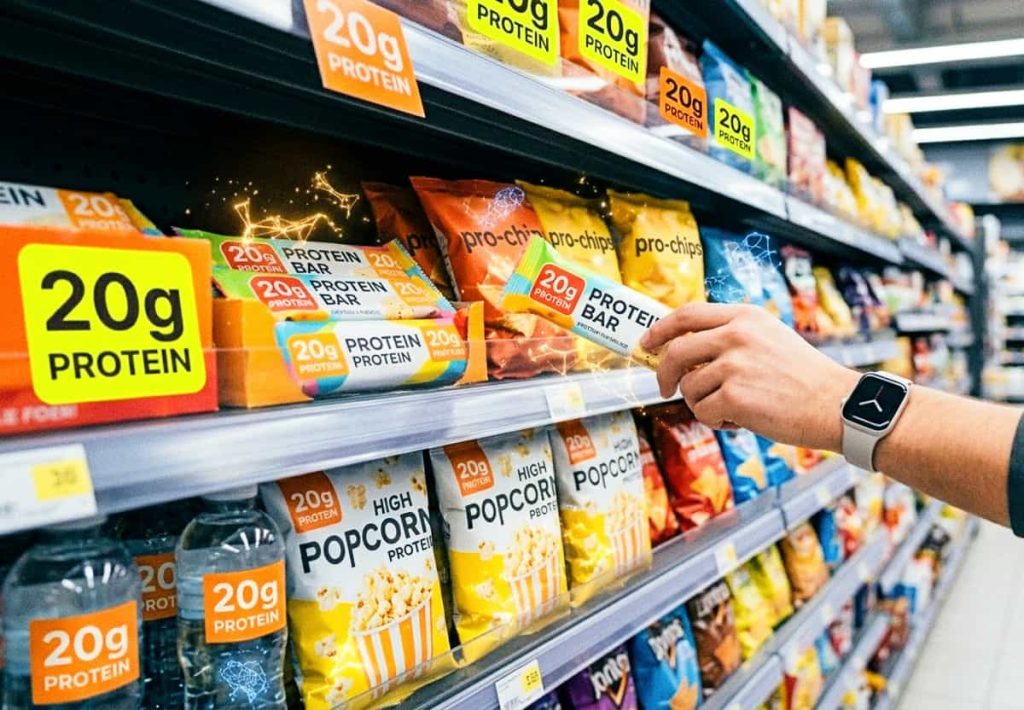
Perhaps the most ironic part of the protein obsession is the rise of “Protein Junk Food.” Experts warn of a growing cognitive dissonance: Gen Z cares deeply about “clean labels,” yet they will buy a highly processed candy bar as long as it has “20g PROTEIN” stamped on the front.
This marketing strategy thrives precisely because of the Gen Z protein obsession. Brands have realized that stamping a ‘high-protein’ claim on a package can effectively neutralize the consumer’s health concerns, allowing them to market sugar-laden, ultra-processed items as functional wellness products. Unfortunately, this creates a false sense of security, leading many to believe that the Gen Z protein obsession is an inherently healthy lifestyle choice, regardless of the ingredient list.
The Marketing Trap
Adding cheap protein powder to a low-nutrient snack allows brands to hike prices and market “junk” as a “health food.”
The Reality Check
Most of this added protein is “stripped” of its natural structure. You might be hitting your protein goals, but you’re missing the fiber and micronutrients that actually drive long-term health.
Are “Protein Snacks” Actually Healthy?
Not always. Often, the protein isolate is the only redeeming quality in an otherwise calorie-dense, nutrient-poor product.
4. Quality vs. Quantity: The Fiber Gap
While the hype says “more is better,” science says “diversity is better.” As reported by experts at Johns Hopkins, 95% of Americans are failing to hit their fiber targets while easily exceeding their protein needs.
The irony of this trend is that while the Gen Z protein obsession focuses heavily on muscle synthesis, it often neglects the foundational health of the gut microbiome. By prioritizing isolated proteins over whole food sources, young adults are widening the fiber gap. This hyper-fixation suggests that the Gen Z protein obsession is less about comprehensive nutrition and more about meeting arbitrary targets seen on social media feeds
Building a Better “Protein Package”
For Gen Z, the goal shouldn’t just be more protein, but a better nutritional delivery system.
Animal Protein
High in essential amino acids but often carries saturated fats.
Plant Protein
Provides the “missing link”—fiber, antioxidants, and minerals like magnesium and potassium.
FAQ: Quick Hits on the Protein Craze
Do I really need 1.6g of protein per kg of body weight?
While new guidelines suggest higher ranges for active individuals, most people already hit the 1g/kg mark through a standard diet. Unless you are in an intense muscle-building phase, variety matters more than sheer volume.
Is “Clear Whey” or “Protein Water” worth it?
They are convenient, but they are ultra-processed. They lack the satiety and thermic effect of whole food proteins like eggs, beans, or fish.
Can too much protein be harmful?
Excess protein without enough water can lead to dehydration and digestive issues. Without strength training, those extra protein calories are simply stored as fat—not muscle.
The Bottom Line
Gen Z’s obsession with protein is a tool for self-optimization, but the true “hack” isn’t found in a supplement tub. The ultimate flex in 2026 is moving away from processed “protein-flavored” snacks and toward a diverse, fiber-rich diet that supports both the muscles and the gut.
To understand how to actually measure if your protein is doing its job, check out our guide on Why Your Protein Labels are Lying: The DIAAS Score Revolution.
Ultimately, true wellness requires looking past the ‘protein-maxxing’ trends. By deconstructing the Gen Z protein obsession, we can move toward a more balanced approach—one that values gut health, fiber intake, and whole foods as much as we value protein counts.
Medical Disclaimer: The content on The Nutrideep is for informational and educational purposes only. It is not intended to be a substitute for professional medical advice, diagnosis, or treatment. Always seek the advice of your physician or other qualified health provider with any questions you may have regarding a medical condition, dietary changes, or the use of supplements.
