In the wellness landscape of 2026, enhanced hydration products have become a multi-billion dollar obsession. We are constantly told to optimize our daily fluid intake with high-sodium shots, mineral concentrates, and alkaline boosters. But if you are wondering is functional water good for you, the molecular reality is often the exact opposite: many of these trendy “solutions” actually trigger an osmotic trap that pulls water out of your cells, leaving you more dehydrated than when you started.
To protect your metabolic health and avoid wasting money on clever marketing, you need to understand how the human gut processed fluids at a cellular level.
The Evolutionary “Silent” Taste of Water
A common misconception in modern wellness circles is that humans never evolved a distinct taste for water, leading people to believe it must be enhanced with artificial flavors or minerals to be properly utilized. When asking is functional water good for you, we must first look at our evolutionary biology.
In reality, our sensory physiology is deeply tuned to the absolute “neutrality” of pure water as an ancient survival mechanism. By maintaining a strict “zero-baseline” for water taste, our oral receptors can instantly detect life-threatening environmental contaminants—such as sulfur, rot, or toxic high salinity.
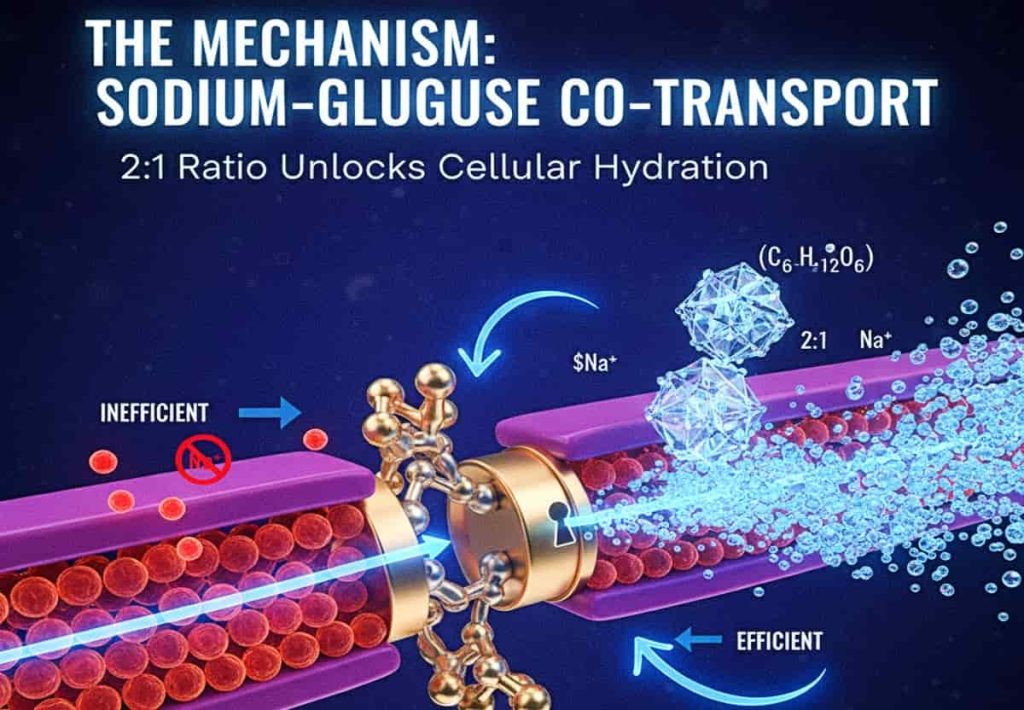
The Mechanism: The Sodium-Glucose Co-Transport
True cellular hydration is not a passive process of simply “pouring water into a vessel.” It is an active, heavily regulated biological transport mechanism.
To efficiently move water across the epithelial lining of the intestinal wall and directly into the human bloodstream, your body primarily utilizes the Sodium-Glucose Co-transport system (SGLT1).
The Molecular Gatekeepers
This specific transport process requires a highly precise, biologically determined ratio of glucose to sodium (approximately 2:1) to act as the exact molecular “key” that opens the cellular gates for rapid water absorption.
When you consume hyped “wellness” waters that are heavily overloaded with sodium but completely devoid of the necessary carbohydrate co-transporters, the liquid simply sits unabsorbed in your gut. Worse yet, if the concentration of salt inside your intestines becomes significantly higher than the salt concentration in your bloodstream, your body will actually dump intracellular water back into the gut to dilute the excess salt. This severe fluid shift causes acute abdominal bloating, “osmotic diarrhea,” and dangerous systemic dehydration.
Expert Map: The Hydration Evidence Hierarchy
Not all fluids share the same osmotic efficiency. If you are tracking your daily performance and wondering is functional water good for you, this matrix illustrates how different hydration sources perform under strict physiological scrutiny:
| Hydration Source | Osmotic Efficiency | Primary Transport Mechanism | Best Scientific Use Case |
| WHO-Standard ORS | Highest (Recovery) | Active Sodium-Glucose Co-transport. | Severe illness, extreme heat, heavy prolonged sweat |
| Plain Purified Water | High (Maintenance) | Passive diffusion via cellular Aquaporins. | Daily sedentary hydration and baseline fluid balance |
| Sugary Sports Drinks | Moderate | Facilitated diffusion; high glucose can cause osmotic pull. | Intense, continuous athletics lasting over 60 minutes |
| Functional/Alkaline Water | Low to Negative | Variable; often completely lacks required co-transporters. | Flavor preference only; use with extreme metabolic caution |
The Specialist’s Nuance: The Bioavailability Factor
As a metabolic specialist, I must point out that the massive “Alkaline Water” craze is largely built on a profound physiological myth. While the pH of these bottled waters is technically high in the factory, they lack structural buffering capacity.
The exact moment these fluids hit the highly concentrated hydrochloric acid inside your stomach, their artificial alkalinity is instantly neutralized. They offer absolutely zero systemic “pH balancing” or alkaline benefits to your blood or tissues.
The Pro-Tip for Cellular Hydration
If you want to maximize true fluid absorption, look beyond flashy lifestyle labels. Instead, focus entirely on your baseline gut health. Emerging data shows that maintaining a healthy gut lining with robust mucosal integrity is vastly more important for active electrolyte absorption than the arbitrary pH of the bottled water you purchase.
Appliance Safety: The Hidden Threat to Kitchen Hydration
While evaluating is functional water good for you based on electrolyte ratios is essential, the physical purity of the water you heat and prepare at home matters just as much. If you are using premium filtered water but preparing hot wellness drinks or herbal teas in compromised appliances, you might be undermining your efforts.
Be sure to read our comprehensive review on the air fryer peeling toxic risk guide to check the status of your kitchen gear. Just as scratched, flaking non-stick coatings can leach industrial synthetic compounds into your food, using degraded, poorly maintained heating elements or damaged boiling vessels can introduce microplastics and toxic chemical residues directly into your clean hydration routine.
FAQ: Uncovering the Science of Fluid Regulation
Can overusing functional water daily cause high blood pressure? Yes. Over-supplementing with high-sodium hydration powders or mineral drops on a daily basis can easily lead to systematic sodium retention, painful bloating, and chronic micro-strain on the kidneys. If you are questioning is functional water good for you as a sedentary individual, remember that you are not losing significant amounts of salt through intense physical sweat.
Is Molecular Hydrogen ($H_2$) the real secret behind “Reduced Water” health claims? According to the latest peer-reviewed clinical reviews, the therapeutic antioxidant effects historically attributed to “ionized” or “alkaline” waters are actually caused by the small amounts of dissolved $H_2$ gas produced during the factory electrolysis process. When evaluating is functional water good for you based on these parameters, the benefit comes from the hydrogen gas, not the altered pH level of the water itself.
How does food sequencing work to protect my insulin levels? Pairing carbohydrates with fiber, fat, or protein acts as a physical “buffer” in the digestive tract. Eating your vegetables or lean proteins before touching your starches slows down gastric emptying. When analyzing is functional water good for you alongside your physical meals, clinical studies show this sequencing trick can reduce the post-meal glucose spike by up to 73%.
Scientific & Hydration Disclaimer: The biological insights provided by Nutrideep are intended strictly for educational and consumer awareness purposes. Individual fluid and electrolyte requirements can shift dramatically based on underlying kidney function, physical exertion levels, climate, and baseline metabolic health. Always consult a qualified medical professional or registered sports dietitian before introducing heavy electrolyte supplementation into your daily routine.
