Stainless steel pans are durable, versatile, and built to last a lifetime. They can sear steaks, sauté vegetables, and go from stovetop to oven without a problem. Yet many home cooks share the same frustration: “Why does everything stick?”
The truth is, food sticking to stainless steel isn’t a flaw in the pan — it’s a matter of heat, oil, and timing. Once you understand the physics involved, cooking on stainless steel becomes predictable and surprisingly easy.
Why Food Sticks to Stainless Steel: The Microscopic View
At a microscopic level, stainless steel is not perfectly smooth. Its surface contains tiny pores and crevices. When food touches the metal, chemical bonds can form between the food and the metal surface.
The Role of Protein Interaction
Protein-rich foods — like eggs, chicken, fish, and steak — are especially prone to sticking. This happens because their proteins can interact directly with metal atoms in the pan when the thermal barrier is insufficient.
Temperature and Adhesion Mechanics
If the pan is too cold, food bonds to the metal before it has a chance to sear properly. Understanding the food sticking to stainless steel dynamic requires mastering the temperature of both the metal and the oil.
The Science: The Leidenfrost Effect
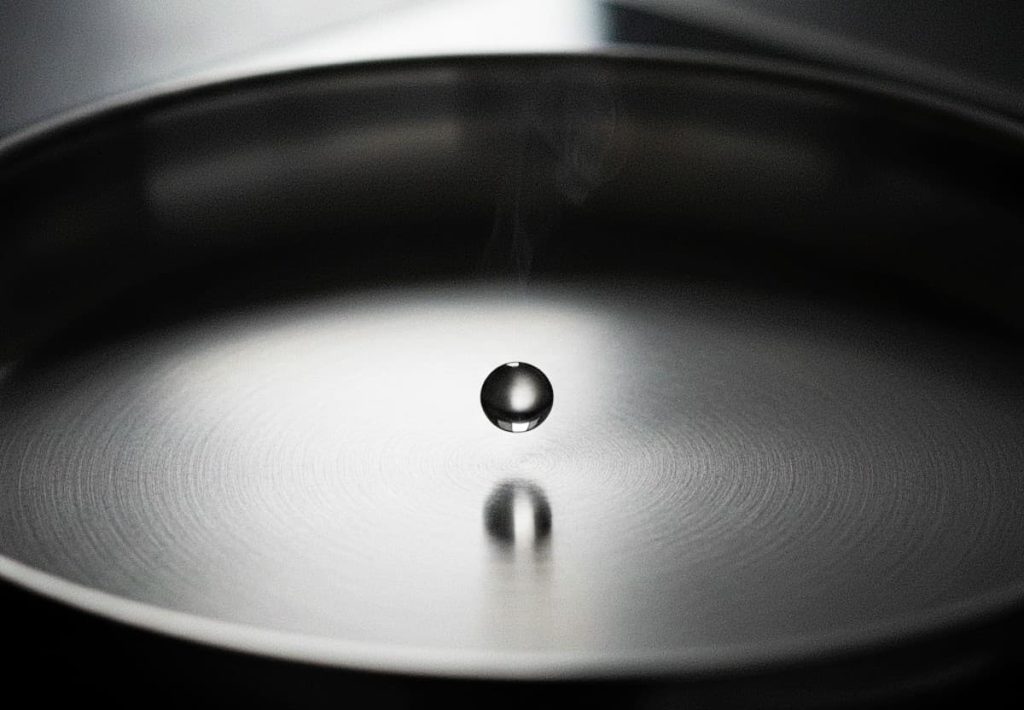
When a pan reaches a high enough temperature (around 200°C), something fascinating happens. This is known as the Leidenfrost Effect, and it is your best defense against sticking.
Creating the Vapor Barrier
When you drop water into a properly heated pan, it forms a single bead that dances across the surface. This happens because:
- Vapor Layer: Water creates a thin vapor layer underneath it.
- Insulation: That vapor layer acts as insulation, allowing the droplet to “float” on steam.
How Food Mimics the Water Droplet
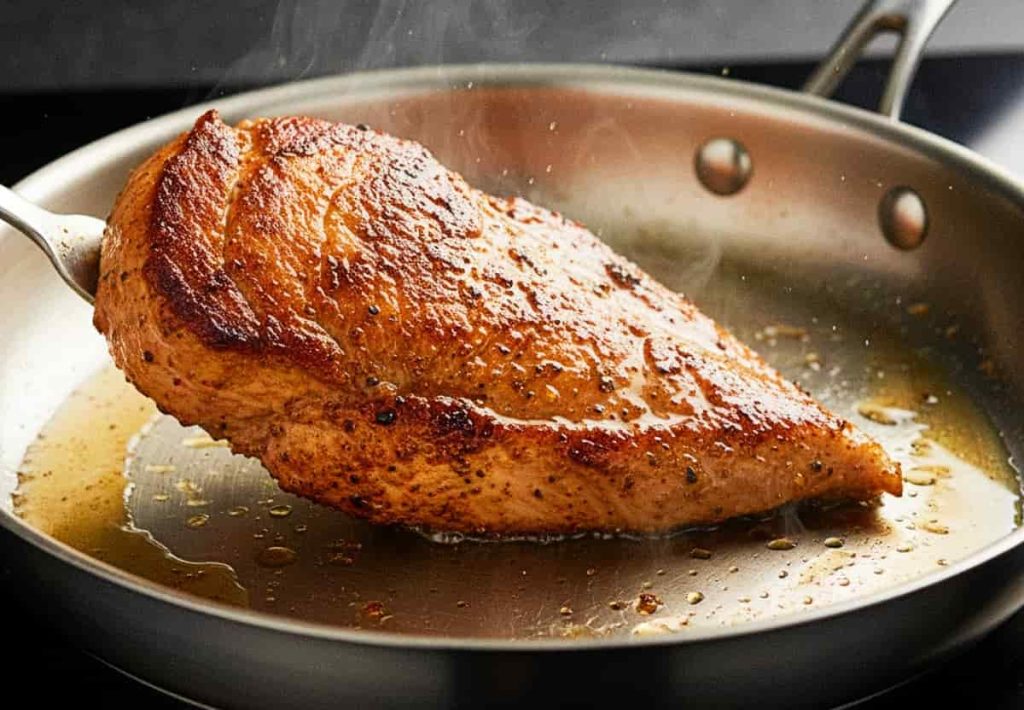
Since food contains water, placing it in a hot pan with hot oil creates a similar steam barrier. This barrier reduces direct contact, preventing food sticking to stainless steel while promoting better browning.
How to Master Your Pan (Step-by-Step)
To stop food sticking to stainless steel, follow this professional sequence used in commercial kitchens:
The Preparation Phase
- Preheat the pan dry: Let it sit on medium heat for 2–3 minutes. Avoid high heat to prevent warping.
- The Water Test: Perform the Leidenfrost test. If the water beads up like mercury, it’s ready.
- Add Oil: Only add oil after the pan is hot. Wait for it to shimmer or develop “legs.” To ensure your fat barrier stable at these high temperatures without degrading into inflammatory byproducts, check out our guide on Seed oils vs. Fruit oils: The science behind the inflammation myth, which breaks down the structural differences of cooking fats.
The Cooking Phase
- Pat Food Dry: Moisture on the surface of the food is the enemy. Use a paper towel to dry your proteins.
- Patience: Don’t flip too early. When a proper crust forms, the food will naturally release itself.
FAQ: Mastering Stainless Steel Cookware
Why does my food stick even when I use oil?
If oil is added before the pan is fully heated, it won’t create the correct barrier. Also, moving food too soon interrupts crust formation, leading to food sticking to stainless steel.
Why does cold food stick more?
Cold food drops the pan’s temperature suddenly, breaking the steam barrier and increasing adhesion. Let proteins rest at room temperature for 10–15 minutes before cooking.
Final Takeaway: Building Flavor with “Fond”
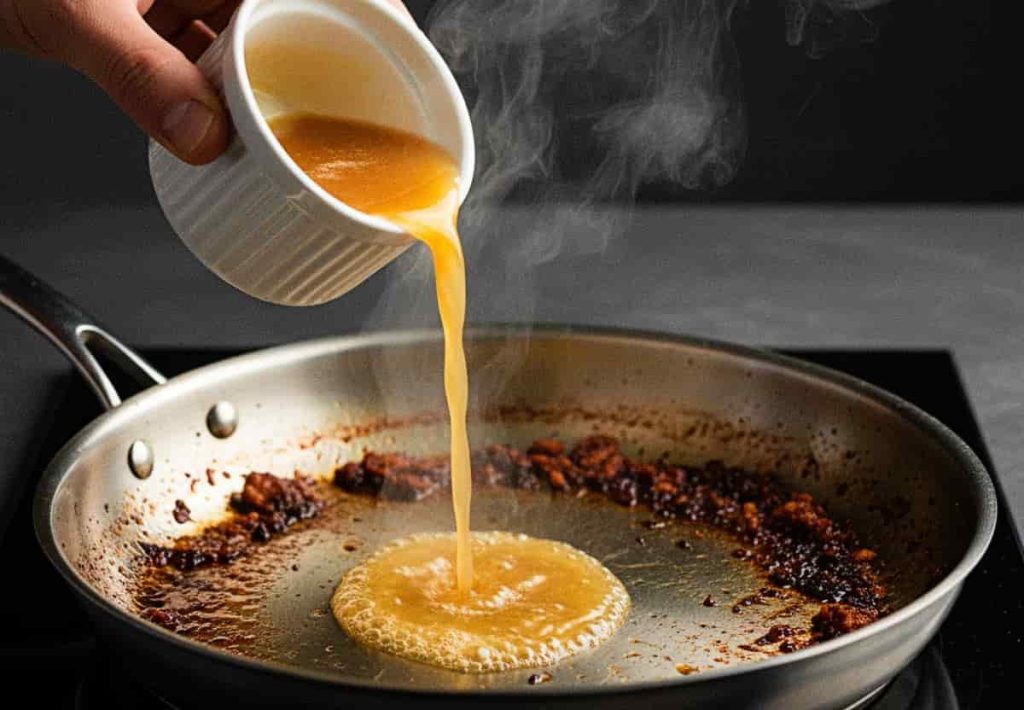
One of stainless steel’s greatest advantages is that it builds “fond” — those delicious brown bits at the bottom. By mastering the heat and preventing food sticking to stainless steel, you gain the ability to deglaze the pan and create restaurant-quality sauces.
Disclaimer: This guide is for educational purposes and focuses on culinary techniques. Always follow manufacturer safety instructions for your specific cookware to prevent burns or damage while managing the physics of food sticking to stainless steel.
