When planning your garden, it is vital to know what should not be planted next to blueberries. Growing blueberries can be one of the most rewarding experiences for a gardener, but it can also be one of the most frustrating. Unlike most backyard crops, blueberries are “finicky”: they demand very specific soil conditions and do not tolerate certain neighbors well. What should not be planted next to blueberries is a question that every successful grower must understand to ensure a prolific harvest and sweet berries.
If you want a prolific harvest and sweet berries, the secret lies not just in what you plant, but in what you keep away. As permaculture expert Dorothy Stainbrook points out, knowing what not to plant is just as vital as the fertilizer you choose.
Here are the 10 worst neighbors for your blueberries and the scientific reasons behind every “no-go.”
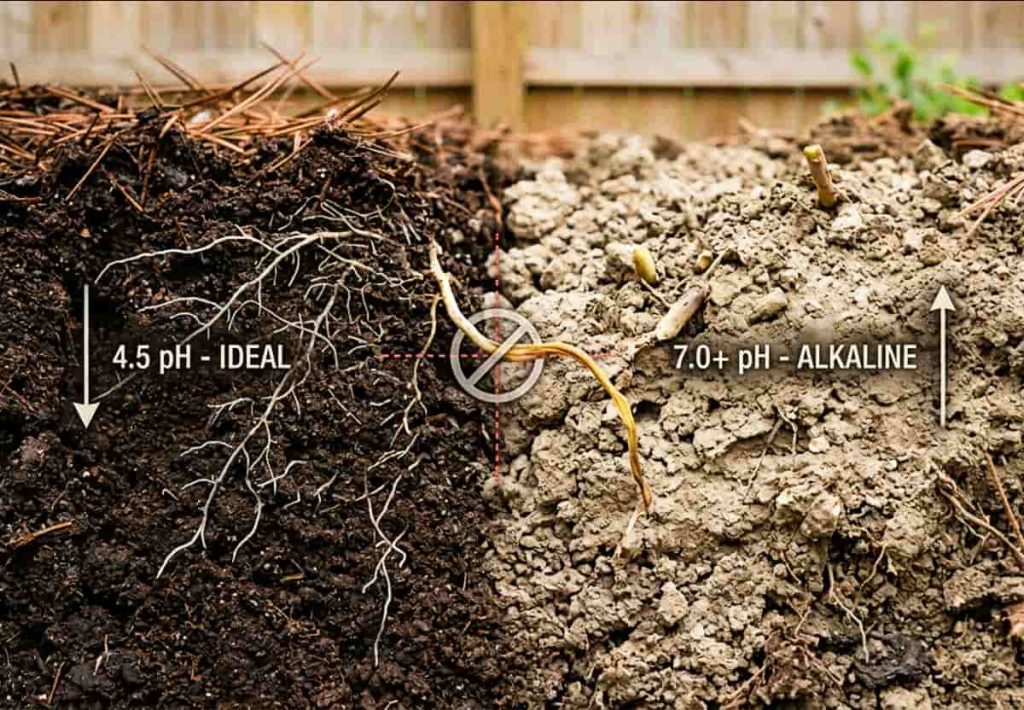
What Should Not Be Planted Next to Blueberries: The Top 10 Garden Enemies
1. Walnut Trees – The Chemical Nemesis
The Walnut tree is arguably the most dangerous neighbor. Its roots release a bioactive compound called juglone. For blueberries, juglone acts like a natural herbicide, suppressing growth and potentially killing the bush. Never plant blueberries within the drip line of a walnut tree.
2. Nightshades (Tomatoes and Peppers)
pH Conflict and Nutrient Competition
While many urban gardeners try this combination, it is technically flawed. Tomatoes prefer nearly neutral soil (pH 6.0 to 7.0) and are “heavy feeders” that deplete the nitrogen blueberries need to form flower buds in late summer. Beyond the nutrient clash, nightshades often require frequent soil disturbance during harvesting, which can damage the delicate, shallow root systems of your blueberry bushes.
The conflict with nightshades is primarily about soil pH and fungal competition. Because tomatoes require soil amendments that can raise the acidity level toward neutral, they are fundamentally incompatible with the blueberry bush’s needs. If you are ever in doubt about what should not be planted next to blueberries, always treat nightshades as a ‘no-go’ zone to protect your soil integrity.
3. Asparagus
Asparagus is one of the greatest enemies of blueberry pH. It thrives in alkaline soils (pH up to 8.0). If you acidify the soil for the blueberries, the asparagus will die; if you neutralize it for the asparagus, the blueberries will develop yellow leaves (iron chlorosis) and fail to fruit.
4. Brassicas (Cauliflower, Broccoli, and Cabbage)
Plants in the brassica family require heavy nutrition and high pH. Additionally, they have root systems that compete aggressively for space, which is a problem for the shallow, sensitive roots of the blueberry bush. This is a primary reason why brassicas remain on the list of what should not be planted next to blueberries, as they simply cannot coexist in the specialized acidic environment your berries require.
5. Various Beans and Peas (Legumes)
There is an important nuance here. While they fix nitrogen, most beans and peas prefer soils above pH 6.0. The acidic environment required for blueberries (pH 4.5 to 5.0) prevents the bacteria on the legume roots from doing their job, resulting in weak plants that simply waste space.
6. Corn
Corn is the ultimate “sun thief.” Because it grows so fast and tall, it casts shadows that reduce the blueberry’s photosynthesis, resulting in tart, small fruits. Furthermore, corn requires heavy nitrogen fertilization and frequent tilling, which disturbs the soil structure. If you are researching what should not be planted next to blueberries, corn is a prime example because its root competition and light blockage directly hinder the bush’s metabolic efficiency during the critical fruiting phase.
7. Mediterranean Herbs (Lavender and Rosemary)
Mediterranean herbs are beloved by gardeners for their hardiness, but they are diametrically opposed to blueberries. Rosemary and lavender thrive in dry, rocky, alkaline soil with excellent drainage. Attempting to grow them near blueberries creates a watering paradox: the moisture needed for the blueberry roots will cause root rot in the herbs, while the alkaline conditions preferred by the herbs will induce chlorosis in the blueberries. Understanding what should not be planted next to blueberries involves recognizing these environmental contradictions, as forcing these plants to share space will inevitably lead to the decline of one or both species.
8. Raspberries
Even though they are both “berries,” they are not friends. Raspberries are invasive by nature; they spread via runners and can quickly choke out a blueberry bush, competing for every drop of water and nutrient. The root architecture of raspberries is designed to expand aggressively, making them a major physical threat to blueberry stability.
They act as a “resource sponge,” absorbing nitrogen before it ever reaches the blueberries. While many assume that similar fruit types make good neighbors, in this case, it is a significant mistake. If you are planning your garden layout and considering what should not be planted next to blueberries, remember that raspberries will eventually overtake the space, leading to stunted blueberry growth and diminished yields.
9. Sunflowers
Beyond competing for nutrients, sunflowers can cause excessive physical shading. If you must use sunflowers, ensure they are positioned to the north of the blueberries so they don’t block direct sunlight.
10. Common Grass
Grass is a voracious competitor for nitrogen and surface moisture. Letting grass grow right up to the base of the blueberry bush is one of the fastest ways to stunt production. The ideal solution is using a mulch of pine needles or pine bark. Grass acts as a dense mat that prevents oxygen from reaching the soil, effectively suffocating the beneficial mycorrhizal fungi that blueberries rely on for nutrient uptake.
This invisible “suffocation” is often why gardeners struggle to understand why their bushes fail to thrive despite proper watering. When you evaluate what should not be planted next to blueberries, common lawn grass should be at the top of your list, as it creates an environment that is functionally toxic to the long-term vitality of the shrub.
Technical Table: pH Requirements and Conflicts
| Plant | Ideal pH | Reason for Incompatibility |
| Blueberries | 4.5 – 5.0 | Baseline Requirement |
| Asparagus | 6.5 – 8.0 | Extreme pH Conflict |
| Cauliflower | 6.0 – 7.5 | Heavy Feeder / Alkaline Soil |
| Tomato | 5.5 – 7.5 | Intense Nutrient Competition |
| Walnut Tree | N/A | Juglone Toxicity |
Frequently Asked Questions (FAQ)
- Can I plant strawberries with blueberries?Yes! Unlike grass, strawberries function as an excellent “living mulch.” They tolerate acidic soil and don’t aggressively compete for the same nutrient layers.
- How can I acidify the soil quickly?For a safe adjustment, use elemental sulfur or fertilizers specifically designed for acid-loving plants (like those for Azaleas). Using pine needles as mulch helps maintain acidity over the long term.
- Why is shading so bad for blueberries?Blueberries set their flower buds in late summer. If tall plants (like corn or sunflowers) block the sun during this window, the plant won’t have the energy to create the following spring’s blossoms.
- What is the role of mycorrhizal fungi in blueberry gardening? Blueberry bushes have a unique, symbiotic relationship with mycorrhizal fungi in the soil. These fungi attach to the roots and act as an extension, helping the plant absorb essential nutrients like phosphorus and water that the bush couldn’t access on its own. When you plant aggressive neighbors or use improper fertilizers, you risk destroying this delicate fungal network. Protect this bond by using organic, acidic mulch and avoiding heavy synthetic tilling near the root zone.
- Are there any hidden risks if I ignore what should not be planted next to blueberries? Yes. Ignoring soil compatibility often leads to “latent failure,” where bushes survive for a season but never reach full production capacity. By disregarding what should not be planted next to blueberries, you are essentially allowing chemical inhibitors and nutrient competition to slowly starve your plants, leading to irreversible yield loss over time.
The Secret to Success: What to Plant Instead?
If you want neighbors that help, focus on Azaleas, Rhododendrons, Basil, or Ferns. They share the love for acidic soil and moisture, creating a harmonious ecosystem that boosts your harvest.
Remember: in the world of blueberries, soil chemistry is law. Respect the pH, and you’ll reap the rewards!
Expert Tip: To better understand how nutrition affects the final flavor of your fruit, see our guide on how cooking and cultivation methods impact the glycemic index of foods.
Disclaimer: The information on this site is for educational purposes only and is not a substitute for professional horticultural or medical advice. We are not responsible for any adverse results in your garden or health. Always consult with a qualified professional regarding any condition or agricultural need. Never disregard professional advice or delay seeking it because of something you have read here.
