Safe spinach reheating is a topic that triggers many debates, but understanding the science is the key to safety. For years, many believed the myth that it turns poisonous, but modern science tells a different story. If you follow the correct protocol, it is perfectly safe to store and heat your greens again.
The Chemistry of the Scare: Nitrates vs. Nitrites
The primary concern driving the need for safe spinach reheating lies in the nature of nitrates themselves. Nitrates are naturally occurring compounds found in soil and water, which plants absorb to grow. While the nitrate molecule is inherently stable, the enzyme-driven degradation that occurs when leaves are damaged or left at room temperature is what compromises food quality. Understanding this biological transition is the first step toward mastering safe spinach reheating at home. By controlling the environment in which these greens are stored, the risk of converting nitrates into nitrites is effectively eliminated, turning a misunderstood chemical process into a manageable kitchen task.
The Conversion and Carcinogenic Link
When cooked spinach sits at room temperature, bacteria begin converting nitrates into nitrites. When these nitrites are reheated at high temperatures, they can combine with amino acids to form nitrosamines—compounds classified as potentially carcinogenic. However, understanding how to manage these risks is exactly what makes safe spinach reheating a viable practice for home cooks. By prioritizing rapid cooling and controlled temperatures, you minimize the risk of harmful chemical development.
The “Blue Baby” Risk
High nitrite levels can also interfere with hemoglobin’s ability to carry oxygen, a specific risk for infants known as “Blue Baby Syndrome.”
The Hero Who Overturned the “Expert” Advice
One of the greatest wins for kitchen science occurred when a student successfully challenged the European Food Information Council (EUFIC). For years, the council officially advised against reheating spinach.
The Scientific Correction
After a rigorous scientific appeal, the EUFIC admitted their advice was outdated. They conceded that as long as spinach is cooled quickly and stored properly, the levels of nitrites formed are far below any toxicological threshold. In short: The dose makes the poison. This correction by the EUFIC highlights a broader trend: many common kitchen fears are rooted in outdated data rather than modern food science. We see a similar pattern when we analyze the infamous “Iron Myth,” which also relied on historical inaccuracies.
The “Popeye” Error: Iron vs. Reality
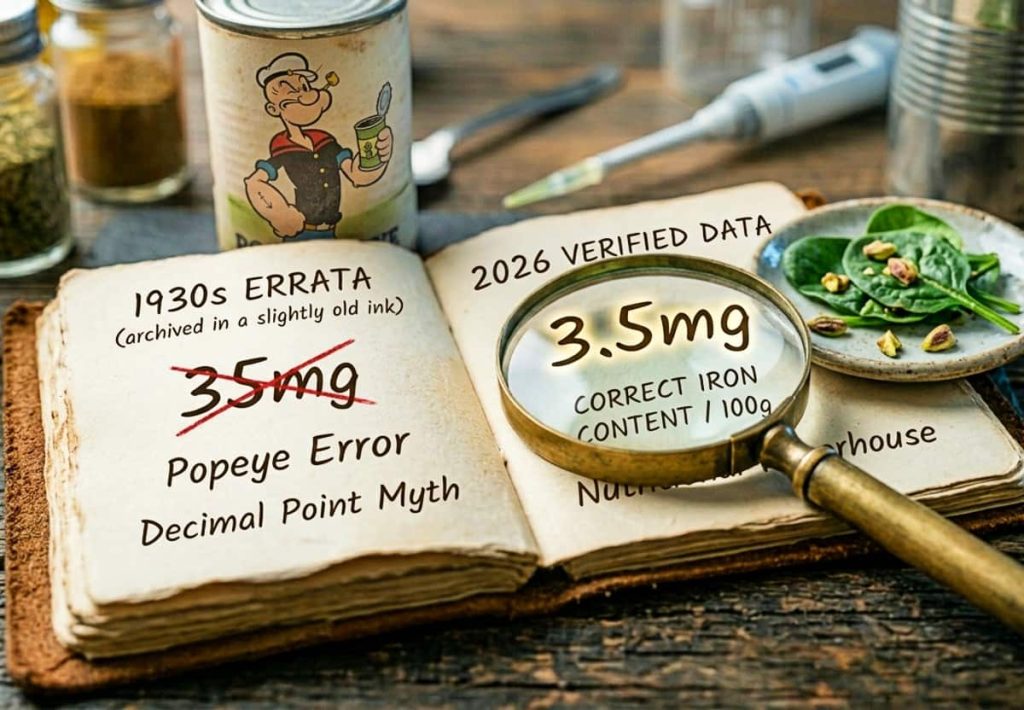
For generations, parents forced spinach on children believing it had 10x more iron than it actually does. A famous decimal point error in the 1930s suggested 35mg of iron per 100g, when the real number is 3.5mg. While still a nutritional powerhouse, this shows that much of what we “know” about spinach is based on decades-old misunderstandings. Just as we corrected the record on iron content, we are now correcting the narrative regarding safe spinach reheating. By applying evidence-based logic rather than outdated myths, we can appreciate the true value of these greens. Implementing a protocol for safe spinach reheating allows you to reclaim spinach as a practical, healthy staple in your diet, free from the shadow of century-old calculation errors.
The 2026 Safety Protocol: Guide to Safe Spinach Reheating
You don’t have to toss your leftovers. When it comes to safe spinach reheating, follow the “Cool Fast, Heat High” rule to ensure your meal is handled correctly. First, ensure your spinach is refrigerated within two hours of cooking; this is the most critical window to prevent bacterial growth. This foundational step is the cornerstone of safe spinach reheating, ensuring that the bacterial load remains negligible before you even consider warming the dish. Beyond the timing, the method of heat application is vital. Many home cooks overlook that aggressive, high-temperature shock can alter the molecular structure of cooked greens unnecessarily. By focusing on safe spinach reheating—specifically using gentle, consistent heat—you preserve the integrity of the remaining nutrients while effectively neutralizing the potential for bacterial proliferation. This disciplined approach transforms a kitchen chore into a science-backed procedure, making safe spinach reheating a simple, stress-free habit. Just remember to heat the dish until it is steaming throughout, ensuring a uniform temperature that guarantees safety.
Best Practices for Storage and Reheating
- The 2-Hour Window: Never let cooked spinach sit on the counter. Bacteria start the nitrate-to-nitrite conversion at room temperature, so move it to the fridge within two hours. If you are worried about the temperature of your leftovers, check our guide on Can You Put Hot Food in the Fridge? to see how to handle it safely.
- The Fridge Hack: To stop bacterial growth instantly, ensure your fridge is at 5°C or lower.
- Avoid “High Power” Nuking: Research shows that stir-frying or microwaving on “High” can accelerate nitrosamine formation. Use medium-low heat and stir frequently.
- The 70°C Rule: Ensure your spinach reaches at least 158°F (70°C). This temperature is high enough to kill off the bacteria that drive the chemical conversion.
The Verdict: Fact or Fiction?
Is it carcinogenic? Only if handled with extreme negligence (left out for days and then scorched at high heat). Is it safe? Absolutely, provided you follow a strict cold chain. For further technical guidance on safe handling and reheating, you can consult this guide on reheating spinach. Otherwise, enjoy your leftovers—just keep them cold and reheat them gently.
FAQ: Your Spinach Safety Check
- How many times can I reheat spinach? Only once. Every time you heat and cool it, you invite more bacterial activity and nutrient decay.
- Does organic spinach have fewer nitrates? Not necessarily. Nitrate levels depend more on the soil and light exposure during growth than the “organic” label.
- Can I freeze cooked spinach to reheat later? Yes! Freezing is even more effective than refrigerating at stopping the chemical conversion of nitrates.
Medical Disclaimer: This content is for educational purposes only and does not constitute medical advice. Consult a healthcare professional before making any dietary changes. Reliance on this information is at your own risk.
