If you have been wondering why is cabbage good for you and why it is suddenly everywhere, you are looking at the biggest food shift of the year. The “Kale era” is officially over, and the humble cabbage has taken the throne. According to the Pinterest Predicts 2026 report, we are in the middle of a full-blown “Cabbage Crush.”
This isn’t just another passing food fad—it’s a massive win for both your wallet and your cellular health. Let’s cut through the culinary hype and look at why this cruciferous vegetable is the ultimate solution for the modern kitchen.
1. The “Silent Luxury” of Your Pantry
Unlike kale, which wilts and turns into unappetizing mush in your crisper drawer within days, cabbage is a true survivor. A single head can last for weeks, even months, if stored correctly in your refrigerator. As noted in this comprehensive guide to cabbage varieties and preparation, cabbage is a literal “veggie chameleon” that adapts to almost any cooking style, from quick stir-fries to slow-simmered soups and gut-friendly fermented staples like sauerkraut.
However, let’s be realistic: chopping up an entire dense head of cabbage by yourself can feel like a kitchen chore. Furthermore, you have to be prepared for that distinct, pungent sulfur smell that takes over the room once it hits the heat. While it is not exactly the most glamorous cooking experience, it is a very small price to pay for the massive metabolic rewards that follow.
2. The Nutritional Powerhouse: Why Is Cabbage Good for You?
Don’t let its low price tag fool you into thinking it lacks value. From a biological standpoint, cabbage is a dense powerhouse. It is incredibly low in calories (roughly 22–25 calories per cup) but packed with vital micro-compounds.
To truly grasp why is cabbage good for you, we have to look past the macro profile and evaluate its micronutrients.
Essential Vitamins and Minerals
- Vitamins C & K: Crucial for immune cell modulation, collagen synthesis, and supporting bone density matrixes.
- Dietary Fiber: Critical for fueling your gut microbiome, regulating bowel transit, and stabilizing blood sugar spikes.
Glucosinolates and Inflammation
The real magic lies in its Glucosinolates. These are powerful sulfur-containing phytonutrients. When chopped or chewed, they break down into biologically active compounds like isothiocyanates, which scientific studies show help reduce systemic inflammation and combat oxidative stress at a cellular level.
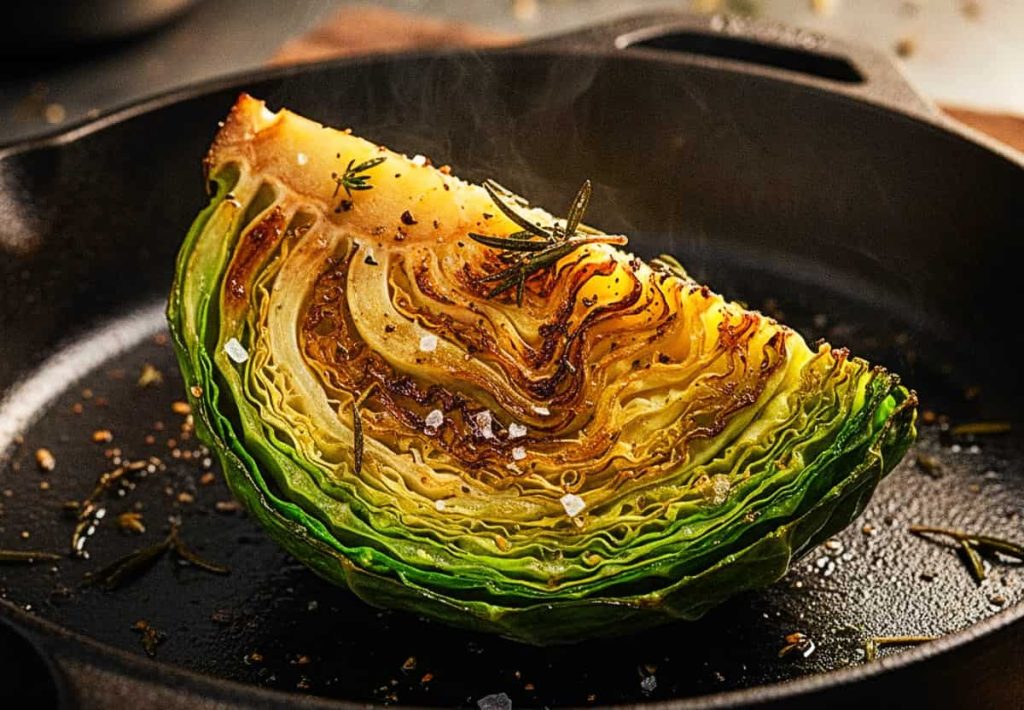
3. The “Cabbage Steak” Technique (Chef’s Level)
I’ll admit, I used to think cabbage was pretty boring and “meh”—until I looked at it through a culinary science lens and tried searing it in a heavy cast-iron skillet. The molecular transformation under heat is wild.
The Perfect Roast Step-by-Step
- The Cut: Slice the cabbage into 1-inch thick wedges, keeping the core intact so the leaves stay tightly together.
- The Seasoning: Rub generously with high-quality olive oil, sea salt, and your choice of robust aromatics.
- The Sear & Roast: Sear it hot in a cast-iron skillet to trigger the Maillard reaction, then roast at 400°F (200°C) until the edges are deeply caramelized, sweet, and nutty.
The Expert Acid Finish
- Pro-tip: If you are cooking red cabbage, add a splash of apple cider vinegar or lemon juice immediately after cooking. Red cabbage contains anthocyanins (natural pigments) that turn a dull blue in alkaline environments. The acid restores the vibrant purple hue and brightens the complex flavor profile.
4. Safety First: The Nutrideep Cookware Warning
Cooking cruciferous vegetables at high temperatures is excellent for developing those delicious, nutty sugars, but high-heat cooking requires the right tools. If you are pushing your skillets to high temperatures to get that perfect char, you must ensure your cookware isn’t leaching industrial synthetics into your clean food.
Cheap non-stick coatings easily degrade under intense heat. If your daily pans are scratched, worn, or flaking, you are potentially ingesting chemical micro-plastics. Before you fire up the stove for your next roast, look at our comprehensive breakdown on ceramic pans vs granite stone to see which non-toxic surface is truly safe enough for high-heat cooking.
FAQ: Common Questions on Why Is Cabbage Good for You
When looking at why is cabbage good for you, is it actually better than kale? They are genetic cousins! While kale holds a slight edge in raw Vitamin A content, cabbage is vastly superior regarding storage durability, economic price per pound, and versatility in hot, cooked dishes without losing its texturized bite.
Why does my purple cabbage turn an unappetizing blue? This is a simple pH chemical reaction. The pigments (anthocyanins) alter color based on acidity. Tossing the shreds with a splash of vinegar or citrus juices will instantly bring back that rich, beautiful purple color.
Is cooked cabbage safe for a post-bariatric diet? Yes. Bariatric specialists often note that thoroughly cooked cabbage is an excellent option for post-op patients looking to reintroduce solid foods. Its high fiber and low carbohydrate profile support healthy weight management, provided it is cooked until completely soft to ensure easy gastric digestion.
Metabolic Health Disclaimer: The nutritional insights provided in this article are for educational purposes only. While cruciferous vegetables like cabbage are highly beneficial for the general population, individuals with thyroid disorders (due to goitrogens) or those on specific blood thinners (due to Vitamin K) should monitor their intake and consult their healthcare provider.
