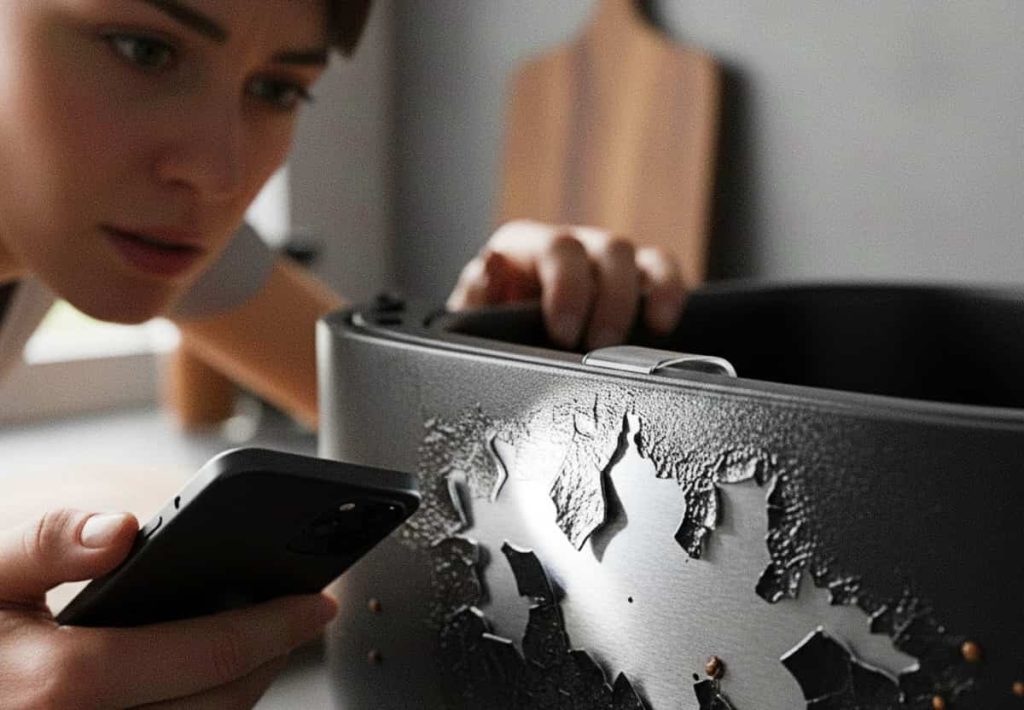
It’s the kitchen miracle of the decade, right? We use it for everything from crispy Brussels sprouts to ‘fried’ chicken, all with a fraction of the oil. But if you’ve noticed black flakes in your food and are wondering, is your air fryer peeling, you aren’t alone. A shadow has been cast over our favorite countertop appliance: you open the basket to shake your fries and notice a small silver glint where the non-stick coating used to be.
If you are asking, “is your air fryer peeling and is it dangerous?”, you’ve come to the right place. My first reaction when I saw this in my own kitchen wasn’t just “Oh, I need a new basket.” It was a cold realization. If the coating is gone, and I didn’t scrub it off… where exactly did it go?
Long story short: You probably ate it. But before you throw your appliance out the window, let’s look at what the science—and the actual experts—have to say about that peeling basket.
The Teflon “Ghost”: Is It Actually Poisonous?
Most air fryer baskets are coated with PTFE (you probably know it as Teflon). For years, the villain was PFOA, a chemical linked to health issues.
The Modern PTFE Reality
But look, here is the nuance: PFOA has been largely phased out since 2013. Modern PTFE is generally considered “inert.” This means if you swallow a tiny flake because is your air fryer peeling, it doesn’t break down in your gut; it simply passes through your system.
The Real Toxic Risks: Overheating and Exposed Metal
“Inert” doesn’t mean “safe” forever. The real risk happens in two ways that nobody mentions:
- Polymer Fume Fever: If you heat an empty, peeling basket above 260°C (500°F), the coating releases fumes that cause “Teflon flu.”
- Metal Leaching: Once the coating peels, you expose the aluminum underneath. When acidic foods touch that raw metal, it can leach neurotoxins directly into your meal.
The “Dishwasher Safe” Lie
The manual says “Dishwasher Safe,” but honestly? This is a trap. High-pressure jets and abrasive detergents are the #1 killer of non-stick coatings. If you notice is your air fryer peeling, the dishwasher is likely the culprit. Once it starts to bubble, the “toxic clock” is officially ticking.
How to Stay Safe: The 3-Step “Peel” Audit
Worried about your family? Do this quick audit tonight:
- The Light Test: Shine a flashlight into your basket. If you see silver “ribs” where it used to be black, stop using it.
- The Scent Test: Does it smell like “hot plastic”? This is a red flag for off-gassing.
- The Tool Check: Still using metal tongs? Switch to high-heat silicone or wood immediately to prevent further damage.
FAQ: Your Air Fryer Safety Questions Answered
1. If my air fryer is peeling, can I just use aluminum foil? It’s a temporary fix, but not a solution. Foil doesn’t stop the basket from off-gassing toxic fumes if it gets too hot. If the coating is compromised, the appliance has reached its end.
2. I accidentally ate a flake of the black coating. Am I okay? Don’t panic. Modern PTFE is mostly inert. The real danger is long-term exposure to raw metal and fumes.
Final Thoughts: When to Replace Your Basket
Is your air fryer peeling? If the answer is yes, it’s a loud signal that your appliance is no longer safe for daily use. Don’t wait until you’ve ingested half the coating to make a change. Your health is worth more than a cheap gadget.
Disclaimer: The information in this article is for educational purposes only and does not constitute medical or professional health advice. While modern non-stick coatings are generally considered inert at low temperatures, a damaged or peeling appliance can pose risks. Always follow the manufacturer’s safety guidelines. If you suspect you have been exposed to toxic fumes or have health concerns related to chemical ingestion, please consult a healthcare professional immediately.
