If you ask a chef or an Asian grandmother if you should wash your rice, the answer is a resounding “Yes.” But if you look at the back of a fortified rice bag in a U.S. supermarket, it might explicitly tell you not to.
So, is it wrong to wash rice? Like most things in the kitchen, the answer isn’t a simple yes or no—it’s a messy balance between texture, toxins, and essential nutrients. I’ll be honest: I used to think washing rice was just about removing dirt. But once I understood how different starches react to water, I realized that my “autopilot” rinsing was actually changing the nutrition of my meals.
The Culinary Myth: Does Washing Really Make Rice Fluffy?
The most common reason we’re told to wash rice is to remove “excess starch” so the grains stay separated. We’ve all seen that cloudy water—that’s amylose, a surface starch produced during the milling process.
Amylose vs. Amylopectin: The Real “Glue”
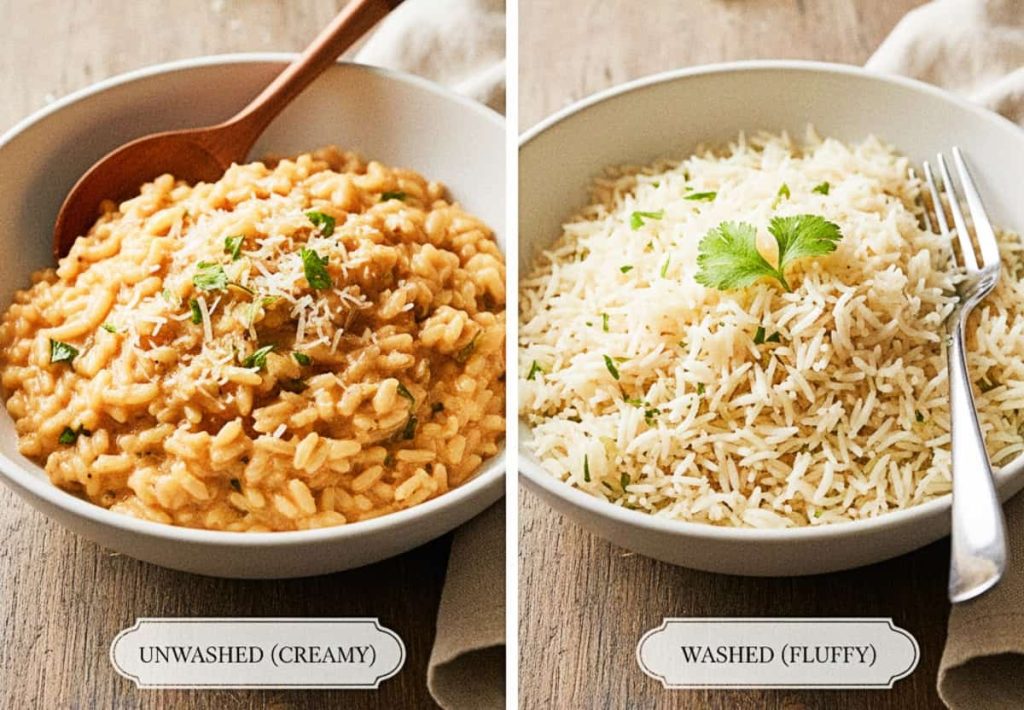
Science actually shows that washing has almost no effect on how sticky your rice turns out. A 2019 study compared washed and unwashed grains and found that the true “sticky” factor isn’t on the surface; it’s a starch called amylopectin that leaks out from inside the grain as it cooks.
Choosing the Right Variety
Essentially, if you want fluffy rice, choosing a long-grain variety (like Basmati) matters a lot more than how many times you rinse the pot. So, from a purely textural standpoint, is it wrong to wash rice? Not necessarily, but it might be unnecessary.
The Real Reason to Rinse: Microplastics and Arsenic
Even if the texture argument is mostly a myth, I haven’t stopped washing my rice. The data on what’s clinging to those grains is hard to ignore, especially regarding modern contaminants.
Scrubbing Away Microplastics
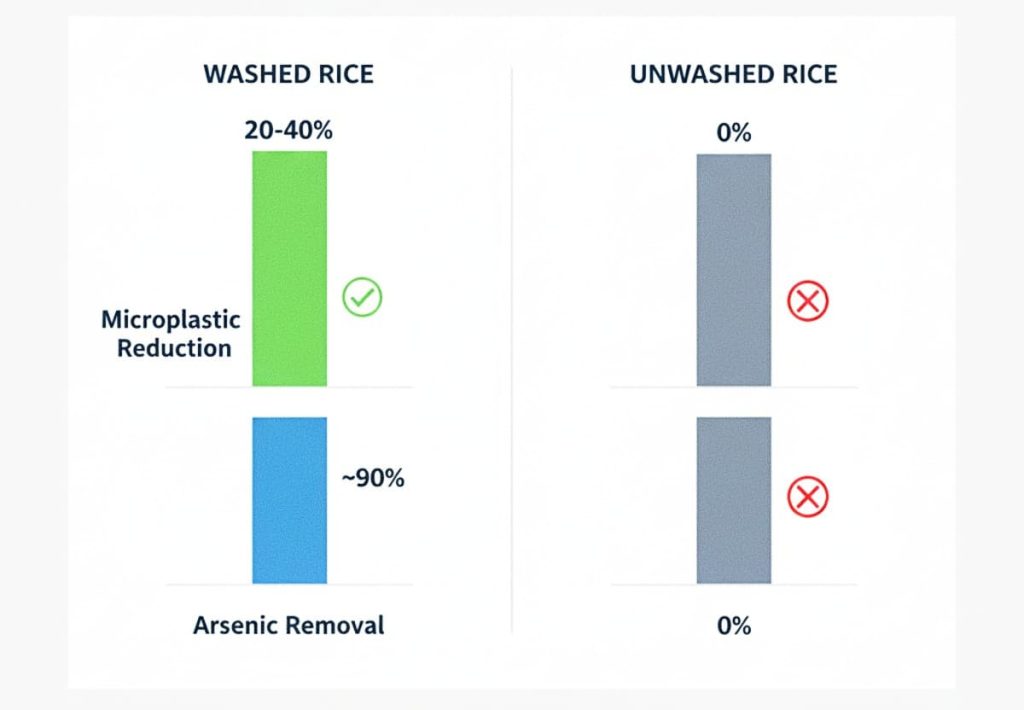
I was genuinely shocked to read that washing can scrub away up to 20% of microplastics from standard rice. If you’re a fan of “instant” rice, that number gets even scarier—rinsing can cut plastic contamination by 40%.
The Arsenic Factor
Rice is like a sponge for arsenic in the soil. Rinsing can remove roughly 90% of the bioaccessible arsenic. When considering long-term health, the question of is it wrong to wash rice becomes a clear “no”—washing is a vital safety step.
When You Should Definitely Keep the Tap Off
Despite the benefits, there’s a massive downside to washing: the “Nutrient Drain.” In many Western countries, white rice is fortified.
The “Vitamin Flush”
If you wash fortified rice, you are literally washing your vitamins down the drain. Manufacturers spray the grains with iron, folate, and niacin. Washing can lead to losing up to 70% of this added nutrition. In this specific context, is it wrong to wash rice? Yes, if you rely on that rice for your daily vitamin intake.
Rice Safety & Cooking: The Quick Guide
| The Goal | My Recommendation | The Reason |
| Separated Grains (Pilaf) | Wash | Removes dust for a cleaner “bite.” |
| Risotto or Paella | Don’t Wash | You need surface starch for creaminess. |
| Health (Arsenic/Plastics) | Wash | Best for long-term safety. |
| Nutritional Density | Don’t Wash | Essential for enriched/fortified rice. |
Handling Your Rice Like a Pro
If you’re going to wash, do it right. I usually use the “Bowl Method”: cover the rice with an inch of water, agitate it gently, and drain.
Tool Quality Matters
Just like the hidden dangers of plastic cutting boards, your tools matter. Use non-porous bowls (stainless steel or glass) to avoid trapping bacteria.
A Warning on Bacillus Cereus
Washing doesn’t kill bacteria. Never leave cooked rice at room temperature for more than two hours. Once those spores activate, no amount of reheating can destroy the toxins.
FAQ: Your Rice Questions Answered
1. Does washing brown rice make a difference?
Texturally, no. The outer bran layer is intact, so there’s no surface starch. Wash it only for hygiene (dust and debris).
2. Should I wash rice until the water is 100% clear?
Not necessarily. Most experts recommend 2–3 rinses. If you go until it’s perfectly clear, you might be losing too much flavor.
Final Thoughts: Is It Wrong to Wash Rice?
At the end of the day, it depends on what’s on your plate. If I’m making a creamy rice pudding, I want that starch. But for my daily bowl, I’ll take the extra two minutes to rinse away the toxins. To answer the debate once and for all: is it wrong to wash rice? Only if you are washing away the very nutrients you need.
Disclaimer: This article is for educational and informational purposes only. While scientific studies show that rinsing can reduce certain contaminants, the safety of your food depends on various factors, including sourcing and proper storage. Always follow the specific cooking instructions on your rice packaging and consult with a health professional regarding heavy metal intake or specific dietary needs.
