The benefits of whey protein extend far beyond simple muscle growth, as this supplement acts as a critical metabolic and biological tool. While traditionally viewed through the lens of bodybuilders, the systemic effects of whey protein on blood pressure, satiety, and antioxidant defense are increasingly supported by clinical research. By integrating these evidence-based benefits of whey protein into your daily routine, you can leverage its unique molecular structure to enhance overall metabolic health.
The Rapid Absorption Advantage
Molecular Foundation and Leucine Signaling
At its most fundamental level, whey is a complete protein containing all nine essential amino acids. Its primary components—beta-lactoglobulin, alpha-lactalbumin, and serum albumin—provide the structural foundation for tissue repair. However, the true benefit lies in its high concentration of leucine, which is why experts often cite the 10 health benefits of whey protein as proof that this specific branched-chain amino acid is the primary trigger for muscle protein synthesis. When analyzing the broader benefits of whey protein, it becomes clear that its rapid bioavailability is the defining factor that separates it from slower-digesting protein sources. This high-speed nutrient delivery ensures that the body receives the necessary building blocks immediately after physical stress or during periods of metabolic demand.
Digestive Efficiency and Amino Acid Spikes
Because whey is a liquid byproduct of cheese production, it bypasses many of the digestive hurdles faced by solid proteins. This leads to a rapid amino acid spike in the blood, which is essential for stopping muscle breakdown immediately after physical stress or during the natural aging process. Understanding how digestive speed facilitates the systemic benefits of whey protein allows athletes and elderly individuals to time their intake for maximum physiological impact.
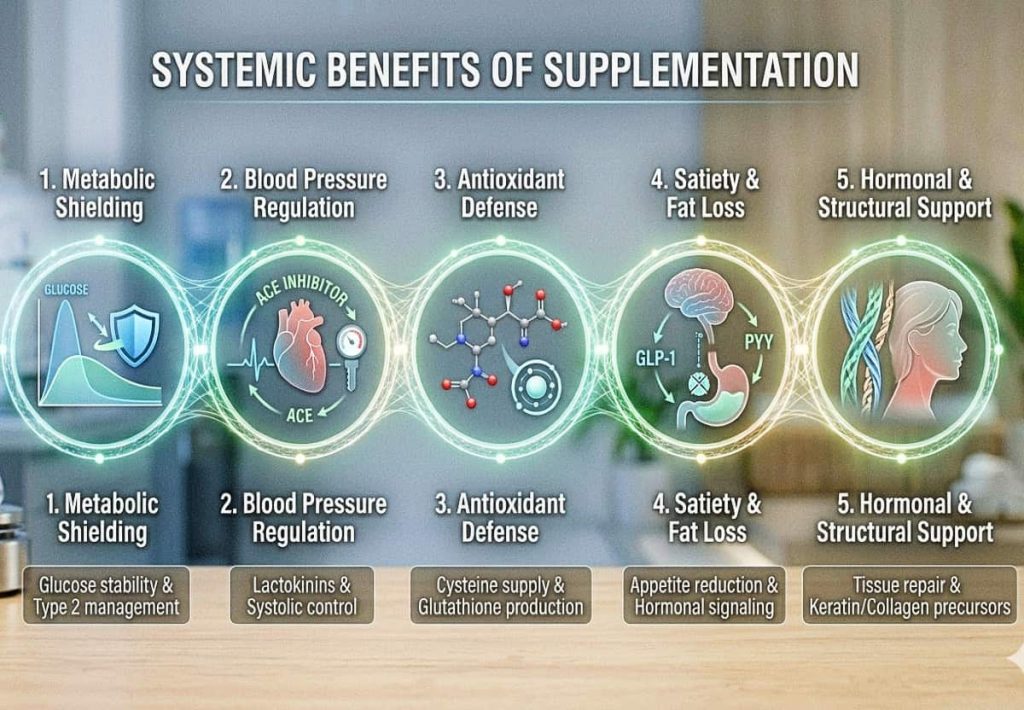
5 Systemic Benefits of Supplementation
Metabolic and Cardiovascular Impacts
While muscle repair is the most visible outcome, the internal benefits of whey protein are increasingly supported by clinical research. Metabolic Shielding occurs when consuming whey before or during a high-carbohydrate meal, as it can slow the absorption of sugar. This helps stabilize insulin levels and improves sensitivity, which is a critical strategy for managing type 2 diabetes. Beyond glucose control, the systemic benefits of whey protein extend to cardiovascular health through specific peptide activity. Blood Pressure Regulation is aided by bioactive peptides known as lactokinins, which act as natural ACE inhibitors. Regular intake has been shown to reduce systolic blood pressure, particularly in individuals with hypertension.
Defense, Satiety, and Structural Integrity
Antioxidant Defense is boosted because whey is rich in cysteine, an amino acid necessary for the production of glutathione. As the master antioxidant, glutathione mitigates oxidative stress and protects cells from long-term damage. Satiety and Fat Loss are supported because protein is the most satiating macronutrient. Whey specifically triggers the release of hormones like GLP-1 and PYY, which signal the brain to reduce hunger, making it an effective tool for maintaining a calorie deficit. Hormonal and Structural Support is provided for those navigating menopause or recovering from surgery, as whey provides the keratin and collagen precursors necessary to maintain skin elasticity and hair strength during periods of hormonal fluctuation.
The Nuance Check: Why Specialists Disagree
Anti-Inflammatory Properties and Bone Health
Despite the clear data, the scientific community is not in total consensus. While many experts highlight whey’s anti-inflammatory properties, noted by reduced C-reactive protein levels, others argue that these benefits are often a secondary effect of weight loss rather than a direct miracle of the protein itself. Furthermore, when examining the bone health benefits of whey protein, the debate centers on the total mineral profile of the diet rather than the protein source in isolation. This highlights the importance of the protein equation and decoding individual requirements.
Safety, Interference, and Strategy
Navigating Medical Interactions
The benefits of whey must be balanced against its potential to interfere with certain medical treatments. High protein concentrations can bind to specific medications, such as Levodopa for Parkinson’s or Quinolone antibiotics, significantly reducing their effectiveness. Managing these interactions requires a strategic window—typically taking medications at least two hours before or four to six hours after protein consumption. Ultimately, the decision to supplement should be based on a gap analysis for protein requirements. If whole food sources cannot meet the body’s demands due to age, activity level, or surgical recovery, whey serves as the most efficient biological bridge available. Because the therapeutic benefits of whey protein are so potent, users must be mindful of their existing medical protocols to ensure safety. Ultimately, the decision to supplement should be based on a gap analysis for protein requirements, ensuring that the benefits of whey protein complement, rather than interfere with, your specific health needs.
FAQ: Common Questions on Whey Protein
Can I take whey protein if I have a milk allergy? No. While whey isolates have very low lactose, they still contain milk proteins that will trigger an allergic reaction. Those with a true milk allergy should seek plant-based or beef-protein alternatives.
Is whey protein considered an ultra-processed food? This is a point of contention. While whey is extracted and dried using industrial methods, high-quality clean label or organic versions avoid the artificial sweeteners and fillers that typically define harmful ultra-processed foods. When choosing a product, consumers should prioritize those that preserve the natural integrity of the benefits of whey protein, avoiding those loaded with excessive additives that may negate its health-promoting qualities.
Will whey protein make me gain weight if I don’t exercise? Protein contains calories. If your total caloric intake exceeds your energy expenditure, you will gain weight. However, because it is so satiating, many find it actually helps them eat less overall.
What is the difference between Clear Whey and standard whey? Clear whey is a hydrolyzed isolate that has been acidified to a lower pH, resulting in a translucent, juice-like consistency. It offers the same protein benefits but is often easier for those who experience milk fatigue or bloating from creamy shakes.
Medical Disclaimer: This content is for educational purposes only. Nutritional requirements vary based on individual health and activity. Consult a professional before making changes to your diet or medical protocols.
