Finding the right vitamins for hair loss can feel impossible when you walk into the pharmacy and see an endless shelf of “hair, skin, and nails” gummies. Biotin is usually front and center, but here is the reality check: for the vast majority of people, spending money on isolated options isn’t the answer. As noted in the comprehensive guidelines from the International Society of Hair Restoration Surgery (ISHRS), the most common mistake people make is treating hair changes as a cosmetic flaw. In reality, your body is often performing a “triage”—diverting energy away from your scalp to prioritize vital organs.
To understand how targeted vitamins for hair loss actually support the scalp, you need to look past the marketing and focus on the two biological triggers that control the follicle’s life cycle.
Waking the Follicle: Vitamin D as a Scalp Hormone
Forget what you’ve heard about Vitamin D and seasonal health; for your scalp, it functions closer to a wake-up hormone. Its role is mechanical: it provides the necessary chemical signal to stimulate the birth of new follicles—those tiny pores where hair begins its life.
The problem? Modern routines often lead to a global deficit when tracking essential vitamins for hair loss. According to data monitored by the National Institutes of Health (NIH), insufficient blood levels can cause the growth cycle to prematurely enter hibernation. This is why addressing Vitamin D levels is a primary consideration in structural cases of Telogen Effluvium and temporary pattern thinning.
What the Labels Don’t Tell You About Dosage
Taking a standard 400 IU a day is rarely enough to support a dormant follicle. Clinical observations show that unless serum levels reach the optimal physiological range, the hair cycle may remain sluggish. Correcting a true deficiency often requires supervised, targeted amounts far beyond a basic multivitamin, which must be monitored by a professional to avoid systemic toxicity.
Vitamin C and the Oxygen Bridge
Most people overlook Vitamin C because they think it is only for baseline collagen production. While it does provide the structural foundation of the hair strand, its critical underlying magic happens through iron absorption.
Iron is the primary vehicle that carries oxygen to the hair bulb. Without adequate oxygenation, the hair strand cannot sustain its growth phase. However, iron is notoriously difficult for the digestive system to process. Vitamin C acts as an indispensable chemical bridge: without it, the iron you consume (whether from red meat or lentils) often passes through your system without ever reaching your roots. It is a game of nutritional synergy, proving that isolated options aren’t always the right vitamins for hair loss.
Specialist’s Nuance: Navigating the U-Curve
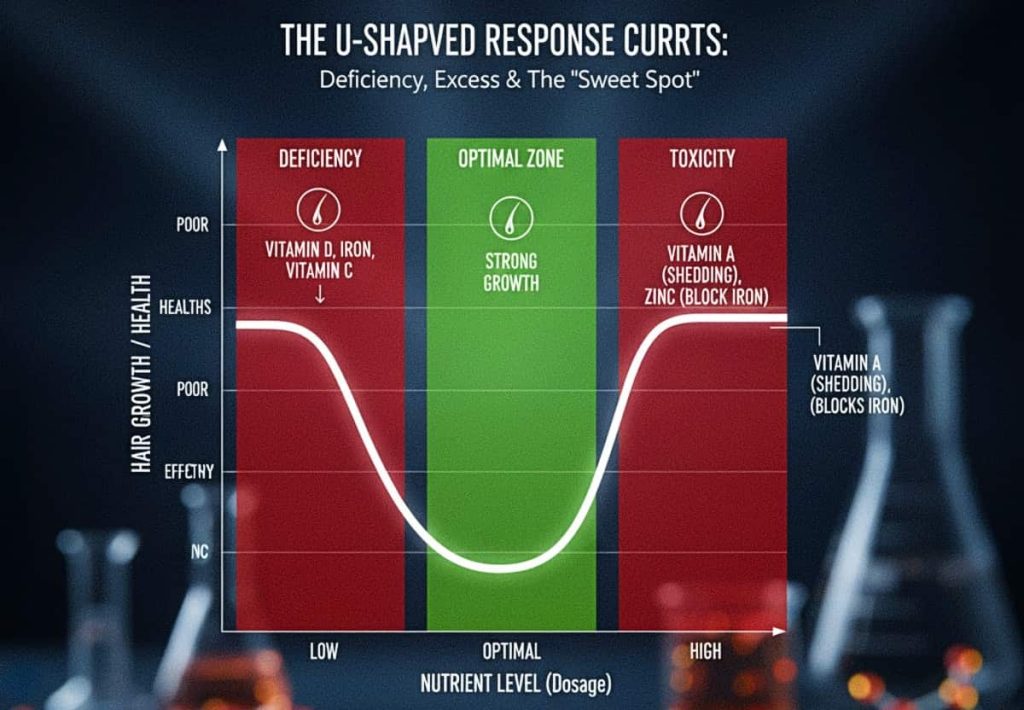
The biggest misconception in nutritional science is that supplementation is a “more is better” game. When evaluating vitamins for hair loss,, we deal with a strict U-shaped response curve where both deficiency and excess can trigger acute shedding. As we discuss in our comprehensive breakdown of The Protein Equation: Decoding Individual Macronutrient Requirements, the timing and balance of these nutrients are just as vital as the dosage.
Nutrient Response and Overdose Risk Matrix
Primary Follicle Supporters
- Vitamin D: Signals the creation of new hair follicles. Overdose Risk: Excessive levels can lead to kidney stones and calcium complications.
- Vitamin C: The essential bridge for iron absorption and collagen synthesis. Overdose Risk: Generally safe, as excessive intake is simply excreted by the body.
Secondary Co-Factors to Monitor
- Vitamin A: Moisturizes the scalp via sebum production. WARNING: High doses are a known trigger for acute hair shedding.
- Zinc: Repairs structural tissue and controls oil glands. WARNING: Too much zinc can actively block iron absorption, worsening shedding.
Demystifying the “Biotin Myth”
Let’s be direct: Biotin (Vitamin B7) deficiency is incredibly rare in anyone consuming a standard, balanced diet. The marketing industry has successfully sold a solution to a problem most people don’t actually have.
Worse, high doses of Biotin can severely “cloud” laboratory blood tests for thyroid and cardiovascular function, leading to dangerous medical misdiagnoses. Unless you have a confirmed clinical deficiency, evaluating other vitamins for hair loss is statistically a better use of resources.
FAQ: Vitamins for Hair Loss Common Questions
How long until I see less hair in the drain? Patience is mandatory. Hair grows at an average biological rate of about 1 mm per day. You will likely see a stabilization in shedding within 4 to 8 weeks, but visible density changes generally take 3 to 6 months of consistent nutritional and metabolic correction.
Does Vitamin E actually help? Yes, but think of it as a cellular booster. Clinical data indicates that specific antioxidant forms of Vitamin E can support hair count by protecting the delicate follicles from environmental oxidative stress.
Can I fix this with diet alone? A: Always start with whole foods. However, if you are seeking targeted vitamins for hair loss like Vitamin D and iron while experiencing active, accelerated shedding, diet alone is often too slow to correct the baseline deficit. Targeted supplements act as the immediate support, while a balanced diet is what maintains long-term scalp stability.
Final Takeaway: Evidence Over Marketing
Choosing the right nutritional path requires looking past flashy labels. By focusing on real biological triggers like Vitamin D signaling and Vitamin C synergy, you support your body from the inside out.
Disclaimer: This content is intended for educational purposes only and does not substitute professional medical advice, diagnosis, or treatment. Always consult with a healthcare professional before starting any new supplementation regimen.
